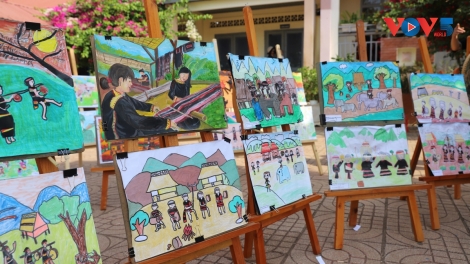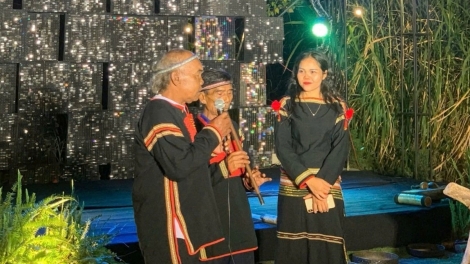




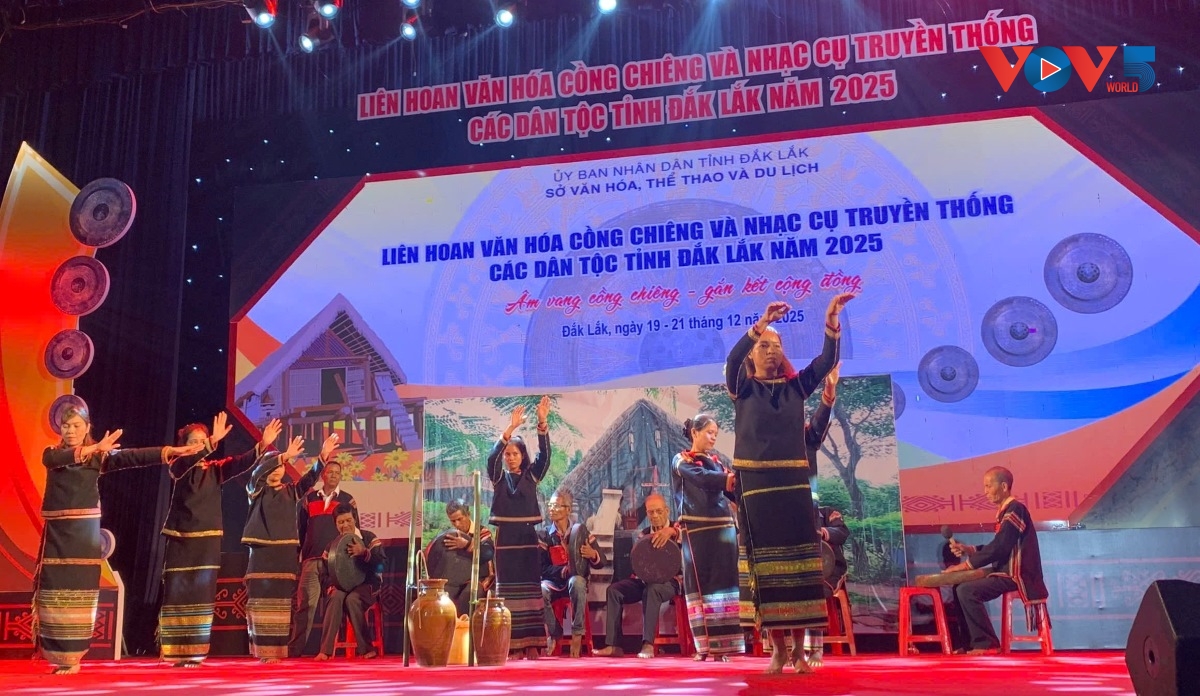
Amid the resonant sounds of gongs, Ede women gently step around the jars of rice liquor, performing the traditional invitation dance. The dance is commonly performed during the new rice ceremony or during water source worship rituals, health blessing ceremonies, weddings, and other joyful village gatherings. Taking place in the cosy atmosphere of the longhouse or on festival grounds, the dance helps connect the community and remind people of their cultural roots.
“According to Ede customs, the liquor invitation dance is performed only during joyful occasions. It is never performed when a family is in mourning. Our ancestors said that festivals were occasions for young men and women from throughout the village to meet and celebrate,” village elder Y Kut Nie of Dak Lak province said.
The dance consists of gentle movements, with dancers circling steadily around the jars of rice liquor with their hands moving slowly in gestures of invitation and respect. The movements carry strong ritual significance and symbolic meaning, expressing reverence for the deities and honored guests as well as their Ede faith, gratitude, and hopes for a peaceful and prosperous life.
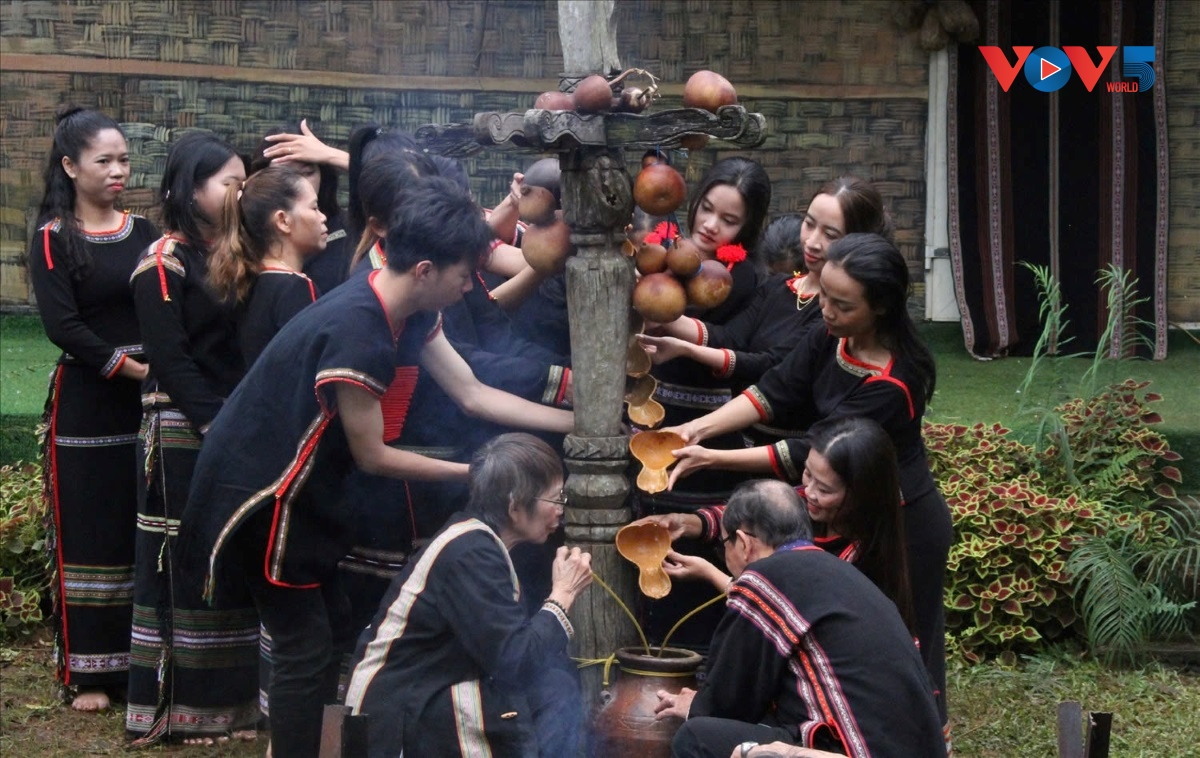
“After completing the rituals of the water source worship or good health worship, the liquor invitation dance is performed with the wish that all villagers will enjoy happiness and prosperity. It’s also an invitation to the deities of the mountain and springs and the ancestors to celebrate with the villagers,” artisan Y Klot Buon Ya of Dak Lak province said.
Artisan Buon Ya said that dancers usually wear traditional Ede attire made of brocade fabric. According to ancient custom, the water poured into the liquor jars must be fetched from the village wharf, using dried gourds. This water source is considered the most sacred and purest.
“The number of liquor jars and dancers is always odd. Each jar is paired with a dancer, so the two numbers always correspond,” said Ya.
The liquor invitation dance is an art form where music, movement, and spirituality merge into one. Every step and gesture is performed with reverence, reflecting the close relationship between people, nature, and the spiritual world.