





 Vietnamese
 中文
中文
 日本語
日本語
 한국어
한국어
 Français
 Русский
 Deutsch
 Español
 Bahasa Indonesia
 ไทย
ไทย
 ພາສາລາວ
 ខ្មែរ
ខ្មែរ




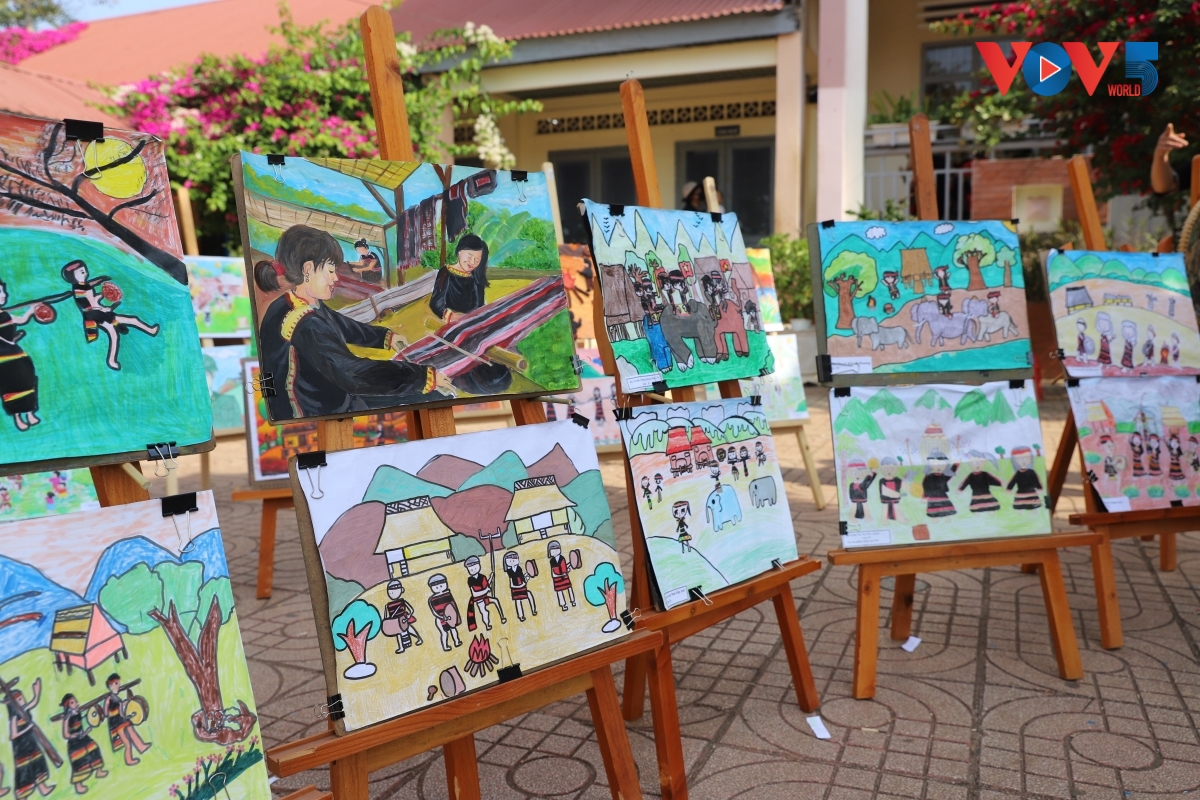
At To Hieu Primary School in Ea Kao ward, students are taking part in building longhouse models, crafting traditional musical instruments, decorating costumes with brocade motifs, and painting village landscapes.
Fifth-grader H’Tram Nie said: "I enjoy the exhibitions because they reflect the identity of the E De people. I’m very proud of my ethnic heritage and look forward to more activities like this so we can continue to promote our cultural identity.”
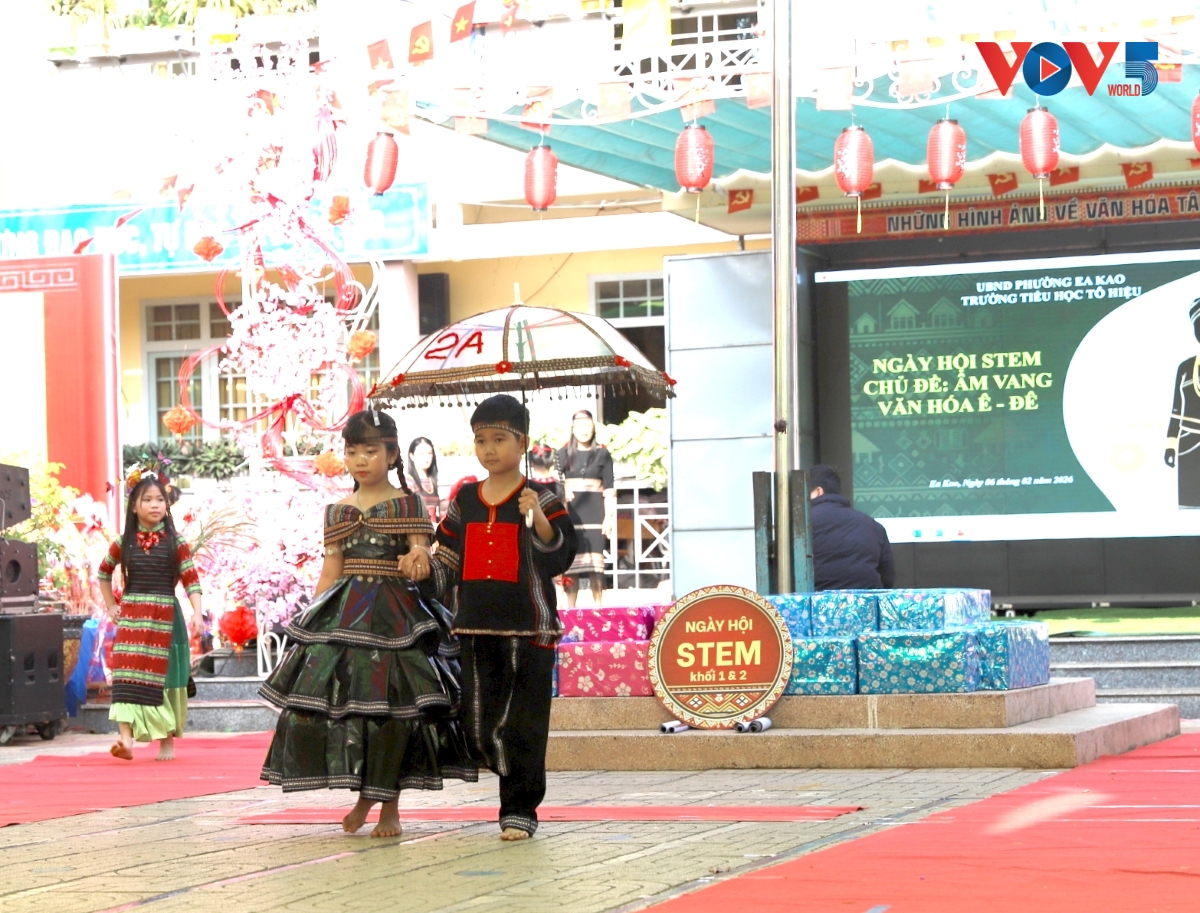
The school, which has nearly 1,200 students, many from ethnic minorities, also organized a competition called the “Golden Bell Challenge” that quizzes students about ethnic culture.
Third-grader Dinh Diep Anh said: “I’m very happy and excited. I’ve learned a lot about E De culture – about its longhouses, gong music, traditional costumes, and major traditional festivals.”
Integrating traditional culture into experiential activities makes learning more engaging and memorable. Students’ active participation fosters a stronger connection to their cultural roots.
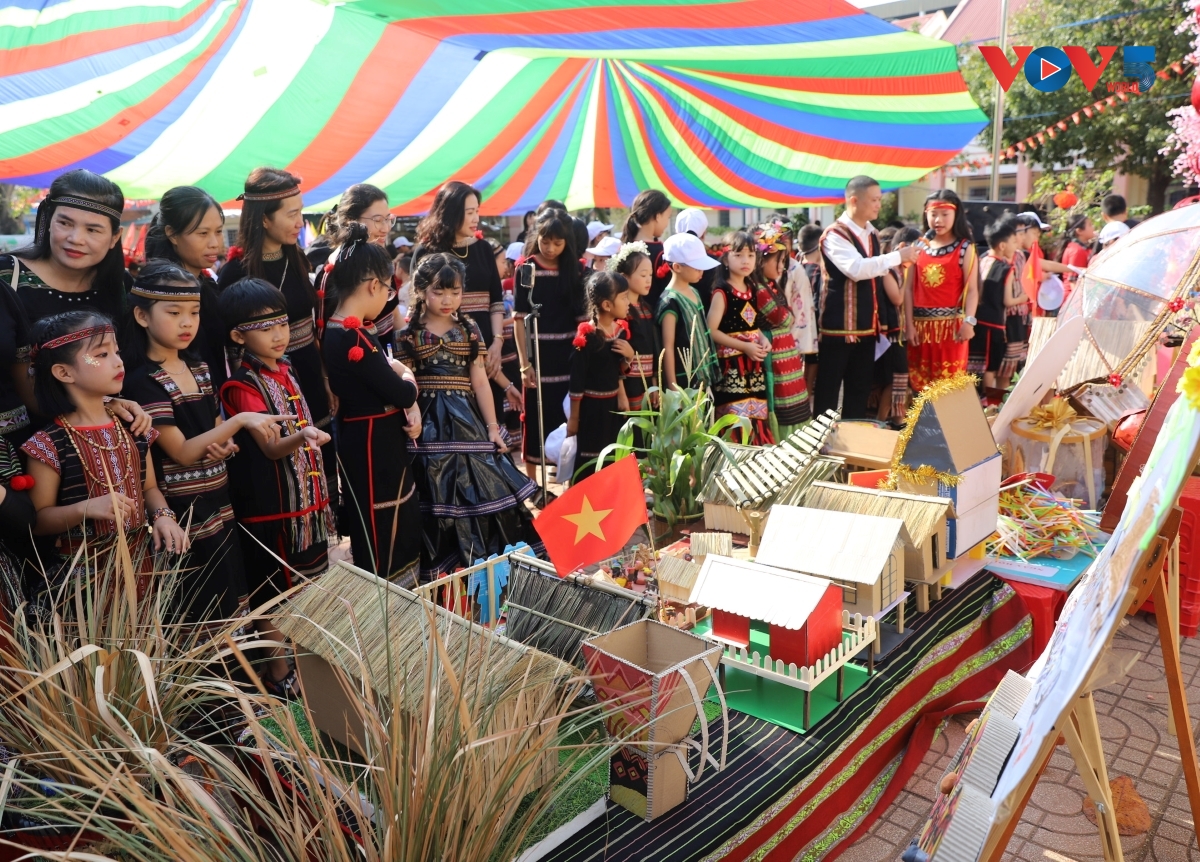
According to Doan Thi Tuyet Yen, Principal of To Hieu Primary School, these activities give students an opportunity to learn from one another and strengthen their awareness of the importance of preserving cultural values.
Yen said: “This is a way for students to experience, create, apply STEM knowledge to the cultural values of ethnic groups, and contribute to the preservation and promotion of local cultural heritage.”
This integrated educational model, combining multiple subjects, is being implemented in many schools in Dak Lak . In areas with large ethnic minority populations, cultural content is woven into experiential learning activities, enabling students to engage with it in a natural and meaningful way.
