



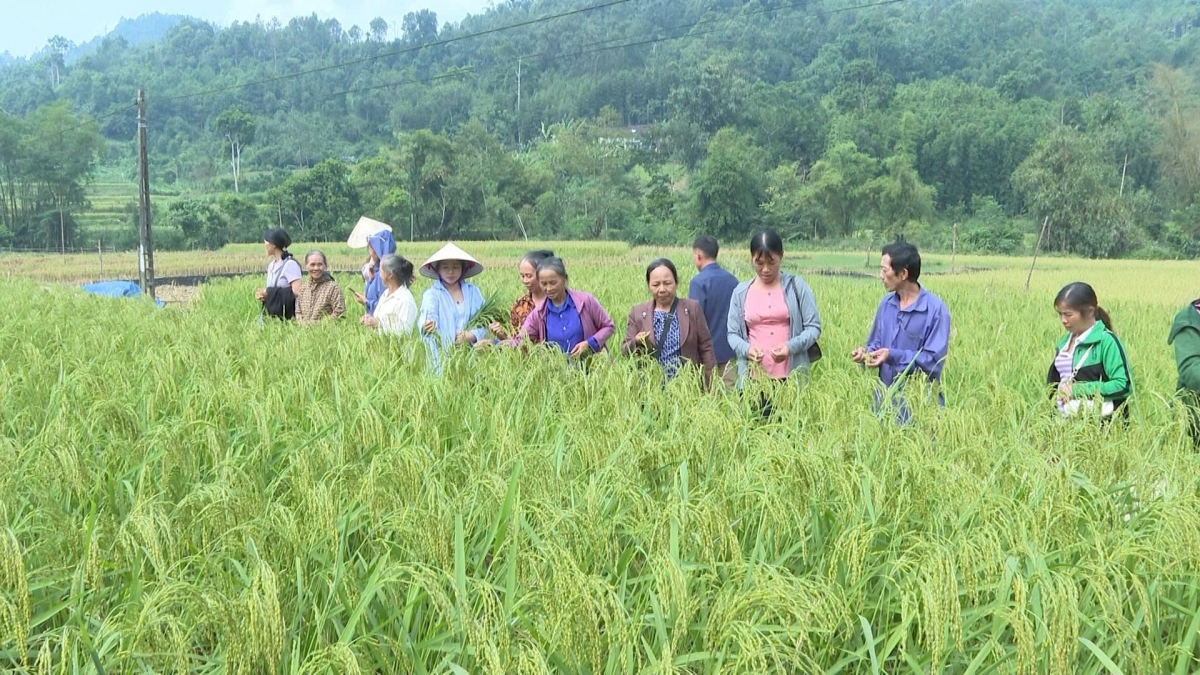
The rice is harvested in the early morning, then boiled, roasted, pounded, and sifted all in the same day. Once produced mainly for family consumption, Khau Nua Lech green rice is now sold as a delicacy in many provinces.
Khau Nua Lech is an indigenous glutinous rice variety of the Tay and Nung ethnic communities in Ngan Son. It’s well suited to the cool climate and mountainous terrain. Its grains are round and milky white, and when steamed or made into green rice, they have a distinctive fragrance and chewy texture.
Nong Thi Binh, who has been making com for years in Coc Dan village, said com’s quality depends largely on the maker’s experience. “There are many steps to make com. We have to harvest the rice in the early morning because if we bring it home late and leave it overnight, it won’t taste as good.”
“Once the rice is brought home, we wash it thoroughly, boil it, and then roast it. When it reaches the right stage, we take it out and remove the husks. Then we sift it, selecting the clean grains for pounding. After pounding, we sift the com grains one more time before we get the finished product,” said Binh.
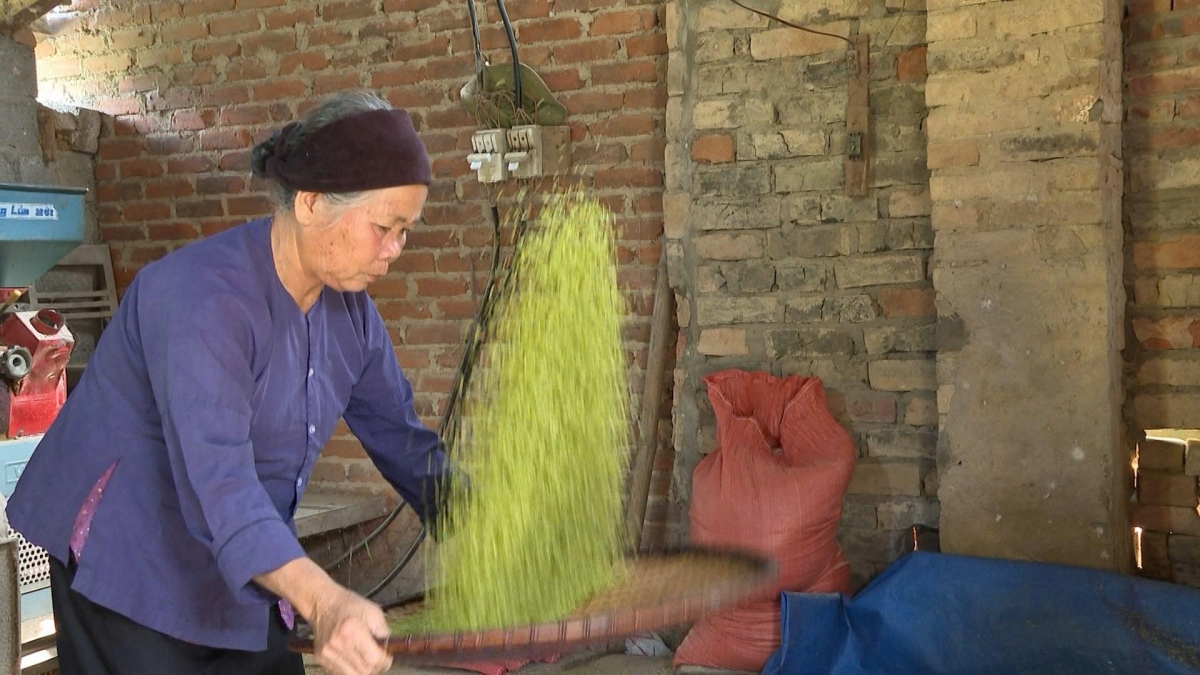
In the past, people made com mainly for their family or to give as a gift during the New Year celebration and other festivals. As customers in other localities began ordering com, some households started boosting their production and now regard the product as a seasonal source of income.
“I’ve been making com since 2014. At first, I only made a small amount, but gradually I gained more customers and increased my production. Now, during the com season, I sell more than 200 kilograms. I ship my products to Cao Bang, Thai Nguyen, Bac Ninh, Dak Lak, Lam Dong, Quang Ninh, and several neighboring provinces, so my income is more stable than before,” said Nong Thi Tam of Hoang Phai village.
To meet growing demand, households have restructured their production. Ngan Son commune has encouraged households to form cooperatives to share equipment and take a more proactive approach to customers. There are now 5 com cooperatives in Coc Dan, Hop Tien, and Hoang Phai village, comprising 40 female members.
In Hop Tien village, machinery has replaced some of the steps previously done by hand. To reach more customers, members have been trained in online sales.
“We received funding from Bread for the World to purchase equipment. Now that we have machines, we can produce and sell more com. We also attended online sales training courses so we can sell our products as soon as they are made,” said Nong Thi Hoa, head of Hop Tien’s com cooperative.
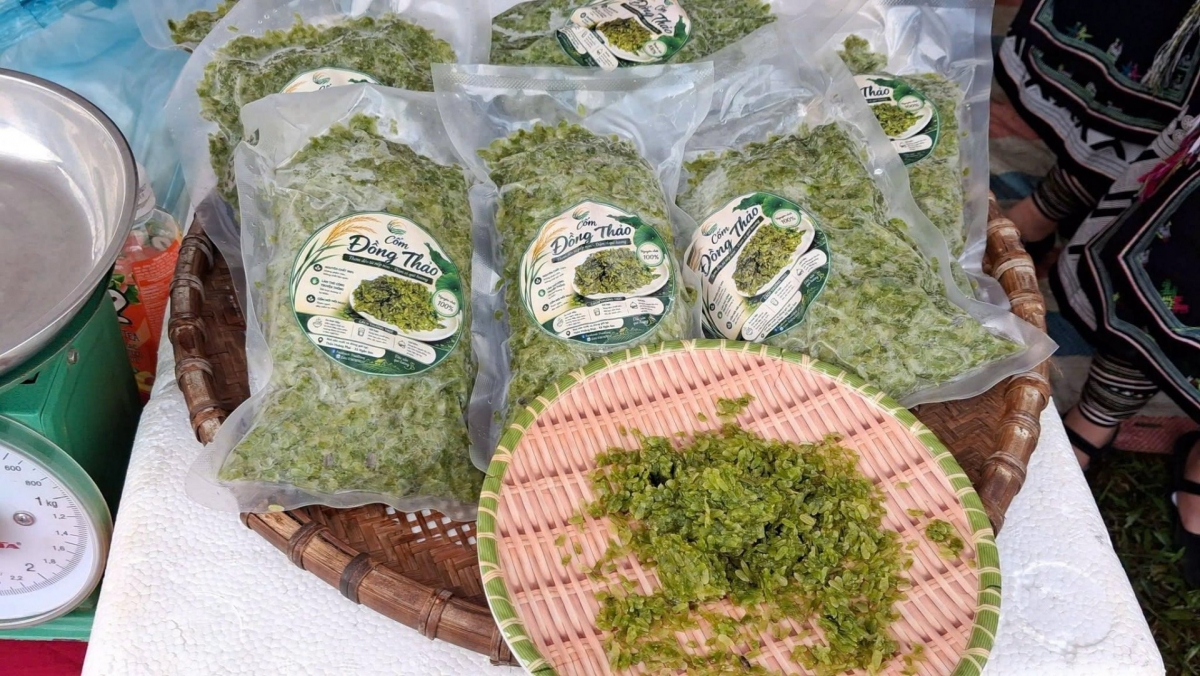
The cooperatives pay close attention to hygiene, packaging, labeling, and product information, all of which are essential to building a trusted brand for Khau Nua Lech com. The local authorities have also incorporated com production into cultural and tourism activities. The Khau Nua Lech Com and Ngan Son Chestnut Festival was held at Ban Chang Lake, where visitors took part in a com-making contest, food tastings, and other activities showcasing local culture.
“To ensure that Khau Nua Lech com develops sustainably and reaches a wider market, we will continue to support our members, encourage producers to join cooperatives, share experience, and support one another during production to improve quality and meet market demand. We will also promote our product at trade fairs, festivals, and other cultural events,” said Dinh Thi Loan, Chairwoman of the Ngan Son commune Women’s Union.
Ngan Son commune plans to establish a dedicated raw-material area for Khau Nua Lech sticky rice, provide technical support, and strengthen market linkages. Producers will continue to standardize processing and packaging to ensure food safety. With those efforts sustained year after year, Khau Nua Lech autumn com could find its way into households far beyond the region.