



Households in Thanh Son commune have preserved the traditional method of making sour pork for generations. The main ingredient, of course, is pork, usually from free-range local pigs. The carefully selected meat is sliced into small pieces, seasoned, and mixed with fragrant roasted rice powder.
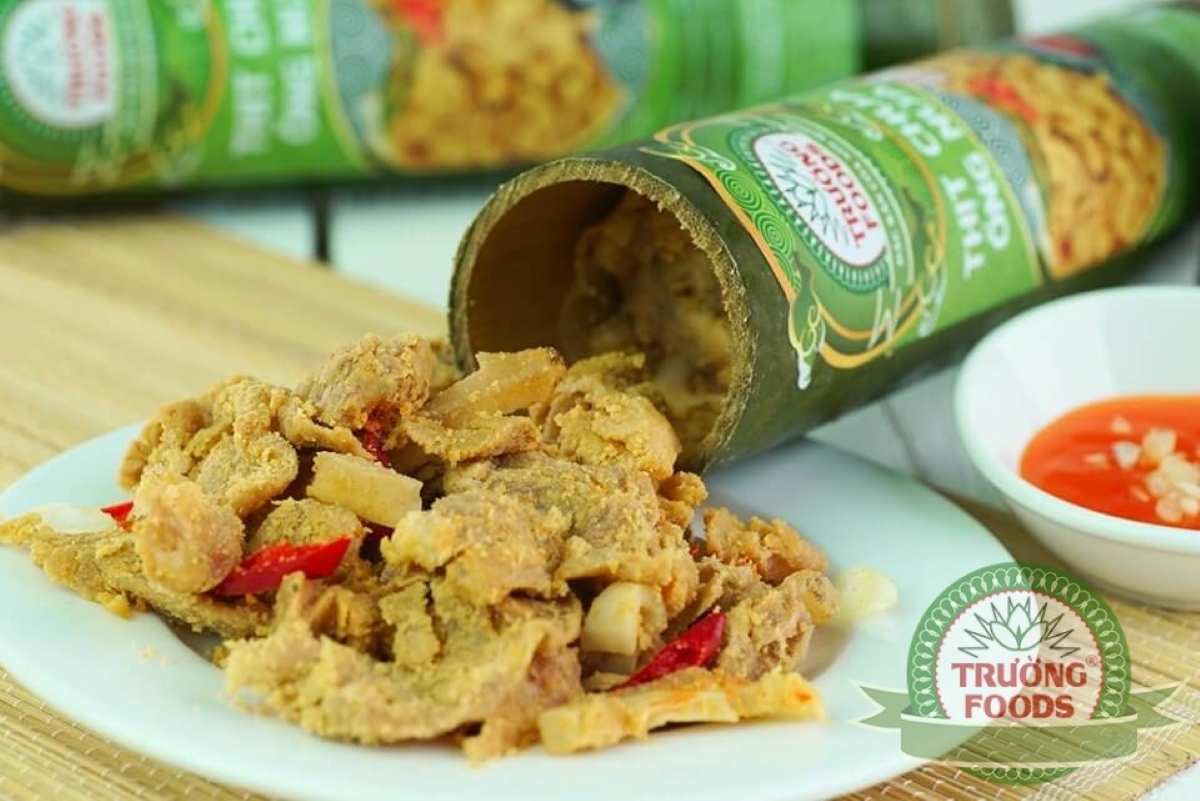
Without preservatives or industrial additives, the seasoned meat is stuffed in bamboo tubes or sealed containers and left to ferment for several days. Once matured, the meat develops a mildly sour taste, a nutty aroma, and a unique fragrance.
“I have tried different versions of sour pork in different places, but Thanh Sơn sour pork has a distinctive taste. I learned that the roasted powder here is made from sticky hill-grown maize, and free-range mountain pork is used to make the sour pork. It makes the difference,” said a visitor from Hanoi.
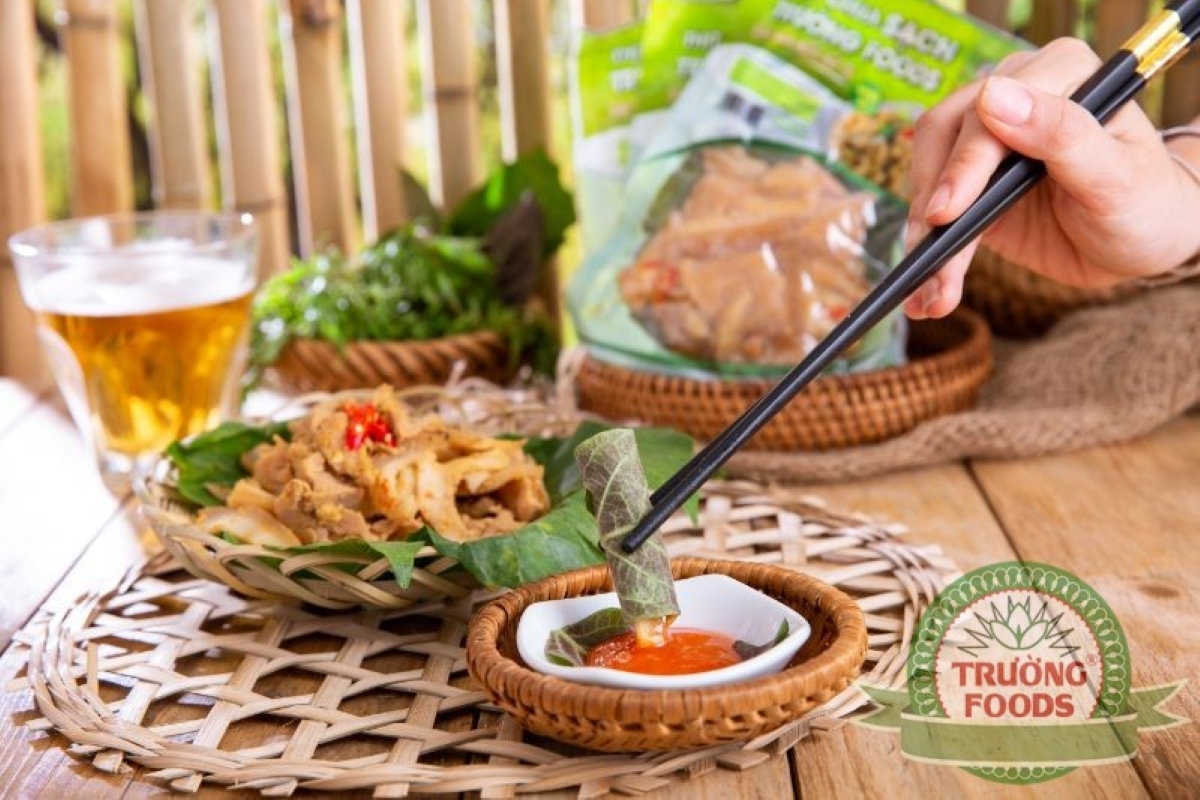
Unlike many elaborately prepared dishes, Thanh Son sour pork carries the rustic simplicity of the Mường people in Phu Tho province. When eating it, people often wrap it in fig leaves, guava leaves, or ming aralia leaves, and dip it in chilli sauce or fish sauce. The combination of the meat’s gentle sourness, the nuttiness of the roasted maize powder, and the slight astringency of the leaves creates a harmonious flavour.
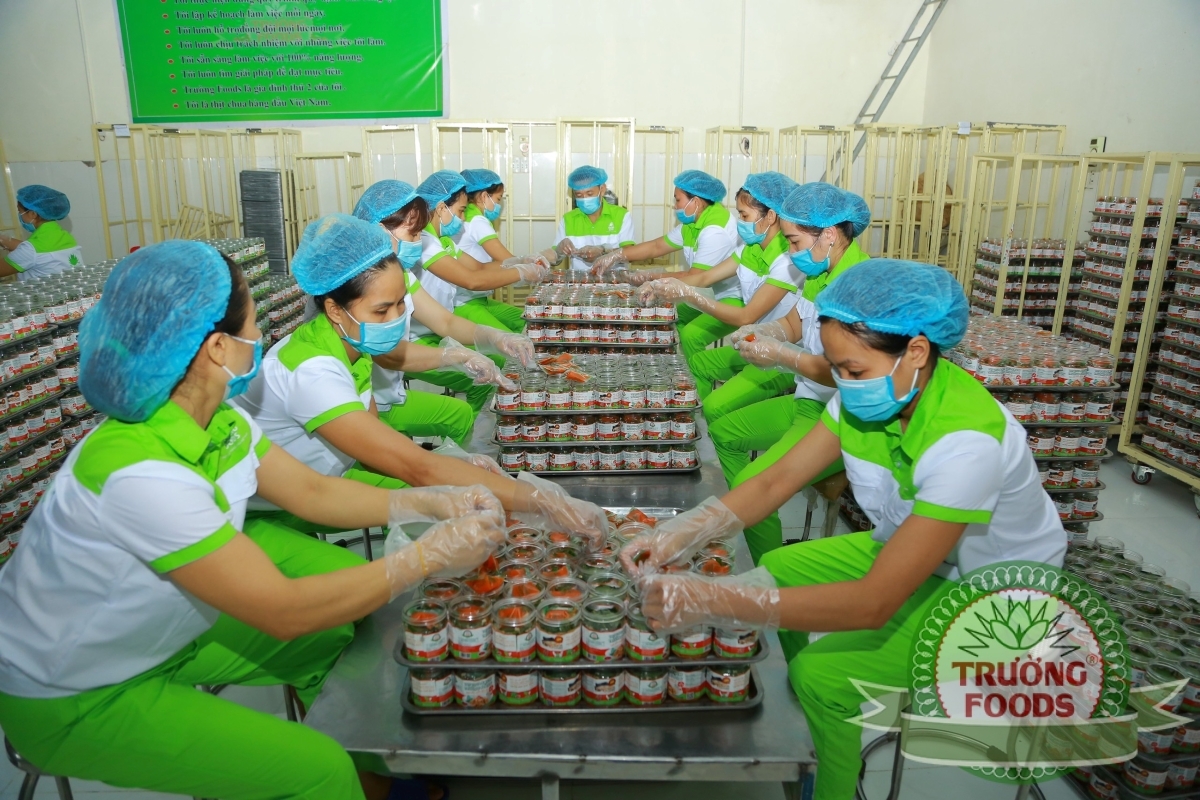
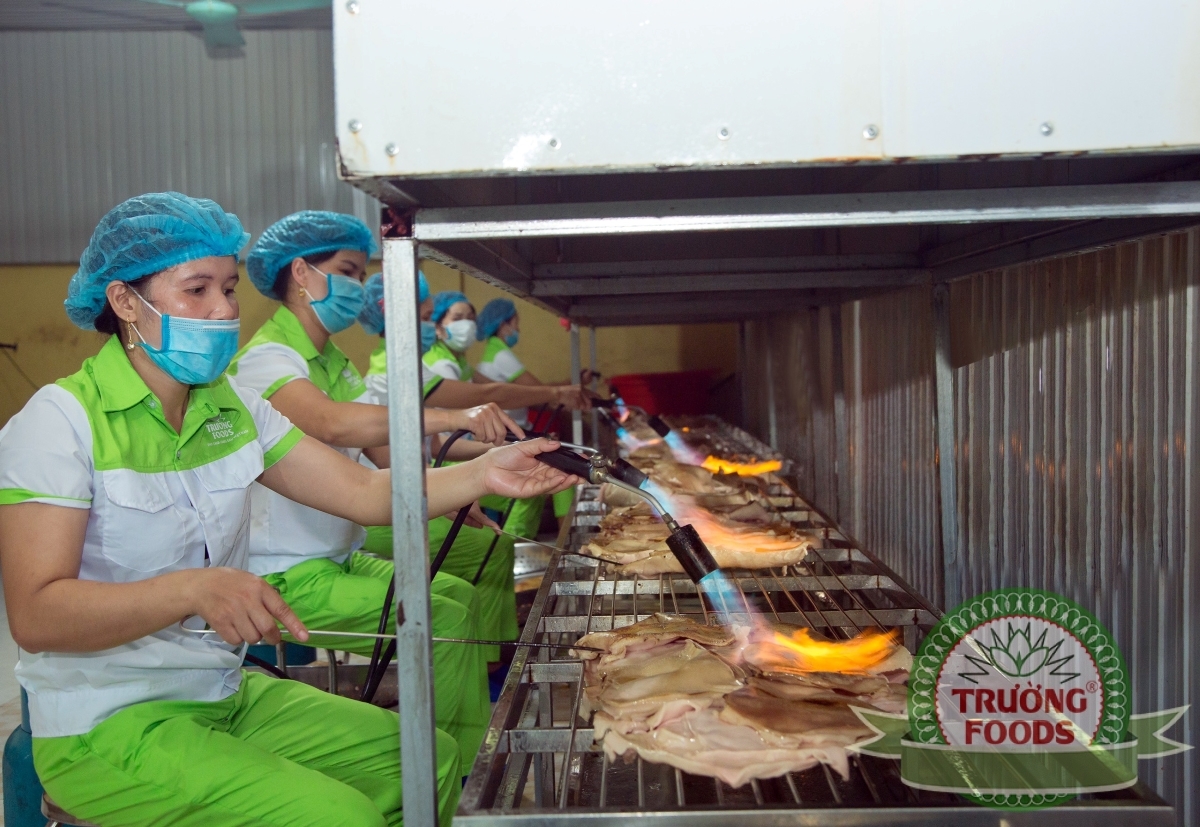
Many local establishments still maintain manual methods in order to preserve the traditional taste. Every step, from slicing the meat and mixing the roasted powder to the fermentation process, requires experience and meticulous care.
“We mix lean meat and pig skin, which are selected from softer parts of the pig such as the rump and loin, with a little fat so that diners can enjoy the richness without it becoming too greasy,” Tran Thi Phuong Thu, Deputy Director of Truong Foods Company, said.
Sour pork is an everyday dish and closely linked to the cultural life of the local people. During festivals, Lunar New Year celebrations, or when welcoming guests, sour pork is always on the menu as a symbol of hospitality.
“At first I was a little hesitant because it is fermented meat. But when I ate it, I found it very unusual in a good way. It’s lightly sour and aromatic, and not difficult to eat at all. It tastes more delicious with fig leaves and dipped in chilli fish sauce or spicy chilli sauce,” a visitor named Thu Thuy said.
More recently, Thanh Sơn sour pork can be found in many other localities nationwide. It has been recognized as a four-star product under the “One Commune, One Product” program.
“We have improved the production stages. Once the meat is about 70% cooked, we slice it thinly and then mix it according to our recipes so the product has consistent quality. Our products are now sold at retail outlets and by distributors nationwide,” said Deputy Director of Truong Foods, Tran Thi Phuong Thu.
By preserving its traditional flavor while gradually adapting to the market, Thanh Son sour meat has enriched Vietnam’s culinary map and opened up economic opportunities for local people.