



On October 7, 2023, Hamas launched a surprise attack on southern Israel, triggering a devastating conflict. Although a ceasefire took effect in October 2025, the violence has never actually ended in Gaza.
Systems collapse
The Gaza Strip continues to see a massive loss of life as essential systems collapse. The Gaza Health Authority in late September said 74,000 Palestinians had been killed and 175,000 injured in Gaza. And severe damage has crippled Gaza’s basic life-support systems.
The crisis has been particularly acute in Gaza’s water and sanitation infrastructure. According to the UN Office for the Coordination of Humanitarian Affairs (OCHA), 91% of households are experiencing moderate-to-high water insecurity. All 6 wastewater treatment plants are currently non-operational and 70% of sewage pumping stations are out of service. As a result, more than 150,000 cubic meters of untreated wastewater are discharged into the environment every day, putting public health at risk and threatening further water contamination.
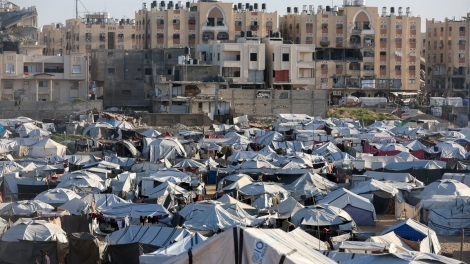
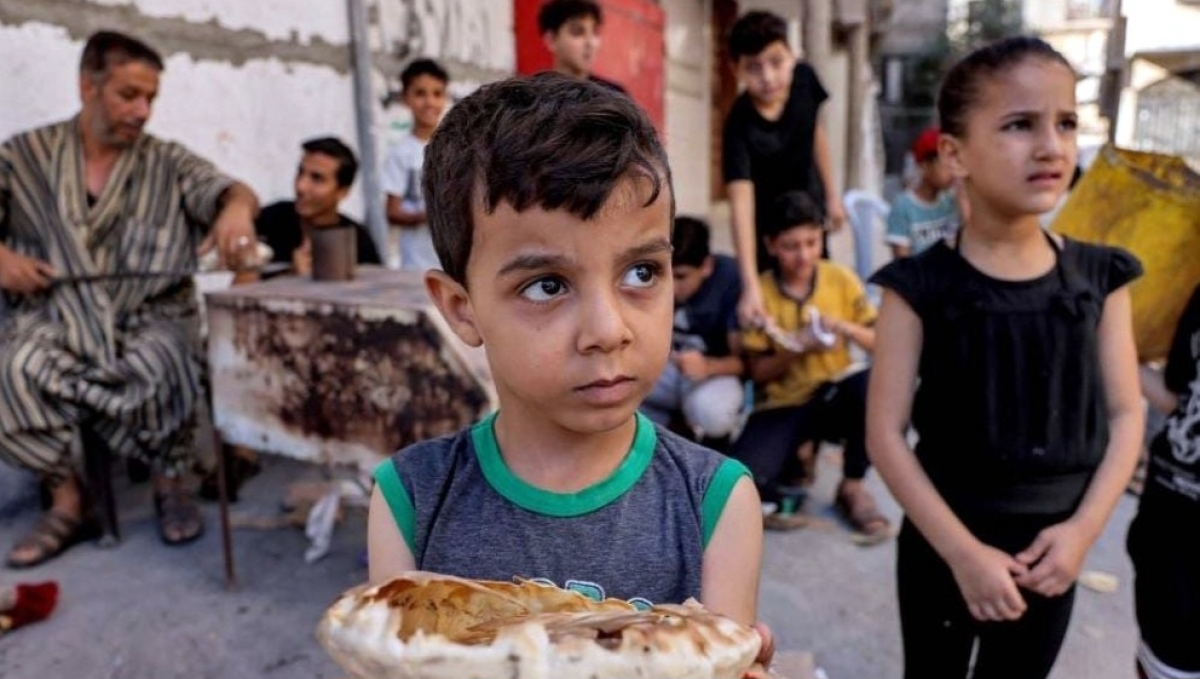
Ramiz Alakbarov. Deputy Special Coordinator for the Middle East Peace Process and Resident and Humanitarian Coordinator of the UN. said: “The humanitarian situation in Gaza in the meantime remains grave. While there have been increased supplies of food and sanitary items in recent months, the health situation remains critical. Infectious diseases remained widespread amid our crowded displacement sites and inadequate water, sanitation, and hygiene conditions. While shortages of medical supplies, fuel, and the overall humanitarian response are compounded by funding shortfalls.”
Daily attacks are destroying buildings and infrastructure. Images on Google Maps in late September showed that 82% of the structures in Gaza had been damaged, 54% completely destroyed. Gaza residents face the constant threat that the building they’re living could collapse at any moment. On September 16, a war-damaged building in Gaza collapsed, killing 20 people.
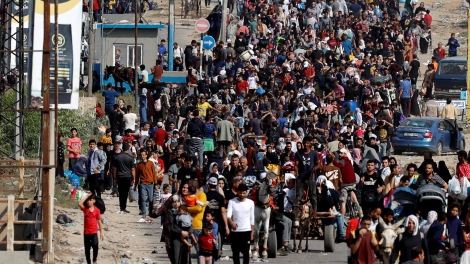
Military operations continue daily in Gaza, with airstrikes, shelling, gunfire, and naval attacks mainly west of the agreed deployment line known as the “Yellow Line.” As a result, almost all of Gaza’s 2.1 million residents live displaced in an ever-shrinking territory.
A report released by the World Bank and the United Nations in April estimated that about 18.5 billion USD would be needed to repair essential infrastructure in Gaza. That figure is equivalent to 97% of the combined GDP of the West Bank and Gaza in 2022.
Political future
Hopes for a brighter future for Gaza now rest on a roadmap being advanced, albeit slowly, by the Donald Trump’s Board of Peace (frequently referred to as the Gaza Peace Council), established by President Trump late last year.
One of the most notable achievements of the Gaza Peace Council is that, in July, Hamas formally agreed to a conditional disarmament roadmap to be implemented in 200 to 300 days. According to the roadmap, Hamas would disarm in designated areas in exchange for a phased withdrawal of Israeli forces. Subsequently, all civil and security governing authority in the Gaza Strip would be transferred to a technocratic body known as the National Committee for the Administration of Gaza (NCAG), with no Hamas representatives.
Finally, to prevent a security vacuum and reduce clashes during the transition, an International Stabilization Force (ISF) would support the NCAG’s efforts to maintain civil order.
The question now is whether the parties to this roadmap, Hamas and Israel, can trust the other side to honor its commitments.
Neil Quilliam, a Middle East expert at the Chatham House think tank in London, said: “I find it very hard to believe that Hamas would want to surrender, and I don't think it would want to surrender or disarm. There are issues around the terminology that's used. Hamas has indicated that it's willing to hand over, but hand over to the Palestinians, not the Israelis, its large pieces of kit. But it's not willing to demilitarize completely. Part of the Israeli condition is that Gaza must demilitarize, which is different to disarming.”
Despite its many challenges, Gaza has also seen some positive developments. On September 23, on the sidelines of the high-level week of the 81st session of the UN General Assembly, the Board of Peace announced a 6-month plan worth 2.45 billion USD covering 66 programs for rebuilding Gaza’s infrastructure and economy.
The Board of Peace’s roadmap has given impetus to Palestinian legislative elections in November and could mark a new beginning for Gaza after three years of conflict.