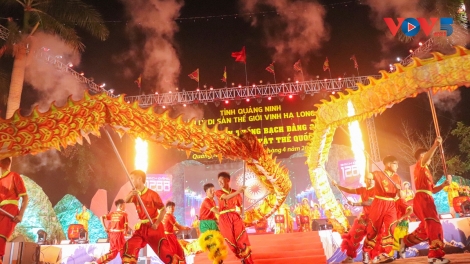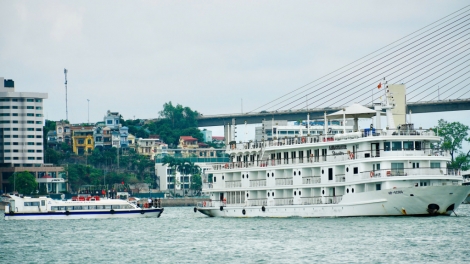




These folk songs once accompanied fishermen on every voyage, helping ease the trials of life at sea while strengthening bonds within the community.
Across the vast expanse of water, simple yet soulful verses rise from two small bamboo boats drifting gently along. There are no dazzling stage lights. Instead, the emerald waters of Ha Long Bay and its limestone islets form the most naturally fitting stage for these lingering melodies, reflecting the rhythm of life in the floating fishing villages.
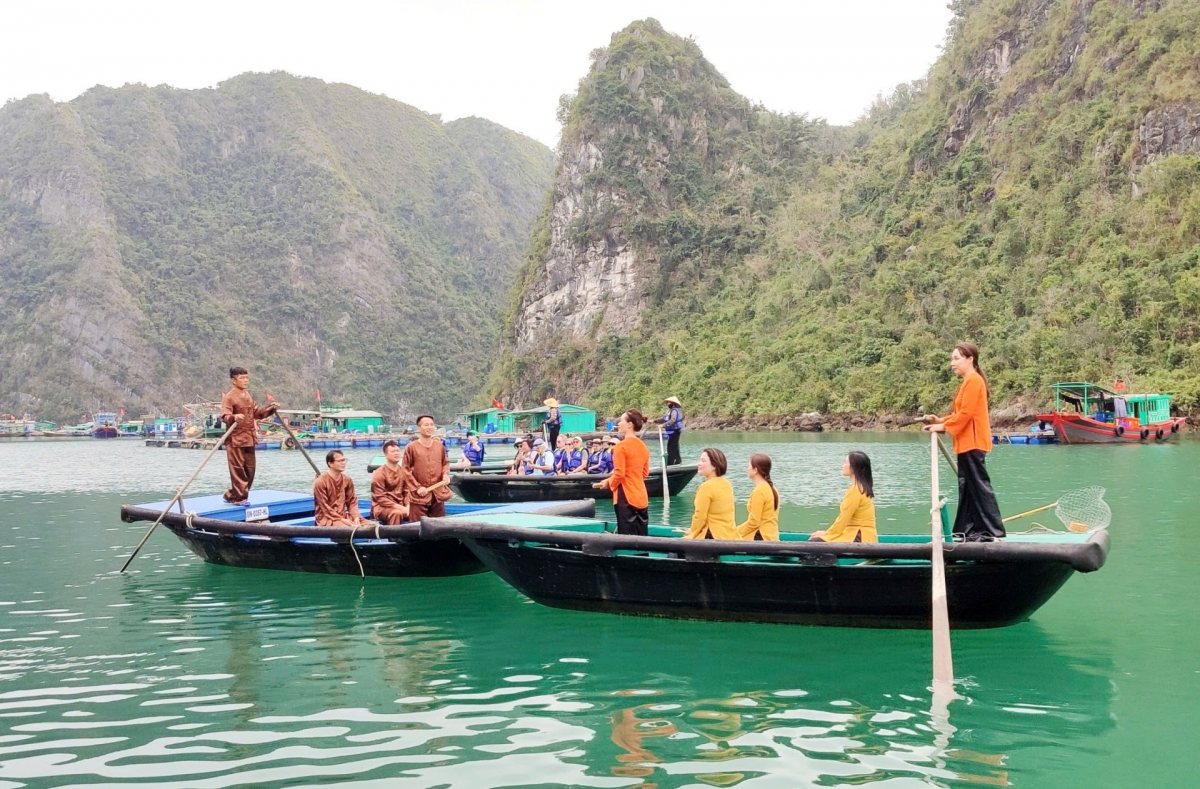
Love duet singing is a distinctive cultural practice of Ha Long’s fishing communities, deeply rooted in their daily labor and maritime life. The songs are exchanges of greetings and encouragement to overcome storms and hardship, and also expressions of affection and hopes for a peaceful life.
Performer Duong Thi Nu said: “In the past, whenever people gathered together, they would sing in response to one another. The men would sing first, and the women would answer in return. The songs were about life at sea and love duets, and also wedding songs. Many lyrics were memorized by our grandparents and parents, then passed down to later generations.”
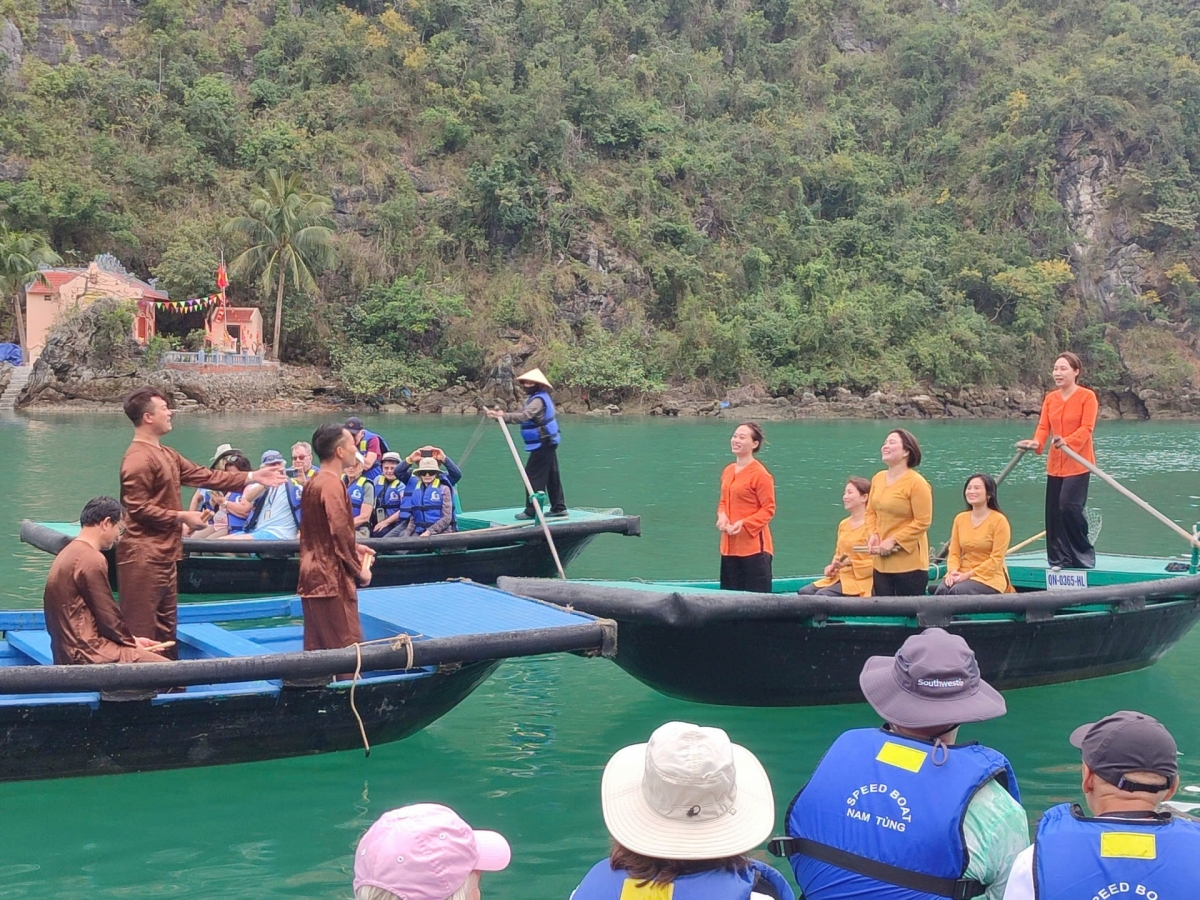
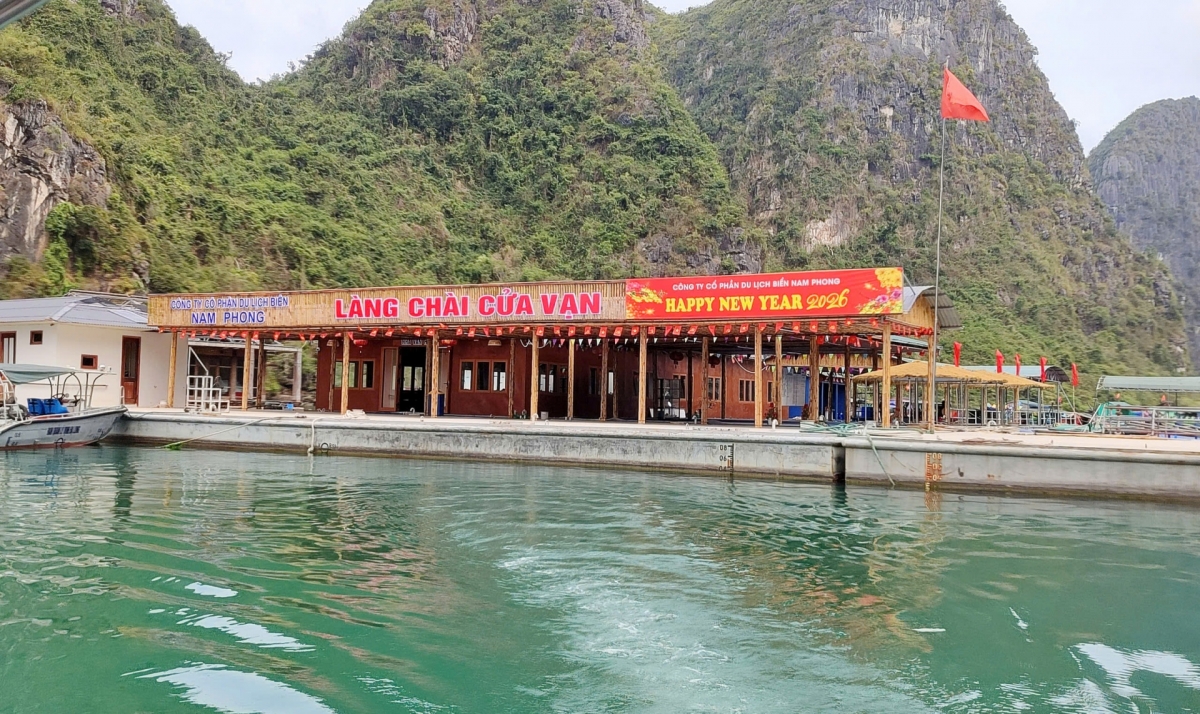
Love duet singing is regarded as a treasured cultural heritage of the fishing villages in Ha Long Bay. In 2017, the performances were introduced to tourists at the Cua Van Floating Cultural Center, becoming a popular cultural tourism attraction. However, in September 2024, Typhoon Yagi caused severe damage, forcing the activity to be suspended.
Determined to preserve this cultural value, local authorities restored the performances in March 2026.
Vu Kien Cuong, Deputy Head of the Management Board of the Ha Long Bay–Yen Tu World Heritage Site, said: “International tourism trends are now shifting strongly toward local experiences and responsible tourism, in which fishing villages and the community life of fishermen are receiving particular interest from visitors. Our viewpoint is that preservation must go hand in hand with development. Most importantly, we must preserve the cultural essence within the living heritage space.”