



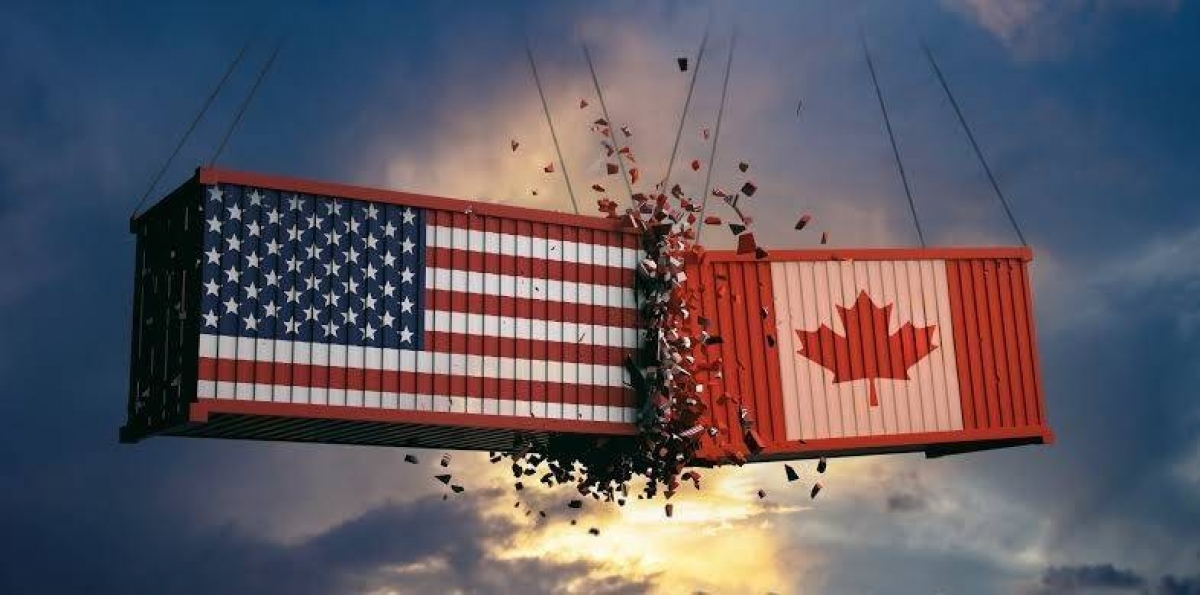
After 3 days of talks that failed to reach a deal, the US imposed a 50% tariff on Canadian goods worth around 20 billion USD, effective August 22. Canada said it will retaliate.
Tit for tat
US Trade Representative Jamieson Greer said in a statement that “despite the US offer to Canada to receive the best treatment of any major exporter to our market, new demands and walk backs of other commitments by Canada have upended the careful balance reached in the past days.”
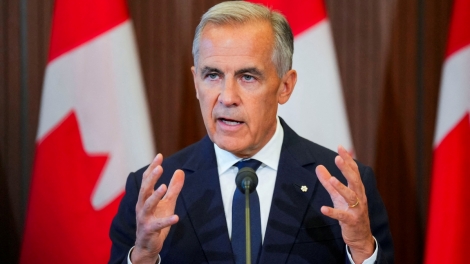
Canadian Prime Minister Mark Carney said the US proposed new terms that were uneconomic, unfair, and undermined the net benefits for Canada, and called into question the reliability of any deal.
The new US tariffs cover about 20 billion USD worth of goods imported from Canada, roughly 5% of the total value of goods imported to the US from Canada last year. Targeted goods include consumer goods, building materials, and healthcare products.
A day later, Ottawa announced retaliatory tariffs of 15, 25, and 50% on more than 700 US products worth around 20 billion USD in total, effective September 8. Prime Minister Carney called it a “dollar-for-dollar” response to protect Canadian workers, farmers, families and businesses. He said Canada will go back to the negotiating table once the United States changes its attitude.
“When the Americans go to the negotiation table first with the right attitude towards our industries and a true partnership, of course, we'll come to the negotiating table. But an attitude at the negotiation table that Canada is a subsidiary of the United States, that Canadian industry is going to be disadvantaged relative to American industry, that we are going to set up terms so that over time Canadian industry is going to face constant headwinds, that's not something we're going to accept.”
Following Canada’s retaliatory move, tensions between the two countries rose again. President Trump signed an executive order Thursday renaming Lake Ontario, which lies on the US-Canada border, “Lake America”. On Monday, the US announced it will double tariffs on Canadian automobiles from 25 to 50% starting in 2027.
“If there's further retaliation from the Canadian side, we, of course, are not going to sit down and take that. Our view is ‘don't retaliate,’ and we have our own trade policy. We'll proceed with it in the way that's best for the United States,” US Trade Representative Greer said.
Damage to both sides
The world community fears that a global tariff war is beginning. Trade agreements between the US and major trading partners are either temporary, like the US-China agreement, or at risk of falling apart, like the US-EU Turnberry deal.
Robert Koopman, a professor at American University and former Chief Economist of the WTO, said Trump regards tariffs as a preferred trade weapon, despite the fact that his “reciprocal” tariffs last year didn’t deliver their intended outcomes.
“The uncertainty as a result of these tariffs is probably more important for long-term economic growth than the actual increase in those tariffs. They often operate in ways – tariffs and other trade policies – that the designers typically do not anticipate. I believe that President Trump, putting tariffs in place last year, did not realize that that would not necessarily reduce the US trade deficit. The US trade deficit increased,” said Koopman.
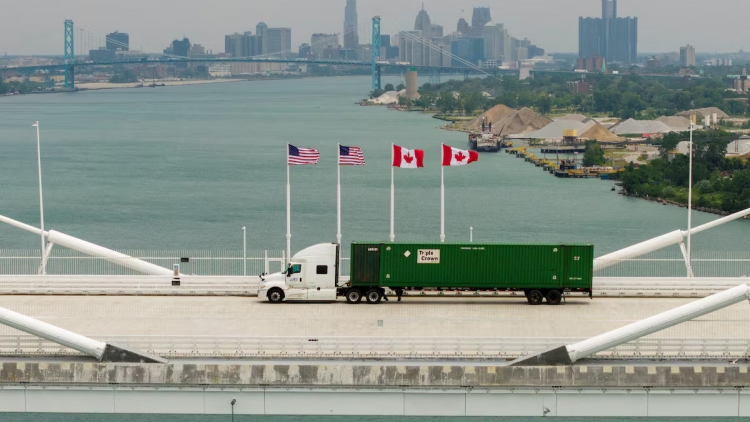
In the short term, escalating trade tensions will damage both the US and Canada. Trade in goods and services between the two countries totaled 880 billion USD last year. 72% of Canada’s goods exports go to the US, and 2 billion USD worth of goods cross their border every day. From an economic perspective, Canada is more at risk. But observers say Prime Minister Carney is receiving strong support, even from members of opposition parties, for his tough stance toward the US.
Analysts also say Trump’s claim that the US does not need Canada is not supported by the facts. There is strong US demand for Canadian goods, particularly energy. According to the US Energy Information Administration, crude oil from Canada accounts for 20% of US oil consumption. The US and Canada have deeply integrated supply chains for car parts and other products, so this trade war will cause the US to suffer significant damage, despite its economy being 13 times the size of Canada’s. It will also affect negotiations to revise the US-Mexico-Canada Agreement (USMCA), one of President Trump’s current priorities.