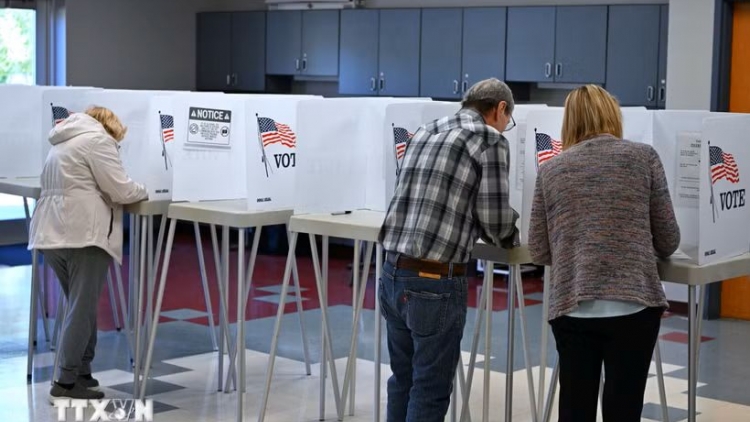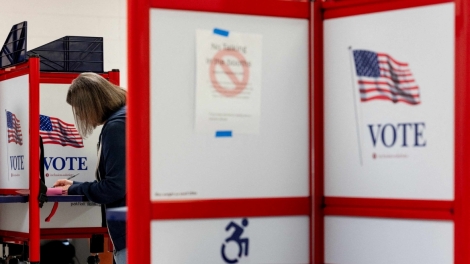




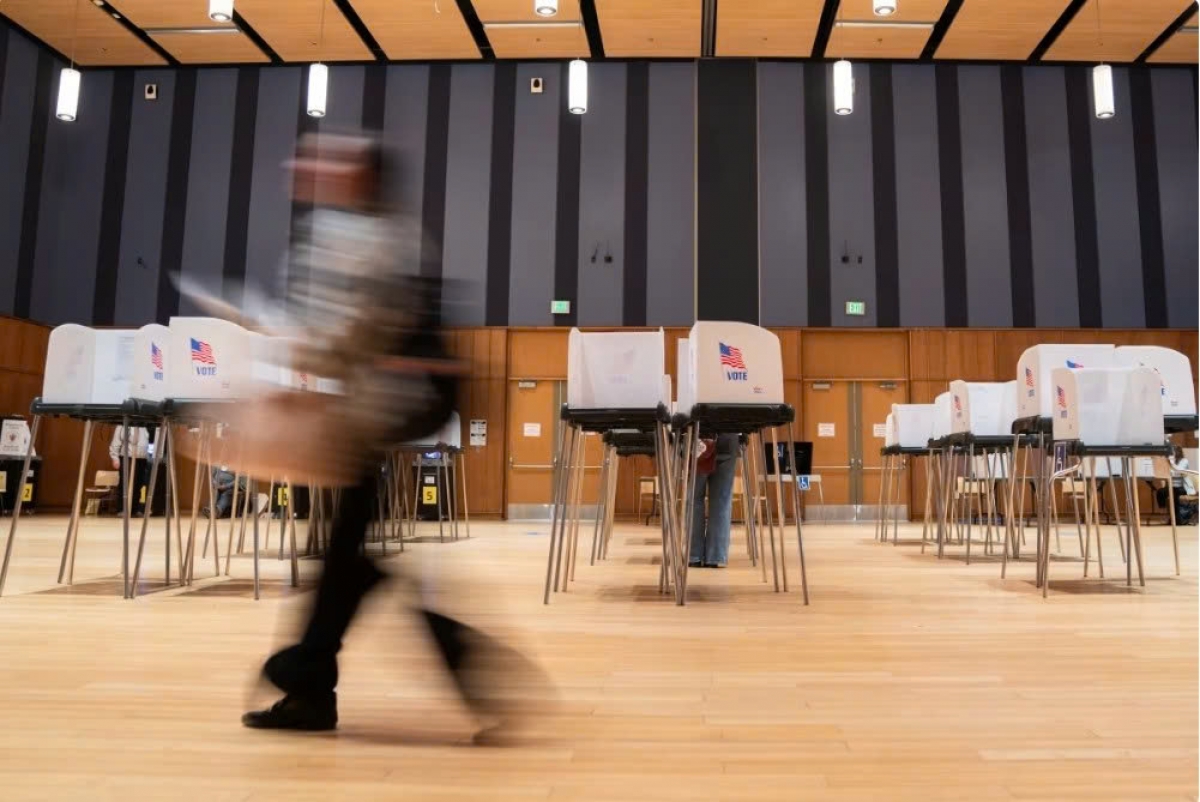
Around 54 million Americans have already voted, either in person or by mail, ahead of Election Day.
A barometer of public sentiment
The midterm elections held halfway through a presidential term are a test of public sentiment toward the administration. Since the mid-19th century, midterm elections have grown in importance and have often resulted in major political shifts.
Observers say this year’s elections could bring such a shift. Most pre-election polls suggest that the Democrats have a strong chance of winning control of the House, and might also score some upsets in Senate races as a result of voter dissatisfaction with a range of domestic issues affecting their everyday life.
Larry Sabato, director of the Center for Politics at the University of Virginia, said: “The foremost issue is cost of living, no question. People are very upset about the price of food which Donald Trump had promised to bring down on day one of his second term and of course it's only increased. The price of gasoline and diesel which has skyrocketed thanks to what most people regard as the mistake of the Iran war. And the war itself. Did that make any sense for America to do that? About 70% of the American public now says not one bit of sense.”
Samara Klar, a professor of political science at the University of Arizona’s School of Government and Public Policy, said the President’s party often loses some support in midterm elections, and it appears likely to be the case this time with President Trump’s approval rating at a record low.
But many variables can combine to make the results of opinion polls uncertain. In recent midterm elections, turnout has ranged from 110 to 120 million voters, about 45% to 50% of the eligible electorate. The level of voter turnout could significantly affect the Republican Party’s fortunes.
Debra Leiter, an associate professor at the University of Missouri-Kansas City, warns that the growing use of AI to generate responses to opinion polls could lead to inaccurate results. “Polling misses, or event AI could give voters a really inaccurate view of what's going on in these elections. My big worry is that affects their decision for whom they're going to vote for or whether they're going to vote at all.”
Implications for foreign policy
The midterm elections could have repercussions well beyond the US’s borders. Over the past two years, Republican control of both chambers of Congress has made it easier for President Trump to advance or change healthcare, energy, and other domestic policies, and foreign policies such as the war with Iran and relations with NATO allies.
But if Democrats make significant gains in the midterms, they might be able to constrain Trump’s actions in several areas. One key issue will be the President’s authority to handle the war with Iran.
Ahead of the midterm elections, US media, citing unnamed administration officials, reported that Washington might resume a large-scale military campaign against Iran if Republicans falter at the polls. Trump has also hinted at this possibility, saying "we still have to take care of one or two sites," while also suggesting that the conflict will be "wrapped up soon, one way or the other."
Wang Jin, a Middle East expert and associate professor at China’s Northwest University, said: "The US approach to Iran is characterized by a seemingly contradictory combination of a hard-line stance and a willingness to engage in dialogue. The hard-line approach has recently dominated the US policy. One reason is that, with the midterm elections approaching, Washington needs to project a tough stance to consolidate domestic support for its Middle East policy. Another is that Washington intends to exert pressure on Iran to secure policy concessions."
The Russia-Ukraine conflict is another major flashpoint that could be affected by the US midterm elections. In late October, US, Russian, and Ukrainian negotiators agreed to meet in Abu Dhabi in the United Arab Emirates in November to resume peace talks.
Russian officials have repeatedly indicated, however, that negotiations will take place only after the outcome of the US midterm elections has been announced. That suggests that Moscow wants to see if there is a change in US foreign policy before negotiations begin.