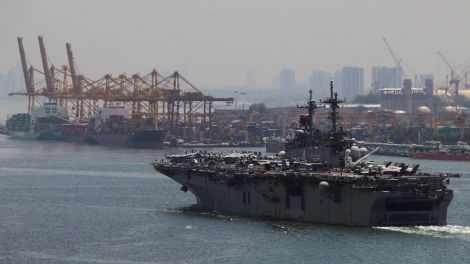




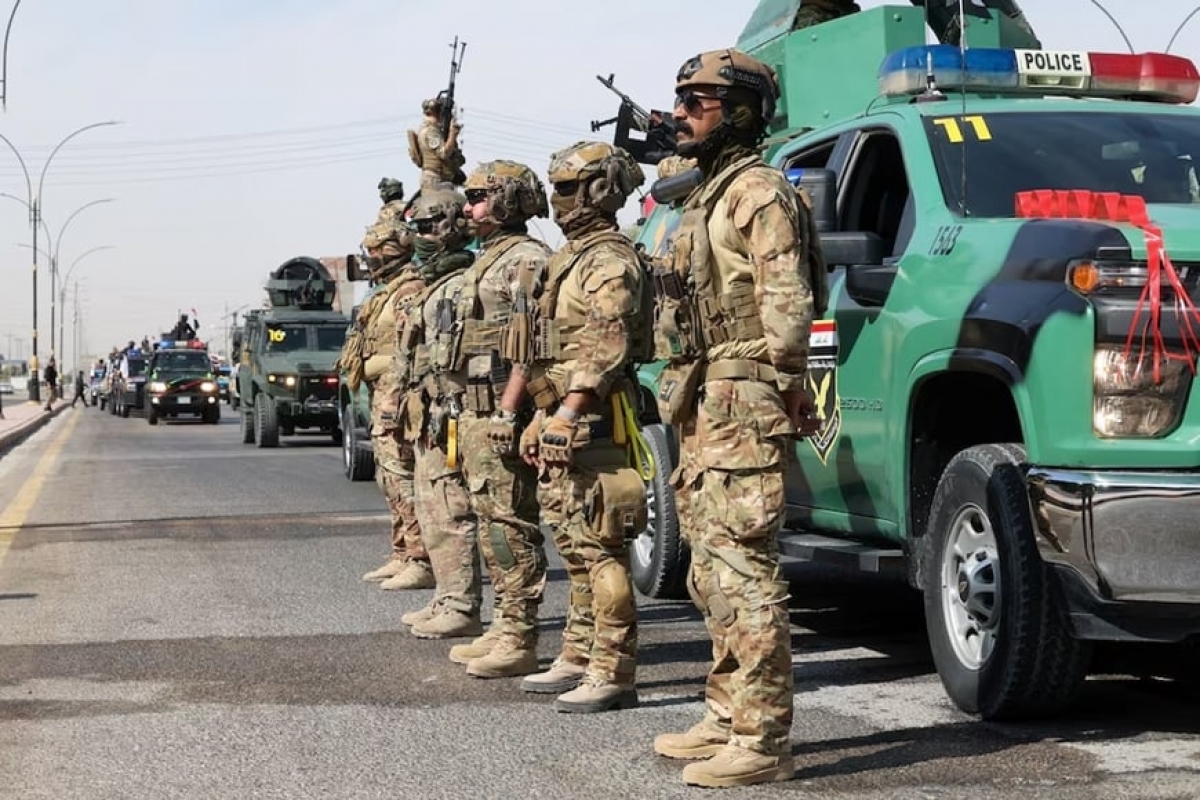
On Wednesday, the Pentagon officially confirmed that all US forces have left Iraqi territory, completing the withdrawal agreement reached by both countries in September 2024.
Ending 20+ years of military presence
Under the 2024 deal, the US-led coalition carried out a withdrawal in phases, first leaving Al-Asad Air Base and other major bases by the end of 2025, and making the final exit at the end of last month. The US forces’ exit also marked the end of the international military coalition “Operation Inherent Resolve”, launched in 2014 to defeat the terrorist group Islamic State (ISIS). A small number of personnel will remain in Baghdad with the sole task of protecting US diplomatic facilities.
This historic event ended a turbulent era that began when the US launched a military intervention in Iraq in 2003. US President Donald Trump delivered a public statement on Wednesday, describing the multi-decade involvement as a "quagmire".
“It's been a long time with very bad decision making that got the US involved in this quagmire in the first place. Many, many years it lasted. But soon that part of history will be over. We're getting the hell out of there. This day is a victory for the United States, a victory for Iraq, and a decisive victory over ISIS, which has been completely decimated, which is the reason we went in there in the first place,” he said.
The Iraqi government and people celebrated the coalition’s withdrawal with great joy. The Iraqi government declared a four-day national holiday, known as “Sovereignty Day”.
In his speech to the 81st session of the UN General Assembly in New York last week, Iraqi Prime Minister Ali Al-Zaidi said, “With the end of the international coalition’s mission in Iraq, we’re moving our relationship with our strategic partners to a new phase, moving from military cooperation to economic and development cooperation in service of our common interests. In this manner, we add to Iraqis’ victory over terrorism a redoubled determination and momentum to finish building our military and security capacities in order to protect our country, our people, and our sovereignty.”
Security vacuum
As the excitement subsides, challenges are emerging for the Iraqi government and the region. The big question now is whether the military vacuum left by the US-led coalition will become a problem for Iraq. With the US-Iran conflict liable to escalate again at any moment, Iran-aligned militias in Iraq are regarding the US withdrawal as a “victory”.
During the transition period the US has pressured Iraq to disarm militias and place them under the government’s command. But Prime Minister Al-Zaidi has delayed the disarmament plan, concerned about internal instability among Shia factions.
Saad Mann, Head of Iraq’s Security Media Unit, said Iraq is controlling weapons through the Popular Mobilisation Forces (PMF), which are part of the Iraqi armed forces, but that effort is at the dialogue stage with some factions and many analysts are skeptical of its effectiveness.
Sajad Jiyad, a senior researcher at the Center for International Policy (CIP) in New York, said, “I want to be categorical in saying there will be no disarming of any groups by the 30th of September. I think that's probably clear to everybody who watches Iraqi politics on a day-to-day basis. The government has been talking about integrating and asking some of these groups to be better assimilated within the PMF as an institution. But I think there is total rejection for anything that's called the disarming. I don't think that's going to happen at all, whether it's the 30th of September or beyond that.”
A big concern for Iraq is the specter of terrorism. Although Operation Inherent Resolve successfully dismantled ISIS control in parts of Iraq, the vacuum left by the coalition’s departure could encourage the resurgence of other jihadist elements. Officials in Iraq’s Kurdish region say Iraq’s internal military and political situations have not stabilized. In the long term, managing sovereignty will remain a difficult challenge for Baghdad.