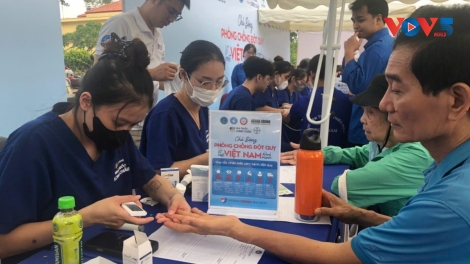




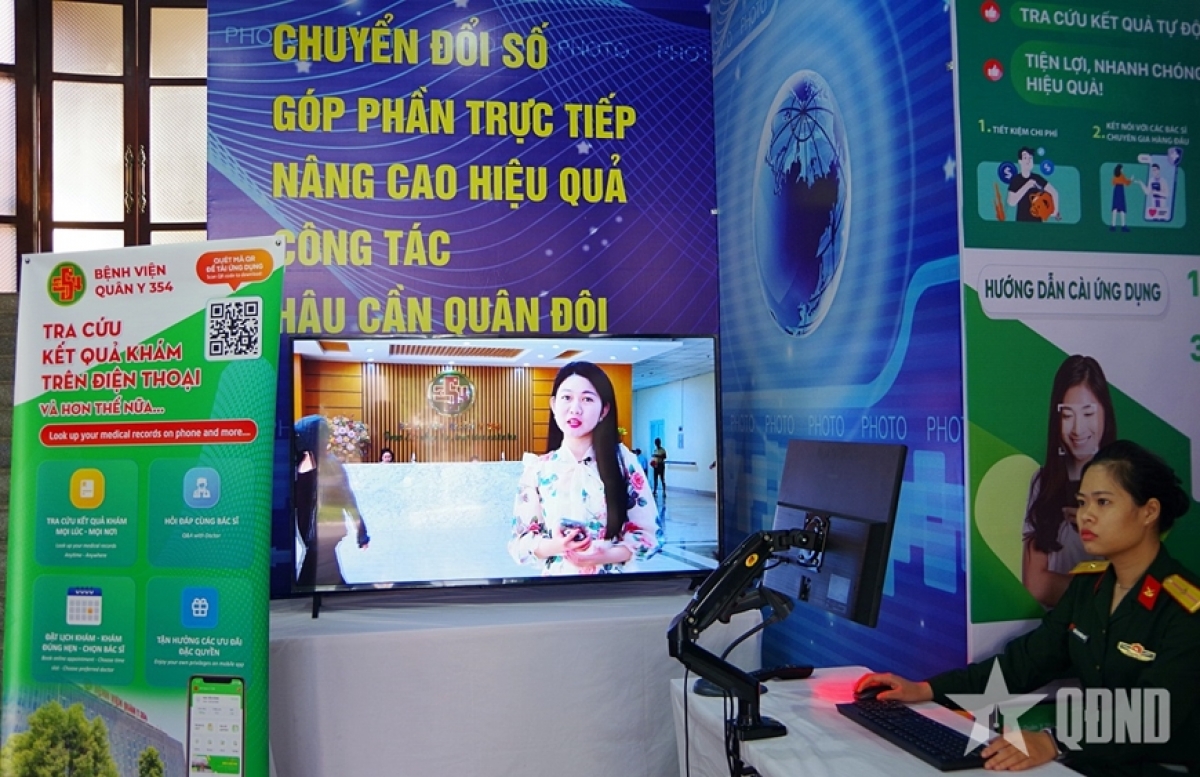
One morning at the outpatient department of Military Hospital 354, patients wait for their turn by following electronic screens displaying their queue numbers. Patients no longer need to carry medical record books with them, but bringing their ID cards instead.
“Patients can now register for their desired examination rooms. Previously, we had to take a queue number and wait in line. It took two steps before we could see the doctors. Now, patients can register directly themselves.”
“The medical examination services are now very fast. Tests are often completed in the morning, and it only takes one to two hours to receive medicine in the afternoon.”
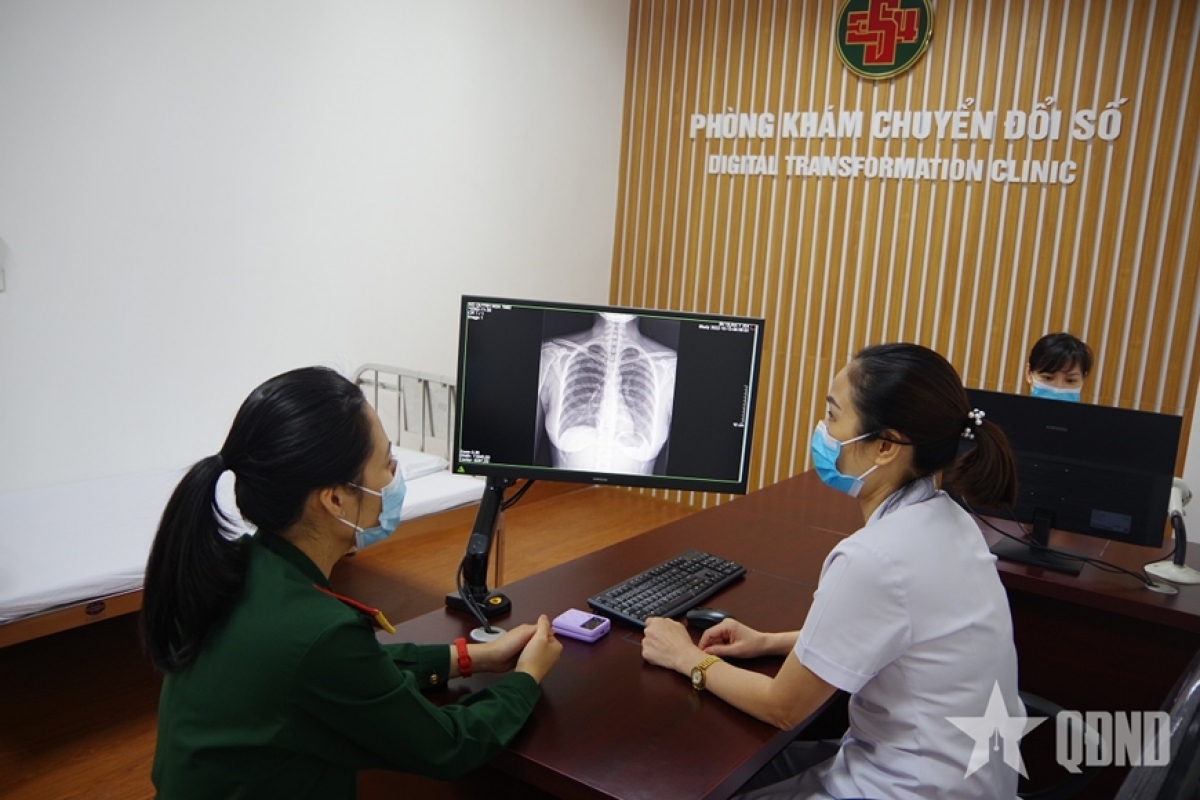
Lieutenant-Colonel Ngo Thi Dao, Head of the Outpatient Department at Military Hospital 354, said: “Patients scan their examination codes when undergoing tests or diagnostic imaging. Their data is already available in the system. They no longer need to carry many papers, nor wait to receive test results. Once the results are available, they are automatically updated onto the system.”
On the hospital’s system, doctors can access the patient’s full health records, from medical history to the latest test results. Major Tran Anh Dung, Head of the Information Technology Department at Military Hospital 354, said: “When patients present their citizen ID cards and scan their faces, their data is verified through the national data center. Patients can register for their desired examination rooms. They don’t have to take queue numbers and wait in line as before.”
At Military Hospital 175, tele-consultations have become popular. A patient on a remote island can now connect directly with doctors in the mainland. Geographical distances, once a major obstacle in military medicine, are gradually being narrowed, bringing life-saving opportunities to many critically ill patients.
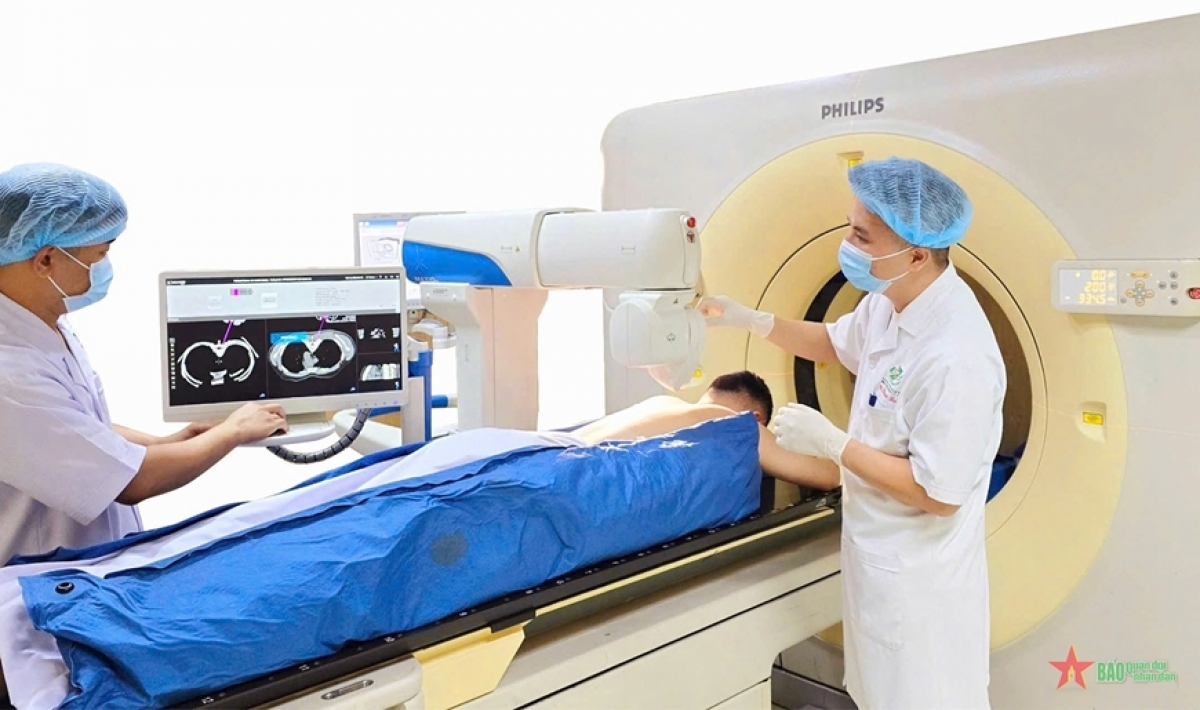
Doctor Truong Trung Hieu of the Diagnostic Imaging Center of Military Hospital 175 said: “The integration of artificial intelligence has helped us reduce 30-40% of the patient setup preparation process. Previously, we had to rely on our professional experience and the machine’s laser beams to position patients in the scanning area, measuring each body part manually before placing the patient, which indeed increased preparation time.”
In the operations room, the hospital management system functions like a “digital brain,” monitoring everything such as patient reception, medicine distribution, and medical supply management. Doctors no longer spend excess time searching for paper records, instead, they search for electronic data on the database center in a few seconds.
Digital transformation is gradually reshaping Vietnam’s military medical sector. Military hospitals are also helping ease the burden on the civilian healthcare system, especially during peak periods such as disease outbreaks, and emergency situations such as natural disasters or military exercises.
Colonel Ha Duy Duong, Director of Military Hospital 354, said: “Digital transformation has brought many benefits and improved efficiency in hospital management, enhanced the quality of medical examination and treatment, and optimized experiences for both patients and healthcare workers. We can digitize medical examination and treatment data, store, retrieve, and share information quickly and accurately, and reduce medical errors and incidents. It supports doctors in diagnostic imaging and early disease detection. Especially, digital transformation creates a large data source, which is extremely important for healthcare management.”
Digital transformation in military hospitals has become an urgent necessity to improve healthcare service quality, optimize management, and strengthen the combat readiness capacity of the Vietnam People’s Army.