



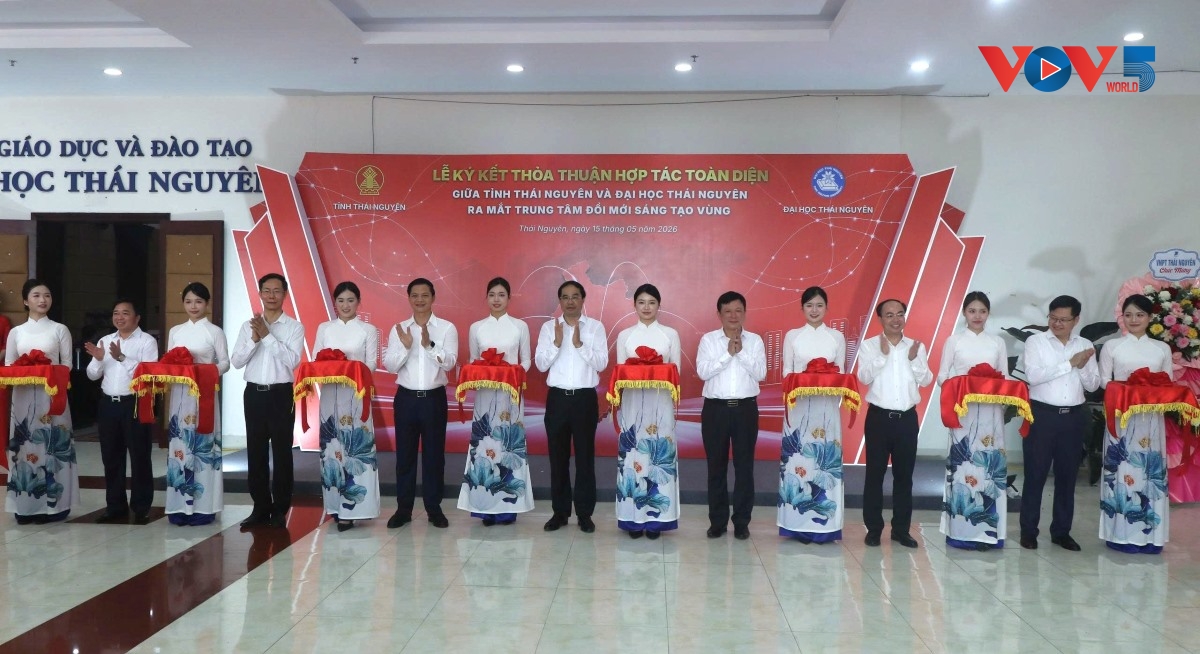
Launched in May 2026, the Regional Innovation Centre under Thai Nguyen University is designed to be a hub connecting knowledge, technology, and resources to promote innovation, entrepreneurship, and technology transfer.
Drawing on the university’s expertise, research resources, and extensive network of partners, the center aims to turn research findings into useful products, rather than simply publishing academic papers.
Associate Professor Dr. Nguyen Thanh Ha, the center’s director, said that as innovation is closely linked to education and training at universities, innovation activities at universities need to be put into practice.
“We hope the center will connect innovative ideas, science and technology products, and research results by lecturers and students with entrepreneurship activities to bring these products to the market and into everyday life,” said Ha.
To achieve this goal, the center has invested in laboratories and research facilities specializing in advanced medicine and biotechnology, materials science for environmental applications, and high-tech agriculture. Researchers also focus on treating persistent organic pollutants in soil and water.
Dr. Nguyen Manh Dung of the center told VOV that they are developing nanomaterials for environmental applications.
“Our students are researching and developing new materials, including composite materials. The laboratory enables us to bring together students from different universities and professors from various disciplines at Thai Nguyen University to work together on research. With modern machinery and equipment, the laboratory facilitates interdisciplinary collaboration, from materials science to other fields, helping develop strategic products in line with national development priorities,” Dung said.
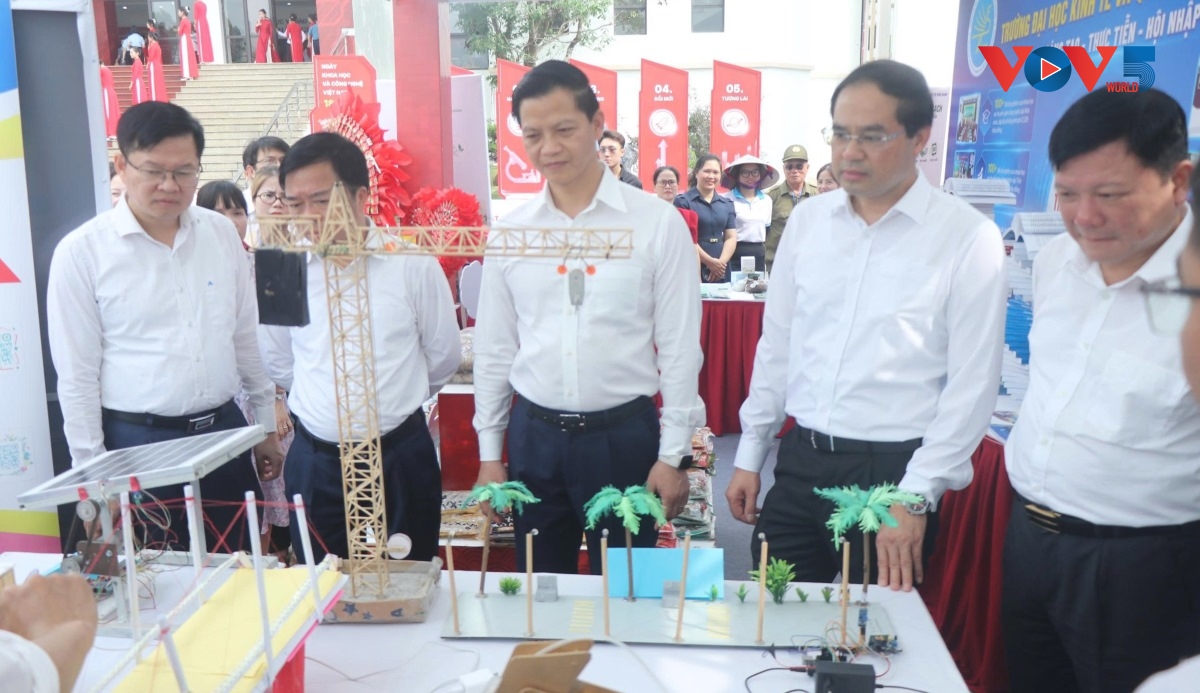
In addition to providing research space, the center also supports business ideas and technology projects from their onsets to product development, connecting project teams with experts, scientists, and business advisors. This helps researchers align with market needs, find partners, and move toward commercialization while supporting higher education reform.
With the establishment of the center, cooperation among the State, universities, and businesses in Thai Nguyen province is strengthened. Under this model, the State provides policy direction and creates favorable conditions; universities contribute skilled personnel, knowledge, and research findings; and businesses identify market needs and adopt new technologies.
Associate Professor Dr. Hoang Van Hung, President of Thai Nguyen University said: “Science and technology promotion will strengthen the capacity of our staff, helping implement our tasks, and more importantly, it has become the lifeblood of the university. Looking ahead, we will focus on research in key national priority areas and fields of particular importance to Thai Nguyen province.”
These include the application of AI; promotion of digital transformation in research and industrial and engineering fields to serve local industrial parks, such as electronics, semiconductors and microchips, and related research areas, Hung noted.
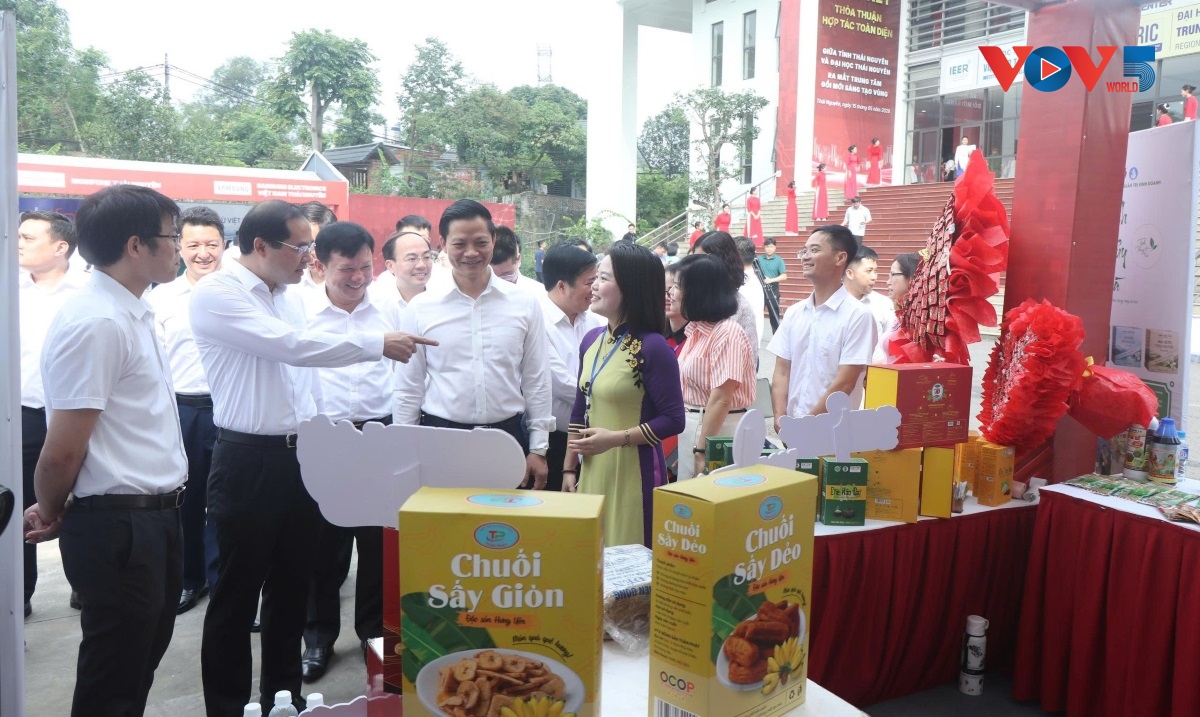
Digital transformation and innovation in Thai Nguyen are not simply about applying technology to management, production, and business. They also involve building a knowledge base and developing a skilled workforce for emerging sectors.
Thai Nguyen University is playing a growing role in this effort, with its Regional Innovation Centre linking knowledge to real-world needs, turning technology into products, and training workers to meet development needs.