




Reporter: Welcome to the show, Dr Hoang Anh. From your clinical experience, how common is conjunctivitis, and why does it spread so easily in big cities?
Dr. Hoang Anh: Conjunctivitis, commonly known as pink eye, is one of the most common eye conditions. It occurs every year and often peaks seasonally, especially during hot and humid weather. In large cities, the disease spreads faster due to high population density and close contact in offices, schools, elevators, and public transport. Viruses can survive on surfaces like door handles, keyboards, and phones, so touching your eyes afterward can easily lead to infection. Infrequent hand hygiene and living in enclosed spaces further accelerate transmission. As a result, during peak outbreaks, eye clinics are often crowded with pink eye patients.
Reporter: Pink eye can have several causes. Could you briefly explain the differences between viral, bacterial, and allergic conjunctivitis?
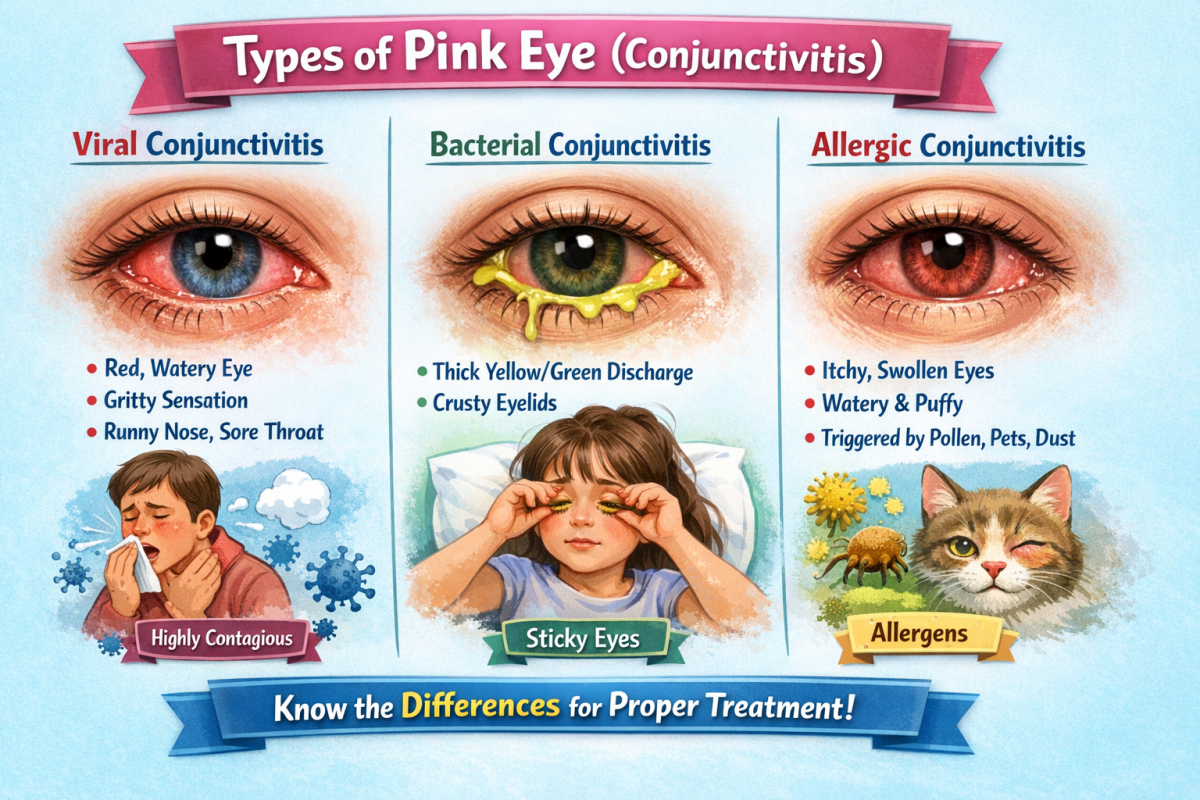
Dr. Hoang Anh: Although people often think all pink eye is the same, there are three main causes, each with distinct characteristics: Viral conjunctivitis is the most common and highly contagious. It usually causes redness, watery eyes, and a gritty sensation, as if there is sand in the eye. Sometimes, patients may also have a runny nose or sore throat because the virus affects the respiratory system. Bacterial conjunctivitis is characterized by thick yellow or green discharge that sticks to the eyelashes, making it difficult to open the eyes in the morning. Allergic conjunctivitis is different: it usually causes severe itching, mild redness, and swelling of the eyelids and conjunctiva. Symptoms often flare up during pollen season, dusty weather, or exposure to allergens like cat fur or dust mites. Understanding these differences helps patients seek the right treatment at the right time.
Reporter: What symptoms should people pay attention to if they want to identify which type of conjunctivitis they might have?
Dr. Hoang Anh: Some simple signs can help differentiate the types: Redness, watery eyes, and a gritty, burning sensation usually indicate a viral infection. Thick yellow or green discharge that makes it hard to open the eyes in the morning is likely bacterial. Intense itching with clear watery eyes that recur seasonally often points to allergic conjunctivitis. If symptoms are mild, without pain, blurred vision, or significant discharge, patients can manage at home by maintaining hygiene, using artificial tears, and avoiding rubbing the eyes. However, if the eyes are very red, painful, sensitive to light, have thick discharge, or symptoms persist for more than a few days without improvement, it is best to see a doctor for proper examination and treatment.
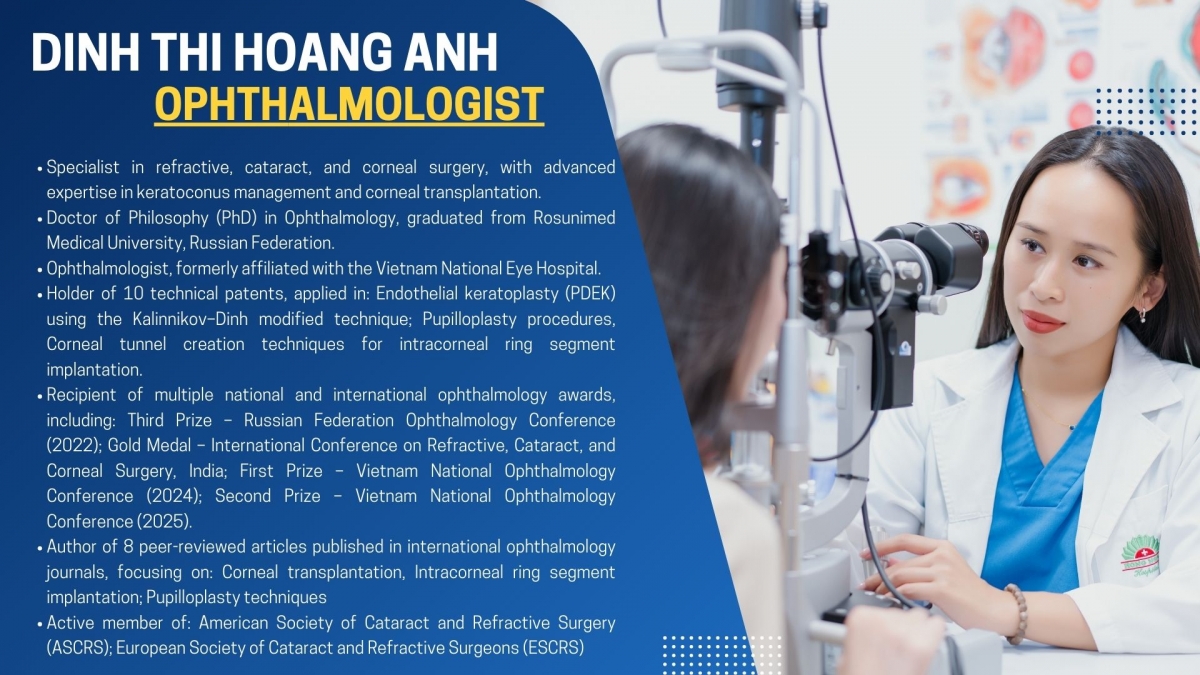
Dr. Dinh Thi Hoang Anh is a specialist in refractive, cataract, and corneal surgery. She holds a PhD in Ophthalmology from Rosunimed Medical University (Russian Federation) and was formerly affiliated with the Vietnam National Eye Hospital. Dr. Hoang Anh holds several technical innovations in ophthalmic surgery, including endothelial keratoplasty (PDEK) using the Kalinnikov–Dinh modified technique. Her work has received several national and international awards, and she is a member of the American Society of Cataract and Refractive Surgery (ASCRS) and the European Society of Cataract and Refractive Surgeons (ESCRS).
Reporter: A lot of patients tend to buy over-the-counter eye drops on their own. What are the risks of self-medicating?
Dr. Hoang Anh: Self-medicating, particularly with corticosteroid-containing eye drops, carries significant risks. These drops may reduce redness quickly but can mask infection, worsening the condition. Prolonged use can lead to corneal ulcers, scarring, increased intraocular pressure, or cataracts. Therefore, never use strong eye drops without a doctor’s prescription. If patients experience deep eye pain, significant blurred vision, extreme light sensitivity, pronounced eyelid swelling, or a persistent sensation of a foreign body in the eye, these are warning signs that the infection may be severe and require immediate medical attention to prevent serious complications.
Reporter: In your experience, can pink eye sometimes lead to complications if treated incorrectly? What can we learn from situations like these?
Dr. Hoang Anh: Yes, I have seen cases where mild viral conjunctivitis became complicated because patients self-administered the wrong medication, especially corticosteroids. This led to corneal ulcers and scarring, causing long-term vision problems. The lesson is never to underestimate seemingly minor eye symptoms and never to use strong medication without medical guidance.
Reporter: Finally, what can patients do to protect their eyes and prevent reinfection while recovering?
Dr. Hoang Anh: During recovery, patients should maintain good hygiene, wash hands frequently, avoid rubbing the eyes, change towels and pillowcases regularly, avoid sharing personal items, avoid swimming, and use artificial tears to soothe the eyes. These habits not only help speed up recovery but also prevent reinfection. Most cases of pink eye are not dangerous, but proper care is essential to prevent complications and limit transmission. Avoid rubbing your eyes, do not use strong medication without guidance, and see a doctor if any unusual symptoms occur. Protecting your eyes means protecting your quality of life.
Reporter: Many thanks to Dr. Dinh Thi Hoang Anh for sharing her expertise with us today. As we’ve heard, simple habits like good hygiene and proper treatment can make a big difference in protecting our eyes. That’s the end of today’s Doctor at Home. Thanks for tuning in, and goodbye until next time.