



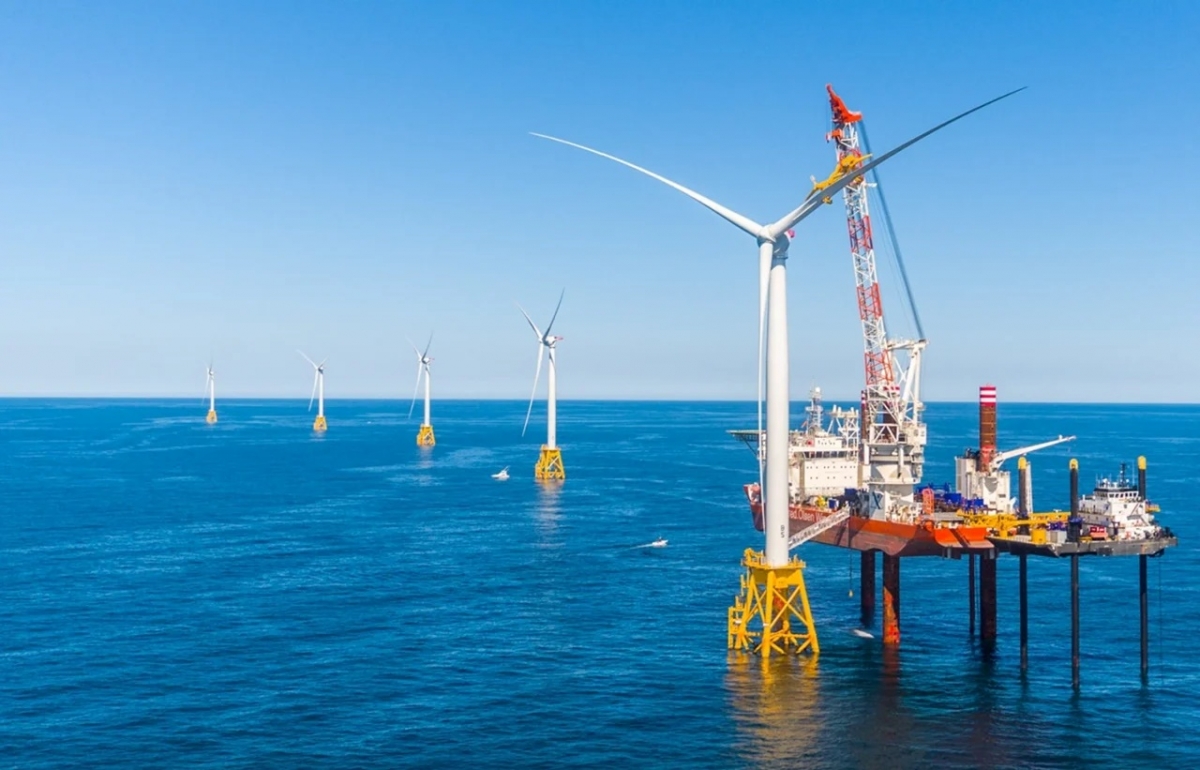
With a 3,260-kilometer coastline, a one-million-square-kilometer exclusive economic zone, and abundant offshore wind resources, Vietnam is well positioned to develop clean energy on a large scale. Offshore wind power will reduce dependence on imported fuels, diversify the power generation mix, strengthen resilience against global market volatility, and safeguard national energy security.
Deputy Minister of Industry and Trade Nguyen Hoang Long said that, with rapid technological advances, offshore wind can become a major source of electricity for domestic consumption and support green electricity exports and green hydrogen production.
“OWP projects are large-scale projects. Our goal is not limited to building power generation facilities, but includes building an offshore wind industrial and service chain, creating jobs for hundreds of thousands of people, increasing revenues, and boosting national industrial capacity. In the long term, Vietnam needs to become a regional and global offshore wind industrial and service hub,” said Long.
Vietnam views offshore wind as a catalyst for developing its marine economy, creating spillover benefits, manufacturing, and technical services. PetroVietnam Technical Services Corporation (PTSC), a subsidiary of the Vietnam National Industry–Energy Group (Petrovietnam), has demonstrated its growing capabilities by exporting 33 large offshore wind turbine foundations last June. The company has been the contractor for offshore substations with a combined capacity of 6 GW over the past five years.
Nguyen Tuan, PTSC's Commercial General Manager, said that a single offshore wind foundation project alone has generated export revenue of between 300 and 400 million USD and created jobs for 3,000 workers in 100 domestic enterprises over 3 years. “Just one contract has brought tremendous benefits in employment, revenue, and foreign exchange, not to mention greater self-reliance. If Vietnam can’t build its own offshore wind power industry, it’ll be unable to develop 16 to 17 GW by 2035 relying on foreign sources,” Tuan noted.
Economists say offshore wind presents a historic opportunity to boost mechanical engineering, supporting industries, construction, maritime transport, and technical services. As localization increases, the sector will generate, not just electricity, but also technological expertise, stronger domestic enterprises, and deeper integration into global supply chains.
Dr. Du Van Toan of the Institute of Meteorology, Hydrology, Environment and Sea at the Ministry of Agriculture and Environment said that in addition to opening up opportunities to form a large-scale production and service supply chain, OWP also creates substantial investment potential for coastal localities.
“Vietnam has 21 coastal provinces and cities, most of which possess favorable wind conditions. According to surveys, the multi-year average wind speed in coastal areas is approximately 6 meters per second or higher, commonly exceeding 7 meters per second—a threshold considered highly suitable for developing utility-scale OWP projects."
"For a standard OWP farm with a capacity of 500 MW, total investment can reach 2 billion USD. If each coastal locality implements a project of this scale, the mobilized investment capital will be enormous, providing momentum for local growth and making a crucial contribution to the nation’s double-digit economic growth target,” said Toan.
Vietnam Electricity (EVN) and the Vietnam National Industry–Energy Group have launched offshore wind surveys in the northern and the southern region. Several domestic firms and investors from Denmark, the US, and Japan have received marine survey licenses covering projects with a combined capacity of 10 GW.
Dr. Du Van Toan said turning this potential into reality will require Vietnam to quickly complete its legal framework and introduce specific policies for offshore wind development. “Relevant laws, namely the Electricity Law and the Law on Marine and Island Resources and Environment, must be amended.”
He added, in fact, both laws are slated for revision this year. The Law on Marine and Island Resources and Environment needs to clearly stipulate marine spatial planning, licensing mechanisms, environmental impact assessments, and policies on the use and lease of sea surfaces and the seabed, creating favorable conditions for investors. The Electricity Law needs to supplement electricity licensing mechanisms, prioritizing in the immediate term projects deployed up to 2030. Land funds for onshore substations and connecting lines must be planned to ensure synchronized transmission infrastructure.
Countries that establish offshore wind supply chains early will gain a competitive edge in the global race for green technology and clean energy industries. For Vietnam, offshore wind is a new source of renewable energy and a strategic driver for realizing its ambition of becoming a strong maritime nation in the decades ahead.