


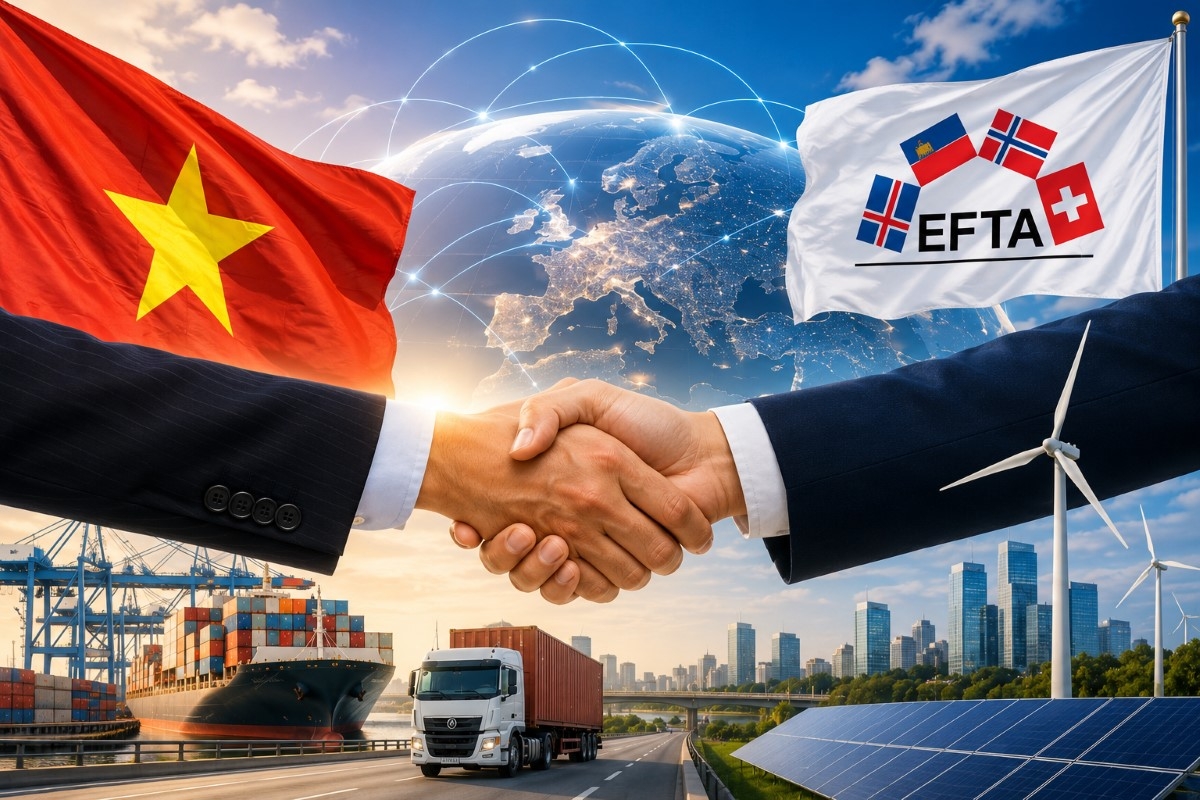
With a combined population of just 15 million, the four EFTA members—Switzerland, Norway, Iceland, and Liechtenstein—rank among the world's wealthiest economies, with advanced industries, cutting-edge technologies, and world-leading innovation ecosystems. The true value of the agreement therefore lies not in the size of the market, but in the quality of these economies. Beyond creating new export opportunities for Vietnam, the pact opens the door to deeper integration into high-value, technology-intensive global supply chains.
Deputy Minister of Industry and Trade Nguyen Sinh Nhat Tan said that the agreement is expected to channel high-quality investment flows from EFTA countries into Vietnam’s priority sectors, including high-tech, processing industries, clean energy, the green transition, innovation, and human resource development. “This will bring not just capital, but opportunities to acquire advanced technology, modern management expertise, and sustainable development models from EFTA nations," according to Tan.
One of the agreement's greatest strengths is its potential to create new momentum for Vietnam's growth. To achieve double-digit economic expansion, Vietnam needs high-quality investment, advanced technologies, and modern governance models to improve productivity and global competitiveness—all areas in which EFTA countries excel.
Equally important, EFTA’s stringent standards will encourage Vietnamese businesses to improve product quality, corporate governance, and competitiveness in international markets, said Julien Guerrier, the EU Ambassador to Vietnam. He added, "Vietnam is open for business, as it’s one of the fastest growing economies in the world. Fast is not always equivalent to high quality, but if you’re able to export to Europe, you’re able to export to anywhere in the world, because we’re the most demanding."
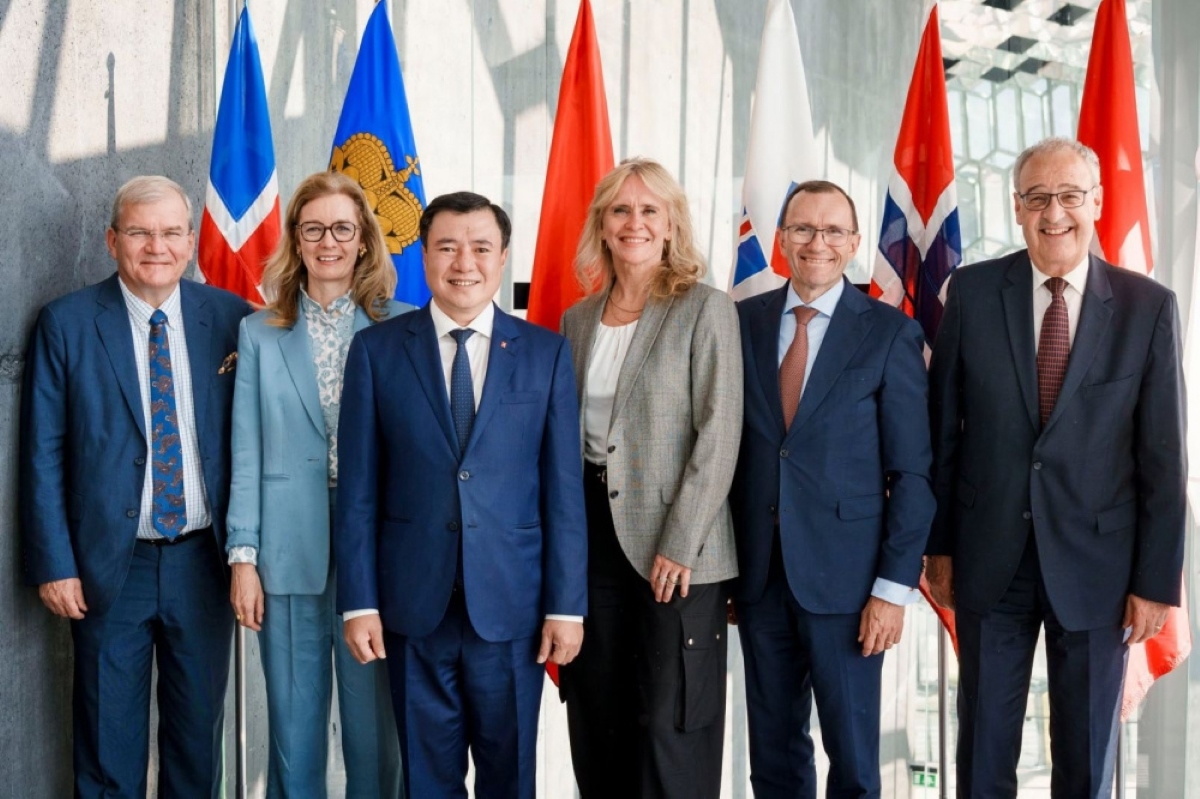
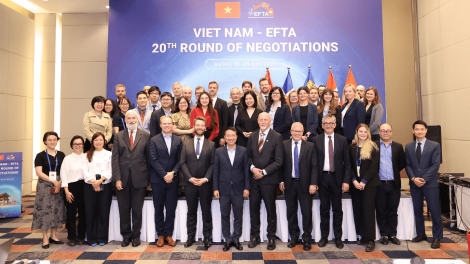
EFTA countries see Vietnam as a market of enormous potential. With political stability, robust economic growth, and a strategic role in regional supply chains, Vietnam is increasingly attractive to European investors. EFTA negotiators had this to say following the conclusion of the talks.
"I think there are many areas where we can cooperate, where Norwegian companies have expertise and know-how that will be beneficial to Vietnam. In the renewable energy space, we are, among other things, very advanced in offshore wind technology, which is relevant for Vietnam, and also in fisheries and aquaculture. We have companies who are present here today, and we can expand on that relationship."
"Vietnam is really a great country. They developed in the last few months and years a lot of very interesting branches, and, for Switzerland, this is very important. For the pharmaceutical, for the tech industry, we have opportunities and we think we can really work with your companies and can invest a lot of money in Vietnam."
"I think the greatest chance is that we can see a lot of opportunities in Vietnam in our field trips – for example, in the production of electric vehicles. I mean, especially small and mid-sized enterprises are very interested in stable political conditions and fruitful opportunities. And the free trade agreement will definitely reduce bureaucracy, increase transparency, and improve processes. This is essential, especially for small companies."
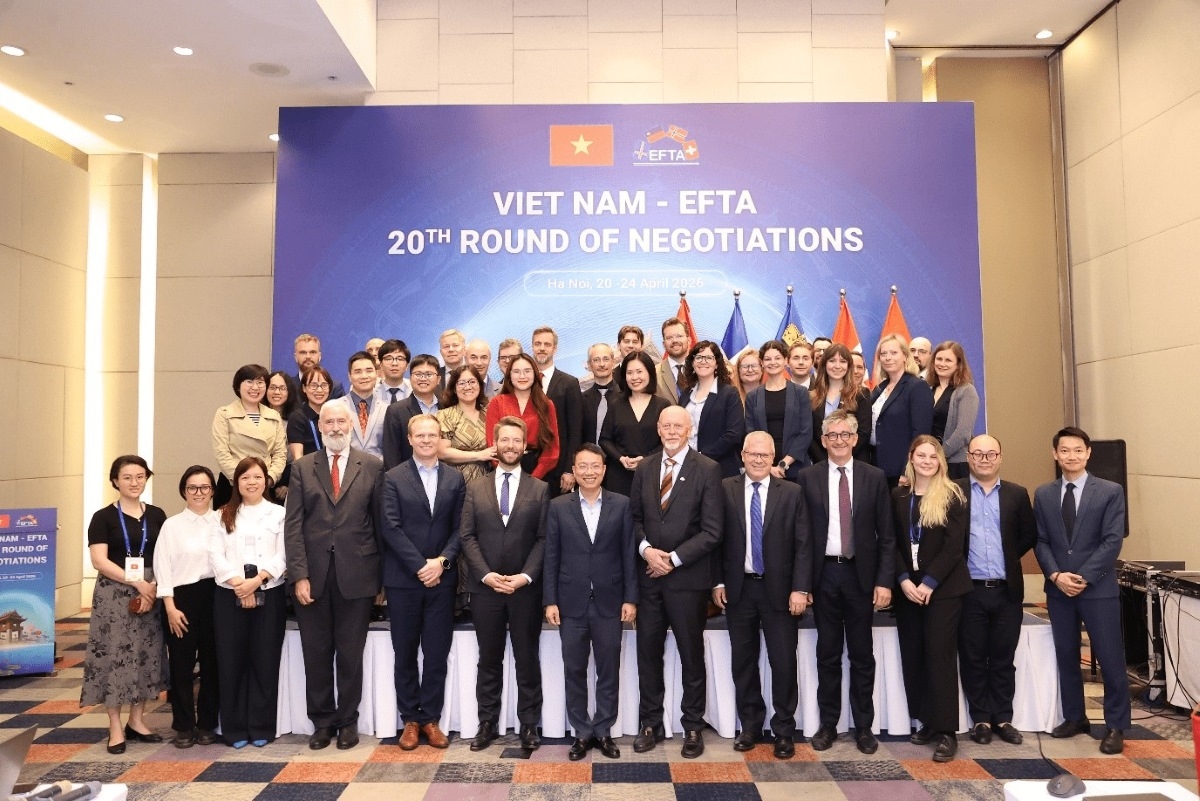
Beyond gaining access to Vietnam’s domestic market of more than 100 million people, EFTA businesses will also be able to use Vietnam as a strategic gateway to ASEAN and to Vietnam’s network of 17 other free trade agreements. The successful conclusion of the EFTA negotiations completes another link in Vietnam’s FTA network and reaffirms Vietnam’s commitment to international integration as a driver of sustainable growth.
As global trade is reshaped by technological innovation, the green transition, and supply chain realignment, the agreement is expected to help Vietnam diversify its markets, attract high-quality investment and technology, and move up the global value chain from a manufacturing base to a trusted, high-value partner. That transformation will create a new engine for Vietnam's long-term economic growth.