The past year marked a series of milestones for Vietnamese culture on the global stage, with UNESCO adding seven new Vietnamese heritage dossiers to its lists. That brings the country’s total number of UNESCO recognition to 77 across all 34 provinces and cities, the highest in Southeast Asia. Vietnamese culture has shined through music, film, cuisine, fashion and lifestyle, alongside advances in technology, digitized heritage projects and renewed interest in folk arts.
Vietnamese culture is stepping onto the global stage with growing confidence, winning international acclaim. In the last days of the Year of the Snake 2025, UNESCO published a message on its website congratulating the Communist Party of Vietnam Politburo’s Resolution 80 on cultural development in a new era. UNESCO Representative to Vietnam Jonathan Wallace Baker talked to a VOV reporter on the organization’s view on Vietnam’s cultural vision.
Reporter: Mr. Baker, Vietnam's Resolution 80 identifies culture as the spiritual foundation of society, a vital endogenous resource and a powerful driving force for the country’s rapid and sustainable development. From UNESCO's perspective, what is your take of this vision amid the ongoing global value conflicts and cultural competition?
Baker: “UNESCO highly welcomes the vision reflected in Resolution 80 by positioning culture as a core resource and a pillar for development. Vietnam is clearly placing people, values, and identity at the heart of its long-term national strategy.
At a time of intensifying geopolitical uncertainties and the growing need for cross-cultural cohesion, this approach is particularly significant for several reasons. First, culture strengthens social cohesion and resilience while helping societies navigate change without losing their sense of direction. It promotes a model of development that is both self-sustaining and globally integrated. Second, recognizing culture alongside the economic, social, and the environmental dimensions fully aligns with the global efforts, of course promoted by UNESCO, to establish culture as a standalone pillar of sustainable development beyond 2030.
And from UNESCO's perspective, the Resolution articulates a very concrete roadmap for structural reform. It builds upon Vietnam's long-standing cultural advocacy and also it will enable Vietnam to navigate the complexities of the digital era and a volatile global landscape.”
Reporter: One of the targets of the Politburo’s Resolution 80 is to develop cultural industries and make them contribute 7% of GDP by 2030 and 9% by 2045. What do you think of Vietnam's potential in realizing these targets?
Baker: “From UNESCO's perspective and our experience at the international level, such targets require sustained political commitment and a long-term vision. In this regard, Vietnam is very well positioned for several reasons. First, there's a clear political commitment with cultural industries now embedded in high-level national policy. Second, Vietnam has a strong base of UNESCO-recognized assets reinforcing Vietnam's international visibility and providing tested frameworks for safeguarding heritage while supporting sustainable local development.
And third, there's a dynamic and increasingly confident creative community, particularly among young people. Finally, Vietnam has growing international convening power and credibility reflected in its governance roles within UNESCO's bodies and its contribution to global cultural agendas, including its leadership promoting the UN Decade for Culture for Sustainable Development.
To translate this potential into real economic contribution, UNESCO would recommend several priority actions. This includes building creative ecosystems related rather than isolated projects by linking creativity with skills, markets, and sustainable livelihoods. It also means investing in people through education, through training, through creative spaces, so the talent can grow and thrive over time. In addition, advancing sustainable and culturally sensitive tourism will be essential, ensuring that growth supports heritage conservation and delivers benefits to local communities.
Finally, strengthening public-private and people partnerships will be key so the governments, businesses, and communities share both responsibility and benefits under clear and transparent governance frameworks.”
Reporter: Resolution 80 sets specific goals regarding soft power as well as the number of cultural heritages that Vietnam will achieve by 2045. How will UNESCO work with Vietnam to ensure that these cultural titles bring tangible value?
Baker: “UNESCO consistently emphasizes that recognition is not an end in and of itself. What truly matters is how these destinations are used to create lasting value for people and for communities. UNESCO will continue to work to accompany Vietnam in three key areas. This begins with improving heritage protection and management. It will work with national and local partners to better align regulations with international standards and to reinforce cooperation among site managers, experts, and communities.
At the same time, UNESCO will continue to promote sustainable tourism together with the private sector, with local authorities, and with communities. Beyond this, UNESCO will also support Vietnam in sharing good practices internationally through mechanisms such as the World Heritage and the Creative Cities Network. In doing so, we help amplify Vietnam's voice and visibility on the global stage.”
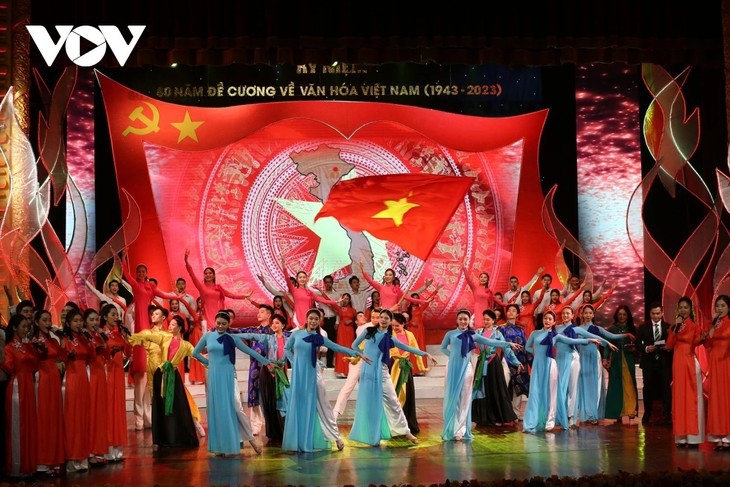 Once Resolution 80 is implemented, culture becomes a solid foundation and an intrinsic strength of the nation. (Illustrative image by VOV) Once Resolution 80 is implemented, culture becomes a solid foundation and an intrinsic strength of the nation. (Illustrative image by VOV) |
Resolution No. 80 of the Politburo has made a new space for cultural creativity based on national spirit and identity, a space that artisans, artists, cultural managers, and pioneering entrepreneurs in the cultural industry are eagerly anticipating.
"We must promote culture as well as preserving it. For me, culture is a process of transformation, and art is a process of interaction, but it must remain firmly rooted in the national spirit. That’s the most enduring element."
"The recent changes are extremely important, even groundbreaking, for the management and exploitation of Vietnam's heritage values. We are promoting cultural heritage, so that heritage does not just lie dormant, but truly becomes a creative value that helps us elevate our national culture."
“For craftspeople like us, the Resolution is very welcome. The first reason is that we can practice our craft and be more connected to it than ever before, and that the Government is showing concern for us. For craft villages, it means more jobs. For craftsmen, it allows us to unleash our creativity, and we can all work together to preserve the cultural heritage passed down through generations and dynasties.”
“Right from the outset, this is a bold and forward-thinking approach, perhaps even ahead of the United Nations, because the UN currently only outlines three pillars of sustainable development, namely economic sustainability, social sustainability, and environmental sustainability, with culture embedded within society. The UN is now preparing to separate culture into a new pillar, so the Party's document and this Resolution have preceded the UN.”
“The most solid, easily accessible, and emotionally resonant foundation is culture. We believe it can have the greatest impact on the audience. Young people love culture and their national heritage. If we can bring that to them in the way they desire, it will spread very powerfully. It will serve as a lodestar for producers.”
Coupled with the rise of the nation's overall strength, Vietnamese culture is gradually establishing its place in the world. The Vietnamese cultural strategy is being studied and explored as a valuable vision for guidance.
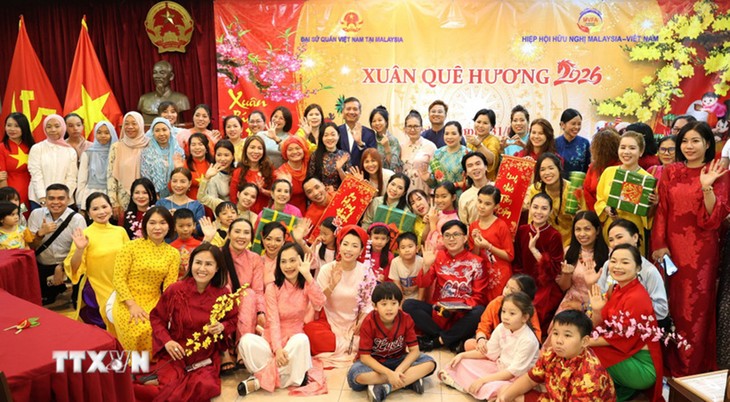 The Spring Homeland Program 2026 in Malaysia. Photo: Vien Luyen/VNA The Spring Homeland Program 2026 in Malaysia. Photo: Vien Luyen/VNA |
Culture – a weapon for winning hearts and minds
To maximize the nation's soft power amid deeper integration, the Vietnamese Cultural Diplomacy Strategy to 2030 confirms the role of cultural diplomacy as an important pillar of modern, comprehensive, professional diplomacy, alongside political and economic diplomacy, contributing to Vietnam's soft power and global standing. Culture brings Vietnam closer to foreign friends and spreads the image of Vietnamese people as friendly, compassionate, creative, and full of aspirations for progress.
Cultural diplomacy, as outlined in the Cultural Development Strategy to 2030, goes beyond simply showcasing inherent values. It aims for greater integration and contribution through deeper participation in international cultural forums. This affirms Vietnam’s role not only as a recipient but also as a responsible partner in global cultural life.
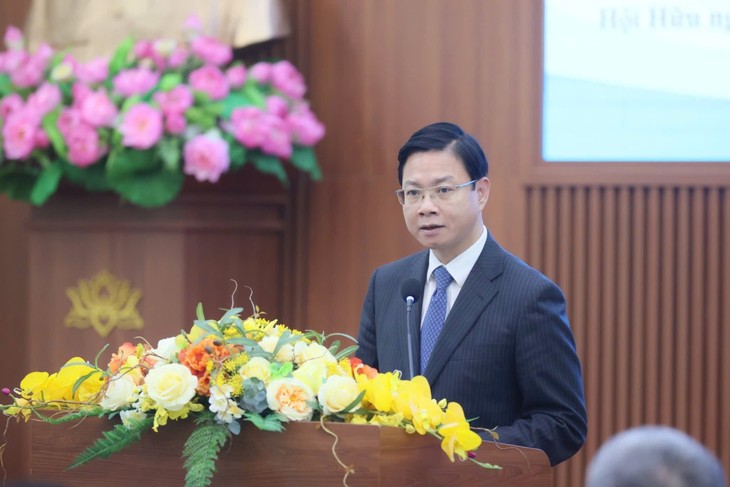 Deputy Minister of Foreign Affairs Ngo Le Van. Photo: An Dang/vufo.org.vn Deputy Minister of Foreign Affairs Ngo Le Van. Photo: An Dang/vufo.org.vn |
According to Deputy Foreign Minister Ngo Le Van, cultural integration in the new era is a process of both opening up and preserving. It’s a process of absorbing the finest aspects of human culture while affirming and spreading the unique values of Vietnamese culture. Integration is not assimilation, it’s adaptation while maintaining the essence of national culture.
“Vietnamese diplomacy is facing a historical mission that demands a shift commensurate with the strategic importance of the new era. We’re promoting deep, effective international integration in multilateral and bilateral cultural forums to spread Vietnam's rich cultural identity to the world. Simultaneously, we’re absorbing the finest aspects of human culture. By doing so, we’ll increase our national soft power and make a worthy contribution to human civilization.”
Amid strong digital transformation, culture is no longer lagging behind, but becoming a crucial resource for development. Cultural products bearing Vietnamese identity in a modern language are introducing Vietnam to the world. Nguyen Thai Hiep, Deputy Director of the Institute for Research Development and Conservation of Southeast Asian Art and Culture, told VOV, “Boosting cultural exchanges between Vietnam and the world will ensure that national identity is both preserved and enriched during integration. Cultural value promotion will make a practical contribution to national sustainable development in the new era.”
The Vietnamese Cultural Diplomacy Strategy to 2030 highlights the role of the Vietnamese community abroad. Over 5 million overseas Vietnamese are cultural ambassadors who preserve the Vietnamese language, customs, and traditions within their communities while spreading Vietnamese cultural values in their host country, delivering a lively, authentic image of Vietnam to international friends.
Cultural diplomacy requires perseverance, creativity, and coordinated efforts, but it’s a way for Vietnam to integrate deeply without being assimilated. Each traditional value, when introduced to the world, retains its own character and enriches the tapestry of human culture. Minister of Culture, Sports and Tourism Nguyen Van Hung said, "We must integrate culturally into the world, transform our mindset from exchanging to cooperating, and use the combined strength of the nation as a foundation for continuing to write the story of Vietnam in the new era. Vietnamese culture is the source of identity and soft power in integration, helping Vietnam maintain its character, spread its values, and stake out its position in global culture."
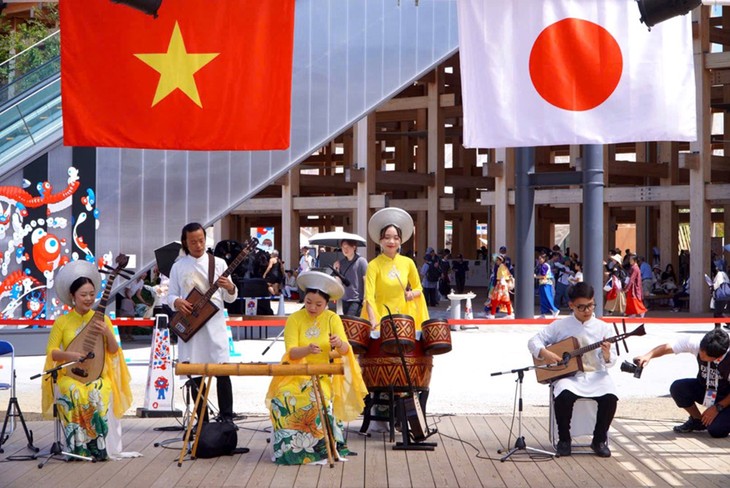 Vietnam-Japan cultural exchange program at World EXPO 2025 (Osaka, Japan). Photo: baovanhoa.vn Vietnam-Japan cultural exchange program at World EXPO 2025 (Osaka, Japan). Photo: baovanhoa.vn |
By shifting its mindset from exchanging to cooperating, Vietnam goes from merely telling its own story to being a responsible member of the international cultural community, ready to share its experience, work to preserve heritages, champion cultural diversity, and achieve sustainable development.
Cultural integration in the new era is not a trade-off, but a journey of enriching national identity with the finest elements of humanity and enriching the world with the unique values of Vietnamese culture. On this journey culture will be a spiritual anchor and soft power that helps Vietnam confidently integrate while firmly asserting its identity and position in global culture.