(VOVWORLD) - The United Nations, the world’s most important multilateral organisation, is facing severe financial troubles. A budget deficit is hampering its essential operationsand threatening to weaken its role in the multilateral order.
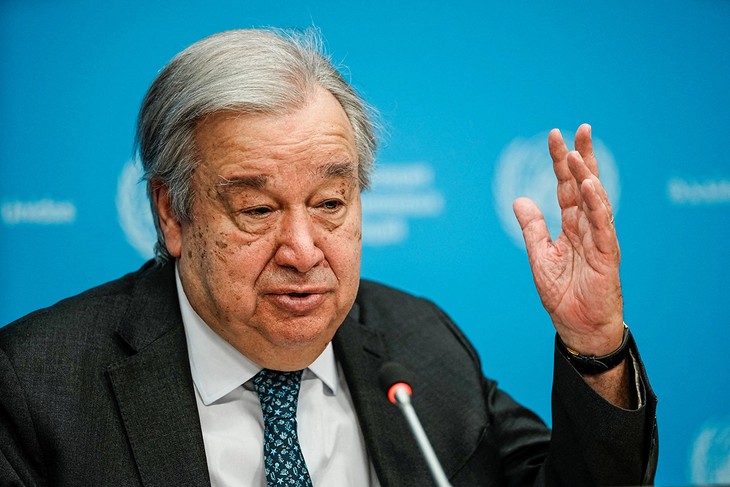 UN Secretary-General António Guterres (Photo: REUTERS/Eduardo Munoz) UN Secretary-General António Guterres (Photo: REUTERS/Eduardo Munoz) |
UN Secretary-General António Guterres sent a letter to all 193 member states on January 31, saying that the organisation is at risk of "imminent financial collapse."
Budgetary difficulties
The letter underscores the gravity of the UN’s current financial situation. Guterres has cited unpaid fees and a budget rule that forces the global body to return unspent money.
Last November, Guterres warned that returning nearly 300 million USD in credits would trigger a liquidity crisis for the UN budget this year. And now they’re facing that crisis.
Under UN regulations, member states contribute financially based on the size of their economies. The US and China account for 22% and 20% of the organisation’s budget. The UN’s financial situation worsened when the Trump administration cut funding for many UN agencies and declined to make its mandatory contributions to both the regular budget and the peacekeeping budget. President Trump has said the United Nations has not lived up to its potential and some of its agendas have not aligned with US interests.
The other problem is the UN’s complex financial spending mechanisms, under which it must disburse funds strictly according to previously approved mandates; otherwise, it must return unspent funds to member states, rather than reallocating the money to other tasks.
UN Deputy Spokesperson Farhan Haq said, “Although 150 member states paid their dues last year, we ended 2025 with a record 1.56 billion dollars in outstanding dues, which is more than double that of the previous year. So unless either the payments come in or we're not compelled to return the monies that we are not able to spend because we didn't receive the budget, unless one of those two things happen, we face a real danger of running out of money.”
On the UN’s 80th anniversary last year Secretary-General Guterres established a task force known as UN80 to seek cost-cutting measures and improve operational efficiency. Member states subsequently agreed to cut around 7% of the 2026 budget, bringing it down to 3.45 billion USD. However, financial difficulties persist, and the UN could run out of money by July.
Several UN agencies, such as the World Health Organization (WHO) and the Office of the UN High Commissioner for Human Rights (OHCHR), have seen significant budget cuts. OHCHR received only 191 million USD last year, despite a previously approved General Assembly budget of 246 million USD.
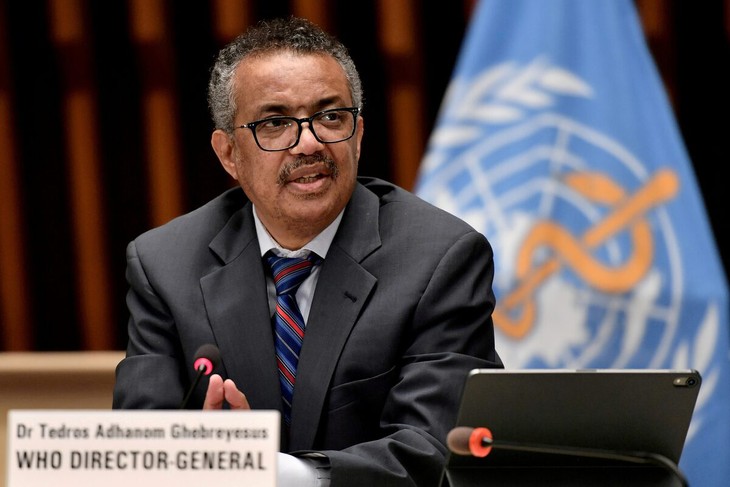 WHO Director-General Tedros Adhanom Ghebreyesus (Photo: Fabrice Coffrini/Pool via REUTERS) WHO Director-General Tedros Adhanom Ghebreyesus (Photo: Fabrice Coffrini/Pool via REUTERS) |
Risks to the UN’s role
Financial difficulties are impacting all UN operations. OHCHR has downsized its staff and scaled back or terminated many programs worldwide. Last year, its human rights monitoring missions were sharply cut back. UN High Commissioner for Human Rights Volker Türk said that, while the approved budget for its operations in 2026 is 224 million USD based on last year’s developments, it’s now calling on the international community to make voluntary contributions of around 400 million USD for its activities this year.
The WHO is planning major staff cuts. WHO Director-General Tedros Adhanom Ghebreyesus said its payroll for 2026-2027 will fall short 560-650 million USD, about 25% of its personnel costs. With the US, the largest budget contributor, withdrawing from the WHO early this year, the organisation will face a budget deficit of about 2.5 billion USD over the next three years. As a result, the WHO will have to significantly reduce its workforce, particularly at its headquarters in Geneva, Switzerland, and close several regional offices.
Observers say the UN financial crisis poses big challenges for the international community, as the problem goes beyond financial constraints and reflects an intent to undermine the UN’s role in addressing global issues.
Veronika Fikfak, Professor of Human Rights and International Law at the University of London, said, “A number of countries have not paid their contributions. In previous years countries would step in and filled up. However in the last five to 10 years, we are really talking about a budgetary crisis where big countries are refusing to pay their contributions for a number of different reasons. What it has meant is that a number of institutions of the United Nations is unable to perform its work; it's unable to plan; it's unable to be strategically present and discussions. I want to underline that this is also been a strategy to make an institution that was considered big and important in international relations to make it small and inefficient.”
Her assessment is echoed by many other experts, who warn that if the “non-contribution” effect spreads, the UN will lack the capacity to handle global responsibilities related to peace, security, and social progress. That scenario would pose significant risks for countries at a time when the world is experiencing its most intense geopolitical upheavals since the end of the Cold War.