(VOVWORLD) - The 62nd Munich Security Conference is seen as an opportunity to set new rules for security and political dialogue between Europe and the US at a moment when the transatlantic alliance is experiencing unprecedented strains.
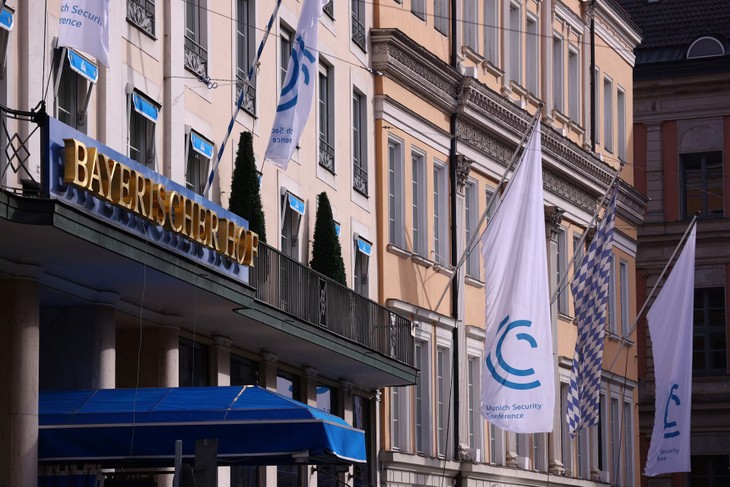 Bayerischer Hof Hotel where the 62nd Munich Security Conference takes place. (Photo: Thilo Schmuelgen/Reuters) Bayerischer Hof Hotel where the 62nd Munich Security Conference takes place. (Photo: Thilo Schmuelgen/Reuters) |
The Munich Security Conference (MSC) will take place from Friday to Sunday in Munich, Germany, convening 65 world leaders, including German Chancellor Friedrich Merz, generals, high-level policymakers, and about 100 foreign ministers and defense ministers, including US Secretary of State Marco Rubio.
A pivotal moment
On Monday, the MSC organizers released the Munich Security Report 2026, highlighting key developments and trends shaping the current global security and political environment. The report notes that certain policies and approaches adopted by major powers, particularly the US, are having significant impacts on international institutions and order.
It says the US’s policy changes might end certain deadlocks, but could also accelerate a trend toward greater self interest and a transactional approach to international relations. The report says the US’s new foreign and security policies threaten multilateral mechanisms, from global trade to humanitarian assistance. Washington’s commitment to Ukraine is another key issue for discussion.
According to MSC Chairman Wolfgang Ischinger, US allies have relied for decades on consensus and shared principles of international order, but the degree of consensus is changing, raising questions about the future of transatlantic cooperation. In this context, the attendance of a US delegation that includes senior government officials, members of Congress, and governors, is very important.
“Transatlantic relations are currently experiencing what I consider to be a significant crisis of confidence. That’s why it’s particularly gratifying that the American side is taking such a keen interest in Munich,” said Ischinger.
Sharing the view that international relations are at a turning point, political analyst Moritz Weiss of Munich’s Ludwig Maximilian University said European countries are being hit hard by these changes and are starting to realize that globalization has come to an end and power is replacing diplomacy.
“I think the challenge that those decision makers are facing at the moment are really, first of all, that the threat and the use of force has become an instrument, a means of policy again. That is a challenge because we used to live in an era where we always had the premise to resolve our conflicts peacefully. So that is really a change and I think that is something that especially Europeans have problems to get used to,” said Weiss.
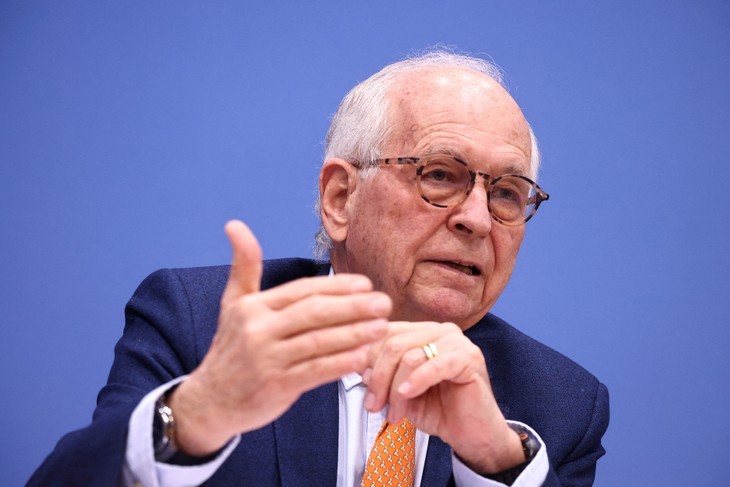 MSC Chairman Wolfgang Ischinger (Photo: Thilo Schmuelgen/ Reuters) MSC Chairman Wolfgang Ischinger (Photo: Thilo Schmuelgen/ Reuters) |
Europe’s response
Current tense relations and major disagreements between Europe and the US raise doubts about whether discussions in Munich can take place in an orderly, candid, and professional manner. For Europe, this is a crucial question. Europe has yet to fully recover from the trauma of last year’s MSC, when US Vice President JD Vance delivered a speech widely seen as “lecturing” Europe on democratic values.
To avoid another such undesirable scenario, the MSC organizers have said all discussions this year must be guided by the Munich Rule – “Engage and interact with each other. Don't lecture or ignore one another.”
Observers say European countries will need to do more in Munich than just have a balanced dialogue with the US. Claudia Major, Vice President of the German Marshall Fund (GMF), an organization specializing in research and promotion of transatlantic cooperation, says Europe has two key expectations for this year’s MSC.
First is to find ways to maintain a constructive relationship with the US while shifting from a US-led defense model to a EU-led model. Second is to end dependence on the US, and build a stronger geopolitical position for Europe.
“The other hope is that Europeans will finally stand up. The big leaders, France, Germany, UK, Poland, and Italy will join forces and send a joint message that Europe has understood, that Europe will rise to the challenges, be it in the security, defence field, in the economic field, and that they will also look out to other partners,” said Claudia Major.
Signals that “Europe is coming of age” have been sent out by multiple European leaders recently. The EU Industrial Summit in Antwerp, Belgium, promoted EU strategic autonomy and competitiveness. German Chancellor Friedrich Merz and French President Emmanuel Macron have said that Europe needs to have its own dialog with Russia on the Russia-Ukraine conflict, instead of waiting on unpredictable action by Washington.
The three-day Munich Security Conference this weekend could establish new rules for the transatlantic dialogue and define Europe’s future position and direction.