(VOVWORLD) - On January 6, 1946, Vietnam held its first general election for the National Assembly under progressive democratic principles: universal, equal, and direct and secret ballot. From that historic event, democracy has been inherited and become a firm political and legal foundation for the revolutionary struggle and national construction.
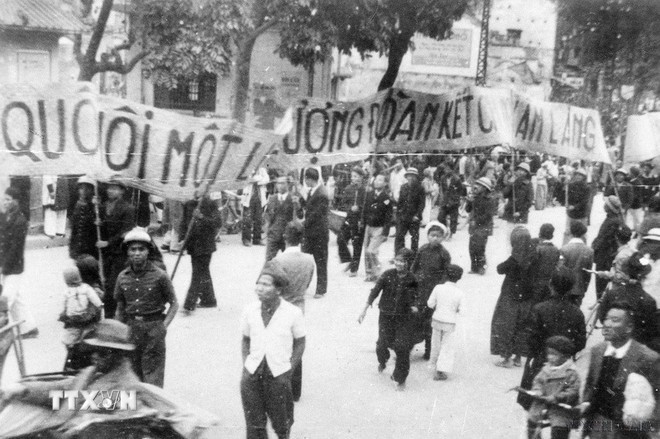 People in Hanoi promote the first general election for the National Assembly in 1946. (Photo: VNA) People in Hanoi promote the first general election for the National Assembly in 1946. (Photo: VNA) |
Over the past 80 years, from the first general election in 1946 to present, the principle of “the people are the roots” has always been championed at the National Assembly, the highest representative agency of the people and the highest agency of state power of the Socialist Republic of Vietnam.
Democracy since the first vote
The democratic nature of Vietnam’s National Assembly was protected from its very inception. The general election on January 6, 1946 affirms the people’s right to mastery. For the first time, Vietnamese citizens were able to exercise the rights to vote and stand as candidates on the basis of universal, equal, casting direct and secret ballots, without discrimination of gender, religion, or social background. At a time when Vietnam had just gained independence and was facing immense difficulties, the general election clearly demonstrated the vision of placing the people at the center of the newly established State.
Speaking at the ceremony marking the 80th anniversary of the first General Election on January 6, top legislator Tran Thanh Man said, “January 6, 1946 was a brilliant milestone, opening a new development period for Vietnam. The victory of the general election affirmed the people’s right to mastery, from a colonial status to gaining independence, establishing their own State with full legal foundations to represent all Vietnamese people domestically and internationally. It was the first democratic State in Southeast Asia.”
Through national resistance, reunification, and renewal, that democratic character has never been interrupted. The National Assembly has remained a forum reflecting the will and aspirations of voters in different historical circumstances. Regular elections, the expansion of the structure of deputies, and increased representation of women, ethnic minorities, intellectuals, and workers have demonstrated that democracy has been gradually broadened and deepened. It reflects efforts to ensure the voice of all social strata at the National Assembly.
More importantly, democracy does not stop at the right to elect representatives. The National Assembly has publicly discussed and decided national issues, reflected the people’s will, and served as a bridge between the State and society. Maintaining the people elected mechanism over the past 80 years is clear evidence of the continuous inheritance of democratic values in the organization and operation of the Assembly.
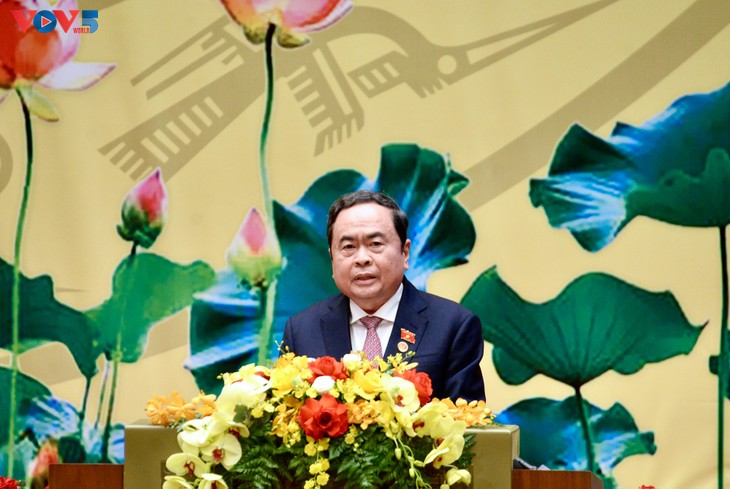 National Assembly Chairman Tran Thanh Man speaks at the ceremony marking the 80th anniversary of the first General Election for the Vietnamese National Assembly. (Photo: Le Tuyet/VOV) National Assembly Chairman Tran Thanh Man speaks at the ceremony marking the 80th anniversary of the first General Election for the Vietnamese National Assembly. (Photo: Le Tuyet/VOV) |
Democracy – a lasting value
Over the years, the National Assembly has conducted reforms toward greater openness, transparency, and closeness to the people. Plenary sessions and question-and-answer sessions are broadcast live, enabling voters to follow and oversee deputies’ activities. Debates have become more substantive, clearly demonstrating the National Assembly’s role in oversight and accountability before the people.
Another important manifestation of democracy is the organization of public consultation on draft laws. Many major policies have been widely discussed in society before adoption, contributing to improved legislative quality and ensuring the people’s right to participate in the law-making process. Oversight, question and answer sessions, and voter meetings are conducted regularly, helping the National Assembly promptly grasp issues arising in society.
National Assembly Vice Chairwoman Nguyen Thi Thanh said, “There are three major lessons. The foremost lesson is steadfastly upholding democratic principles to ensure the people’s right to mastery. Inheriting that spirit, the National Assembly of different terms have always focused on improving democracy, enhancing representativeness, and renewing working methods to become closer to the people and better serve the legitimate rights and interests of voters and the people.”
Democracy has always been a red thread running throughout the 80-year history of the Vietnamese National Assembly. From the most difficult days to the current integration and development, the Vietnamese National Assembly has always guaranteed the people’s right to mastery and regarded democracy as the foundation and the goal for continuous improvement.
Upholding and enriching those democratic values is not only the responsibility of the National Assembly, but also the legitimate expectation of millions of voters, who entrust their power to elected representatives via the ballots.