(VOVWORLD) - The first days of the Lunar New Year (Tet) are often a time for travel and relaxation. On Thoi Sơn Islet in Dong Thap province, the steady sound of horse hooves mixes with laughter and conversation as visitors come to enjoy the countryside. In the Year of the Horse, VOV brings you a story about the people who patiently train and care for carriage horses in Thoi Son, and how this unique local service thrives.
“I really like riding in a horse carriage. It’s interesting, like going back to the old days I only saw in movies. The slow, gentle rhythm of the horses makes the journey relaxing and memorable. It’s a special experience.”
Tran Thi Le, a visitor from Ho Chi Minh City, just took a short horse-drawn carriage ride on Thoi Son Islet during the Lunar New Year holiday. Her words reflect the simple joy many travelers find when they sit on a wooden carriage and slowly move along quiet village roads.
Behind that gentle ride is a job that requires patience, experience, and a strong connection between people and horses. Not every horse on the islet can pull a carriage for tourists. Each one must be carefully selected, trained step by step, and slowly get used to the sound of traffic and the presence of strangers. Now, Thoi Son Islet offers nearly 30 carriages serving visitors every day. During Tet, the number of tourists increases, and drivers begin their work early in the morning.
Before the first trip, horses are bathed, checked, and prepared for the day ahead. Duong Van Lot, 68, has spent many years driving carriages. He says the job brings both pride and pressure, especially when safety is involved.
“The biggest danger is when motorbikes or tourist vehicles suddenly cross in front of us. A nervous horse is even more worrying because it may run and put passengers at risk. I experienced that once and still remember it clearly. This job has both joy and worry. We’re happy to see many tourists, but we always keep road safety in mind,” said Lot.
For drivers like Lot, understanding each horse’s personality is an important part of the job. A calm and well-trained horse helps passengers feel safe and enjoy the ride more. That is why training and daily care are always taken seriously.
Nguyen Van Thao has worked more than ten years training horses and driving carriages for tourists. According to him, not every horse is suitable for this work. Some may be too shy, while others need more time to get used to passengers.
“Horses must eat well, be bathed every day, and be treated gently like children. Without training, many are scared when tourists get on the carriage. Training time depends on each horse, sometimes up to months. We worry they might kick or suddenly run. We have to be patient and help them get used to people so they can pull the carriage safely,” said Thao.
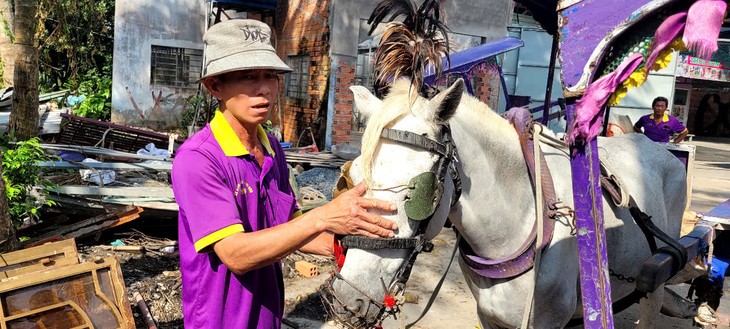 For many drivers, the horses are not only working partners but also close companions. For many drivers, the horses are not only working partners but also close companions. |
With proper care, each horse can work for around ten years. For many drivers, the horses are not only working partners but also close companions after years together on the same village roads.
Dang Van Loc, who owns a carriage business with 13 vehicles, says love for horses is what keeps him and his colleagues attached to the profession, even though the income is modest, about 12 to 20 US dollars a day for each driver.
“We continue this job because we love horses. In the afternoon I enjoy sitting and watching them eat after a long day. When tourists are happy, we are happy too. Every morning we bathe the horses, then take a few trips. We return to feed them and continue until evening. Grass is sometimes hard to find, but everyone works together to collect enough," said Loc.
The steady rhythm of hooves, the fresh countryside air, and the friendly conversations along the way turn a simple ride into a highlight for many visitors Thoi Son islet. Sitting on the carriage, travelers can enjoy the scenery, share laughter with friends and family, and discover a different side of the Mekong Delta. It is a small but joyful experience — one that adds a special touch to their New Year trips.