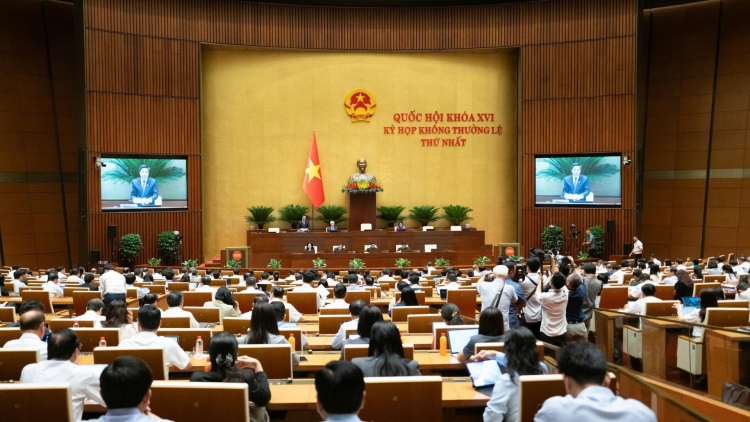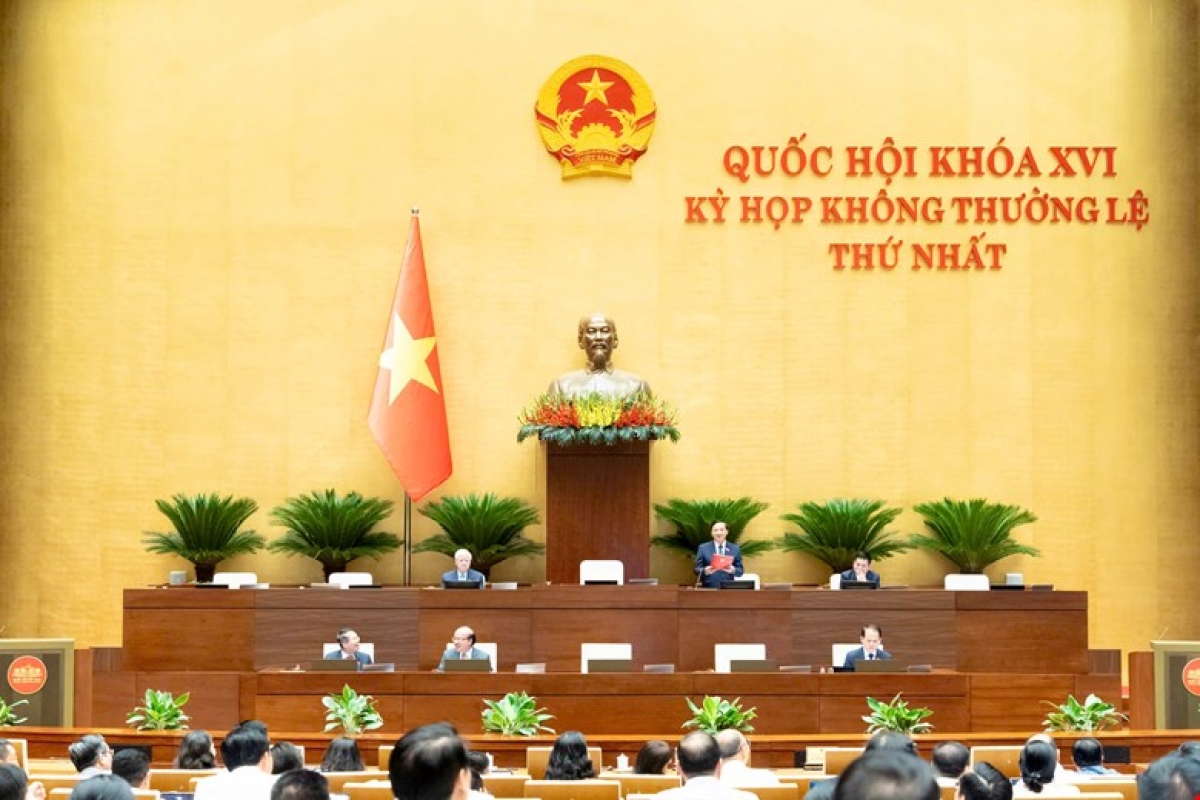
Deputies told Voice of Vietnam reporters prior to the discussion session that revising the Law on Architecture is essential to institutionalize the Party's guidelines, accelerate administrative procedure reform, promote national digital transformation, and ensure the consistency and coherence of the legal system.
Vo Hoang Ngan of Ho Chi Minh City delegation said the proposed amendments would task the Government with issuing detailed regulations and the Ministry of Construction with providing implementation guidelines. The key challenge lies in ensuring the law’s practical effectiveness—specifically, how to foster national cultural identity in architecture and manage urban spaces to achieve civilized, modern development while preserving the traditional culture and history of each region.
"Previously, architectural management regulations for urban areas like Ho Chi Minh City required the City People's Committee to seek the Ministry of Construction's opinion and obtain approval from the municipal People's Council before finalization. However, the current draft law empowers the municipal People's Committee to make this decision," Ngan said.
"Furthermore, provincial-level authorities will decide on the decentralization of powers to commune-level People's Committees based on the specific capacity and practical conditions of each commune or ward. These significant reformist measures foster favorable conditions and greater autonomy for local governments within the two-tier local administration model.”
The decentralization of planning tasks is expected to streamline procedures and alleviate the workload on provincial authorities, while enabling localities to take a more proactive role in planning.
The other three laws to be discussed are Law on Grassroots Conciliation; the Law amending and supplementing a number of articles of the Law on Vietnamese Workers Working Abroad under Contracts; and the Law amending and supplementing a number of articles of the Law on State Compensation Liability.