


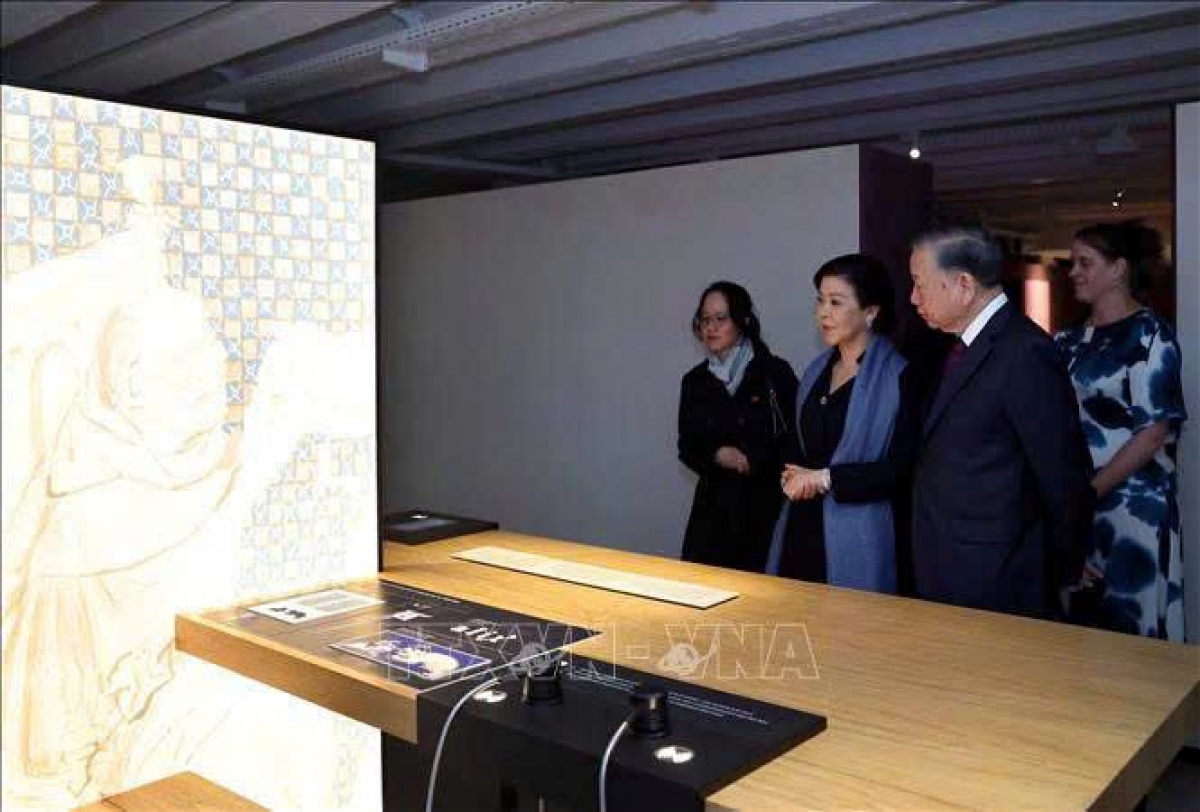
Each woodblock is not only a handcrafted work of art but also encapsulates the knowledge and spirit of the Vietnamese people. The gift also included books introducing the history, culture, land, and people of Vietnam.
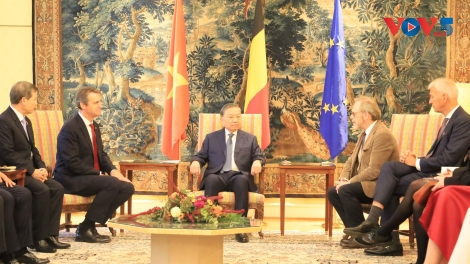
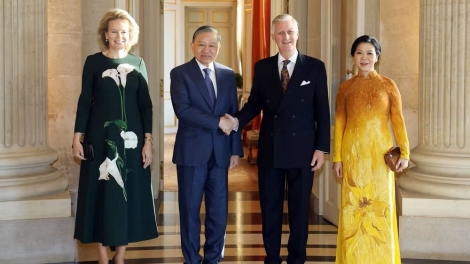
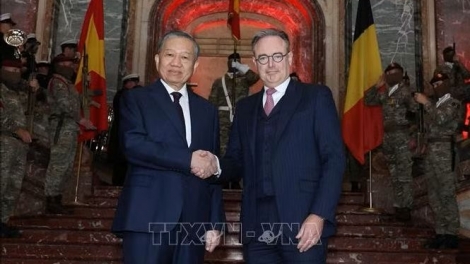
General Secretary and President Lam said that culture has always been a traditional area of cooperation and a bright spot, fostering a lasting bond between the Vietnamese and Belgians. He expressed his hope that the inclusion of the Nguyen Dynasty Woodblock collection within the Royal Library of Belgium would serve as a cultural bridge, inspiring readers and researchers to further explore Vietnam—a nation rich in tradition and possessing a unique identity.
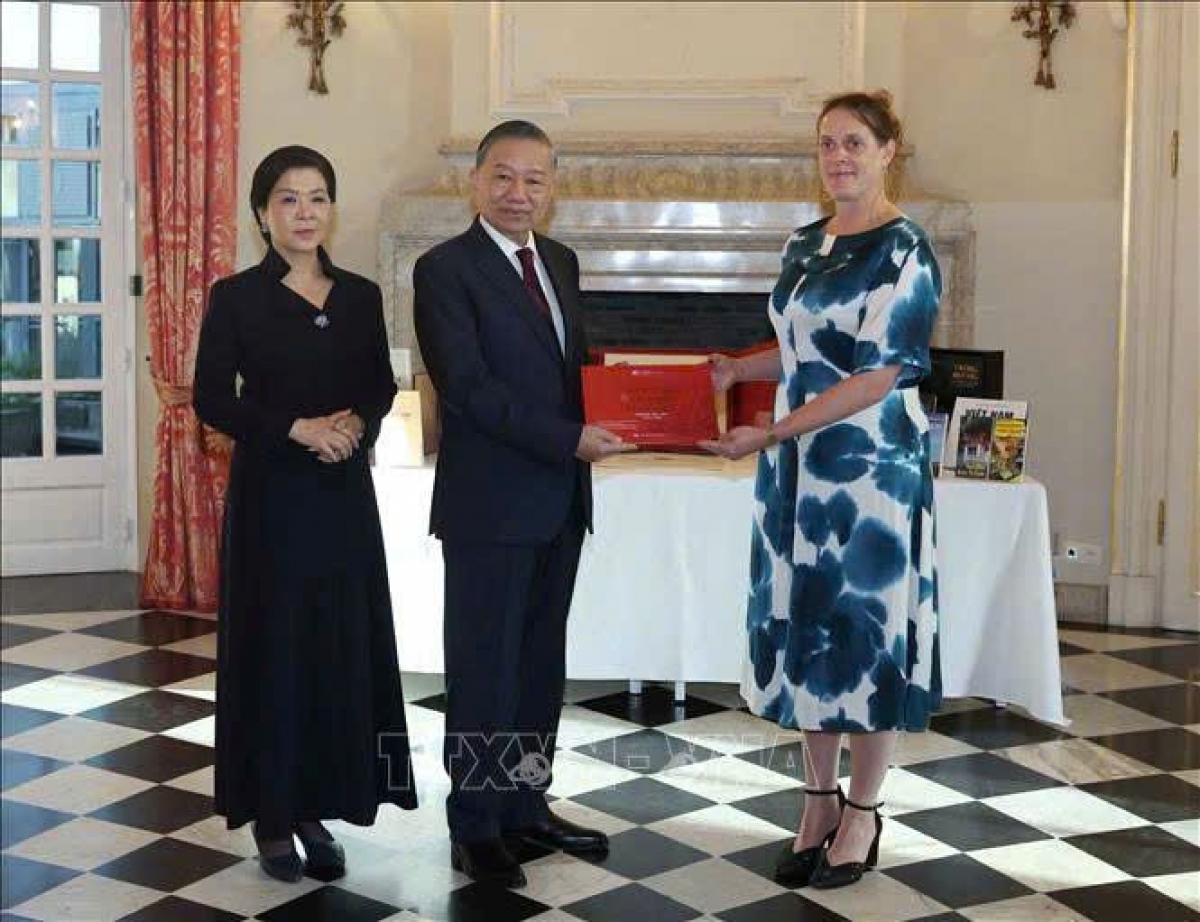
Looking ahead, the Vietnamese leader expressed his desire for the Royal Library of Belgium and relevant Vietnamese agencies to engage in further exchanges of books and documents, share expertise on the preservation, digitization, and dissemination of knowledge, and organize additional programs to showcase the literature, history, and culture of both nations.
By doing so, the people of both countries—especially the younger generation—will have more opportunities to learn about one another and continue to strengthen the social foundation for the friendly relations between Vietnam and Belgium.
For her part, Director of the Royal Library of Belgium Sara Lammens expressed her deep appreciation for the publication gifted to the library. She described it as an exceptionally special and invaluable present—a vivid testament to Vietnam’s long-standing cultural heritage and a meaningful bridge of knowledge between the two nations.
The Royal Library of Belgium, also known as the National Library of Belgium, was established in 1837. It houses collections of great historical significance and serves as a repository for all books published in Belgium, as well as works by Belgian authors published abroad.
As the largest library in the country, spanning more than 150 kilometers of shelving, it holds over 6 million items, including 4 million books, 21,500 periodicals, 150,000 maps, 32,000 manuscripts, 300,000 rare printed documents, 700,000 images, 9,200 microfilms, and 50,000 audiovisual recordings.