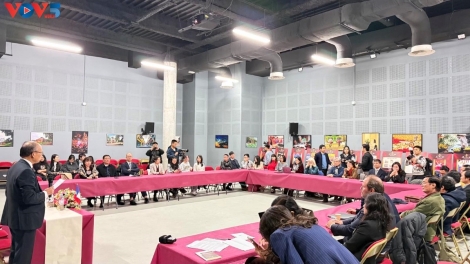




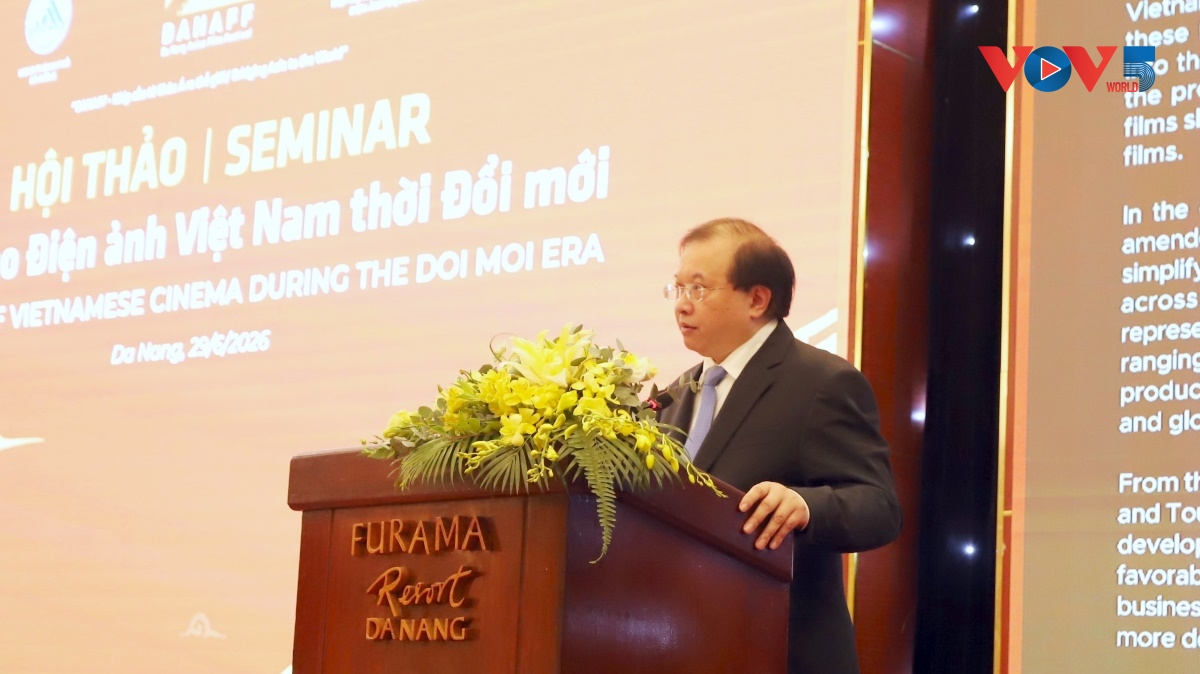
Entitled “Vietnamese Cinema in the Doi Moi Era”, the event dived into opportunities, challenges, and future directions for the film industry amid deepening international integration and the rapid transformation of the global audiovisual landscape.
Over nearly four decades, Vietnamese cinema has undergone profound changes in creative thinking, production models, operating mechanisms, and approaches to audiences. The industry has produced works rich in artistic and humanistic values alongside films that have achieved considerable commercial success.
From the pioneering productions of the early Doi Moi period to later works that earned international recognition, Vietnamese cinema has demonstrated an unceasing spirit of exploration, innovation, and integration while maintaining a deep concern for people, everyday life, and Vietnamese cultural identity.
Ta Quang Dong, Deputy Minister of Culture, Sports and Tourism, said that Politburo Resolution 80 and National Assembly Resolution 28 on the development of Vietnamese culture, and Government decrees implementing these resolutions have attracted investment to the film sector.
The Law on Cinematography is being revised to align with changes in the legal system, strengthen decentralization, simplify administrative procedures, and facilitate public-private partnerships in film production, distribution, and screening.
“By October, 2026, all mechanisms under the Law on Cinematography and its implementing decrees will be amended. We hope that by December, these changes will usher in a new phase of development, creating favorable conditions for Vietnamese cinema by mobilizing all available resources, encouraging film production and distribution, and promoting Vietnamese films internationally,” said Dong.