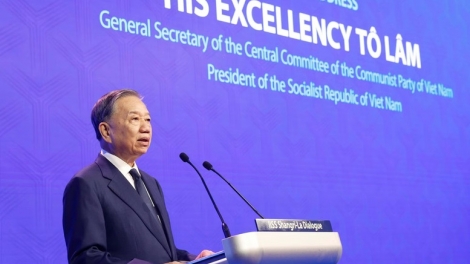




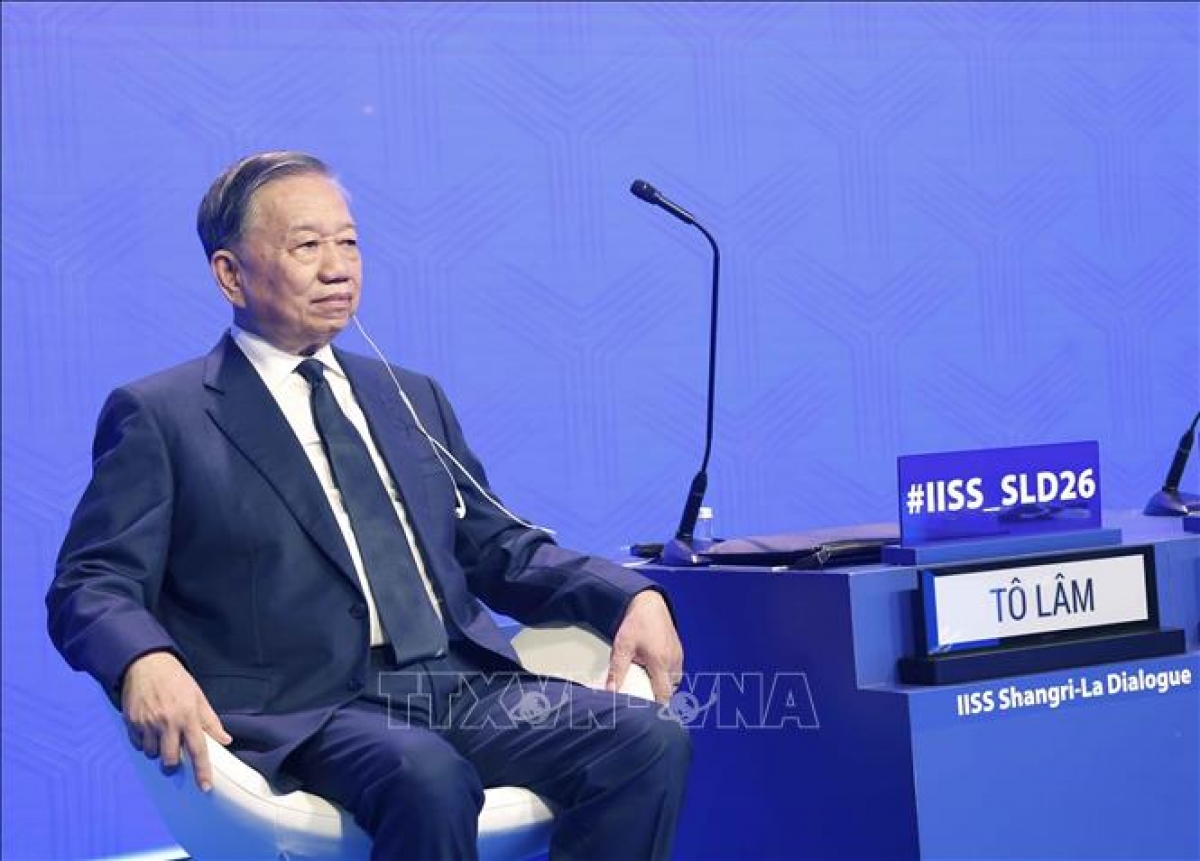
Replying a delegate from Singapore’s Institute of Southeast Asian Studies about the impact of streamlining the government apparatus on Vietnam's foreign policy, General Secretary and President Lam said, "Vietnam is vigorously streamlining its apparatus, refining its institutions, and enhancing national governance capacity. The biggest goal is to create new development momentum, improve the country's competitiveness and resilience amid a rapidly changing and complex world. These developments do not affect Vietnam's fundamental foreign policy; on the contrary, they will help Vietnam more effectively deliver its independent, self-reliant, multilateral, and diversified foreign policy.
"A more dynamically developed Vietnam with more effective governance will be a more reliable and responsible partner for the region and the world," Mr. Lam said.
Vietnam views the Association of Southeast Asian Nations (ASEAN) as a strategic space directly linked to Vietnam's peace, stability, and development. A united, resilient ASEAN that maintains its centrality will continue to be a critical foundation for peace, stability, and prosperity in the Indo-Pacific region, he added.
Responding to a question about the development of science and technology in Vietnam, especially artificial intelligence (AI) and emerging technologies, as a challenge or opportunity, and how Vietnam will handle and manage them, the General Secretary and President said, “We recognize three groups of standards that Vietnam needs to promote."
"Firstly, responsibility and control of human behavior with decisions that have severe security consequences, especially in defense. The more advanced technology becomes, the clearer and more strictly defined human responsibilities must be, including those related to AI."
"Secondly, it is necessary to protect civilian infrastructure and space, and to prevent attacks or sabotage of critical systems such as healthcare, energy, finance, ports, data, and other essential services for citizens, in which AI also contributes to their development."
"Thirdly, transparency, information sharing, and trust building through dialogue based on voluntary principles, technical standards, and gradually moving towards stricter frameworks when there is consensus and the application of science and technology, including AI, to serve production, business, defense, military, and security."
The 23rd Shangri-La Dialogue is underway in Singapore, involving over 550 delegates from security and defense agencies of 44 countries. First held in 2002 in Singapore at the initiative of the International Institute for Strategic Studies (IISS), the Shangri-La Dialogue has become an important annual forum for regional and international security.