



Those involved in the search now underway at Le Thi Rieng Park in HCMC, spent years preparing for it. They conducted dozens of interviews with witnesses, examined thousands of pages of historical documents, and took on countless field surveys.
Their first clue came in 2018. Nguyen Xuan Thang, an architect and a relative of a missing martyr, came across an old photograph on the Internet. The photo showed multiple bodies awaiting burial. There was no information on these people or where and when the photo was taken. Thang said he looked through every detail in the photo for a clue.
"I spent years on that photo and came across a second one several years later. It was a photo of a man with a bottle of antiseptic in his hands, standing in the middle of a cemetery. Fortunately, the residential areas in the background was visible, and I could see rows of houses and a water tower. We cross-checked, reviewed, and verified extensively before concluding that the photo was taken at what is now Le Thi Rieng Park," Thang said.
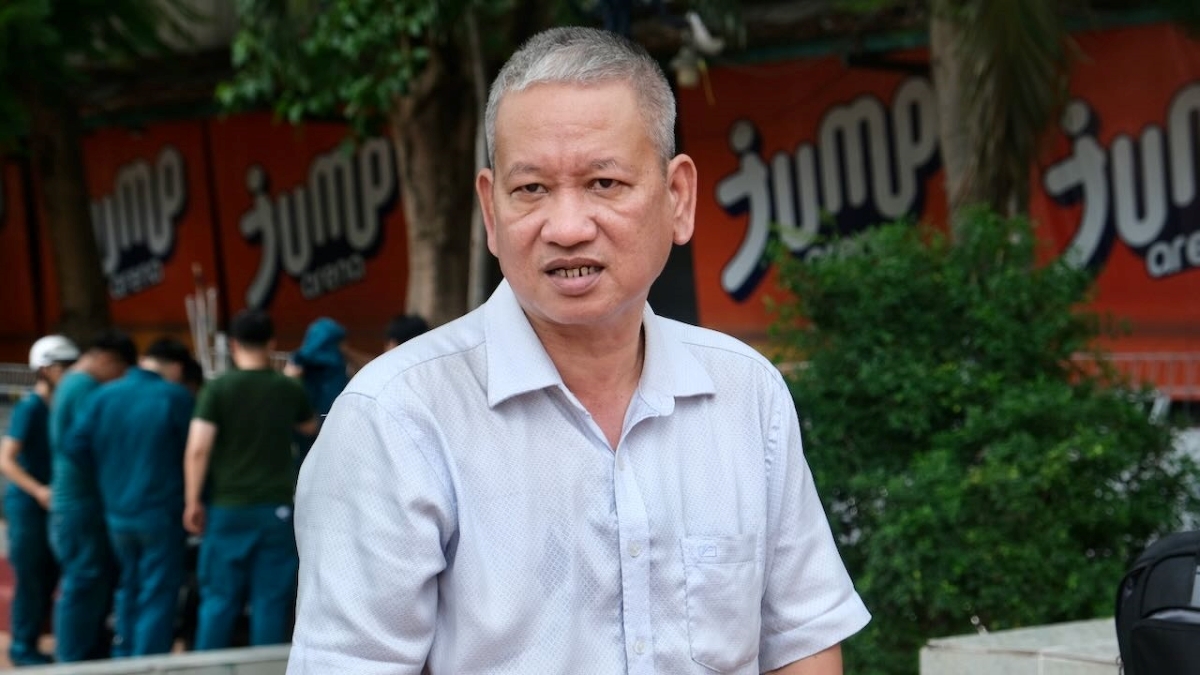
Then, a major breakthrough appeared. "We found a colored photo from the Associated Press (AP) archive, taken on February 12, 1968. It shows workers in Saigon, now HCMC, burying fallen soldiers and civilians and the caption specifically said they were buried in the third trench grave," Thang added.
Once Thang knew where and when the burial had taken place, he and his team began looking for the site's present-day location. The team matched the rows of houses in the first photo with aerial photos of Nam Tram residential area taken in 1975. They went back and forth between satellite images and aerial photos of the cemeteries near Cho Lon in 1969, 1972, and 1975, and then compared their findings to post-1975 and present-day maps of Ho Chi Minh City.
Senior Colonel Bui Yen Tinh, Deputy Chief of the Department of Operations under the General Staff at the Ministry of National Defense, said the team submitted an exceptionally thorough and well-analyzed dossier. The research took nearly 8 years, from November 2018 to May 2026.
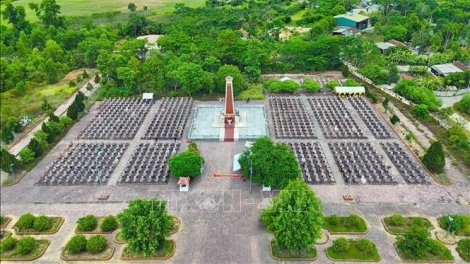
"It took them 4 years to find out that these three photographs were taken in Le Thi Rieng Park, formerly the Chi Hoa-Cho Quan Cemetery. The team analyzed aerial photographs taken from helicopters and satellite images captured in 1969 and 1972 and compared them using scene-matching algorithms, coordinate-system transformations, and data layering to find the trench graves," according to Tinh.
Another crucial source of information was eyewitnesses. "Around 9-10AM, a day after the 1968 Tet Offensive began, my friends and I ran out to the cemetery and saw a mass burial," one witness said.
"There was a fierce fight around the Ong Ta–Bay Hien area. Helicopters were firing rockets. And out of curiosity, I went out to see what had happened. I passed by the Do Thanh Cemetery and saw a crowd. When I went inside, there were dozens of bodies laying beside the morgue."
"During the construction of Le Thi Rieng Park in 1987, bulldozers uncovered a number of human remains. I was a security guard there at the time and saw arm and leg bones, clothing, ammunition belts, rubber sandals, and even a grenade," another added.
Thanks to the eyewitness accounts and their own scientific findings, the team narrowed down their options to a few possible burial sites. Around 900-1,000 martyrs are believed to have been buried at Le Thi Rieng Park, said Major General Tran Chi Tam, Deputy Political Commissar of Military Region 7.
"The archived photos showed two very important landmarks: a rain tree and a water tower. They still exist today. I believe the research team's findings and the General Staff's independent review have been highly accurate. These 2 landmarks are the basis for the next steps of the search campaign," he added.
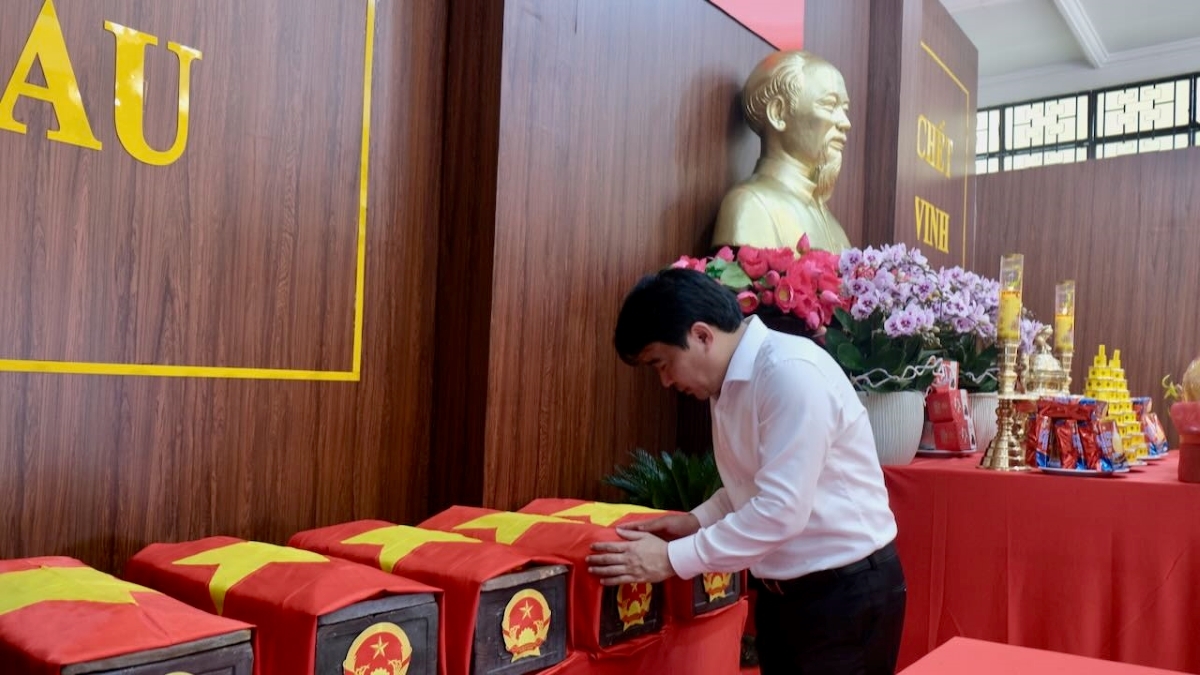
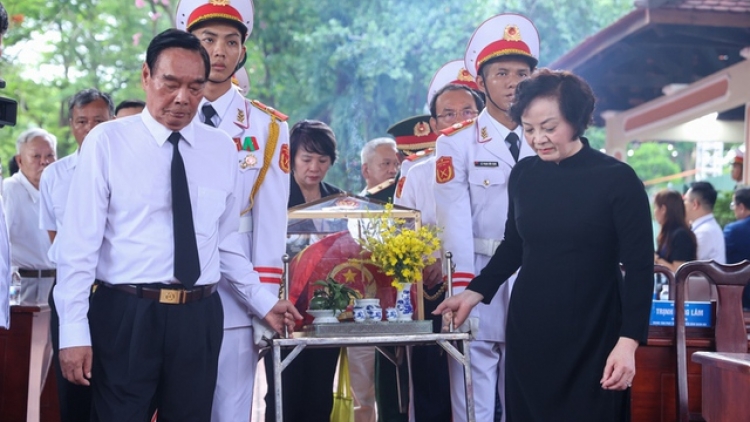
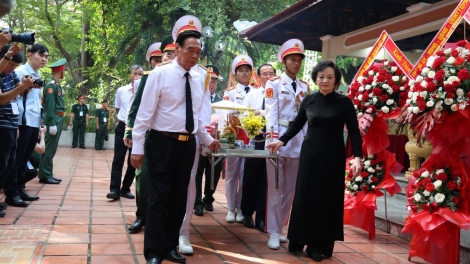
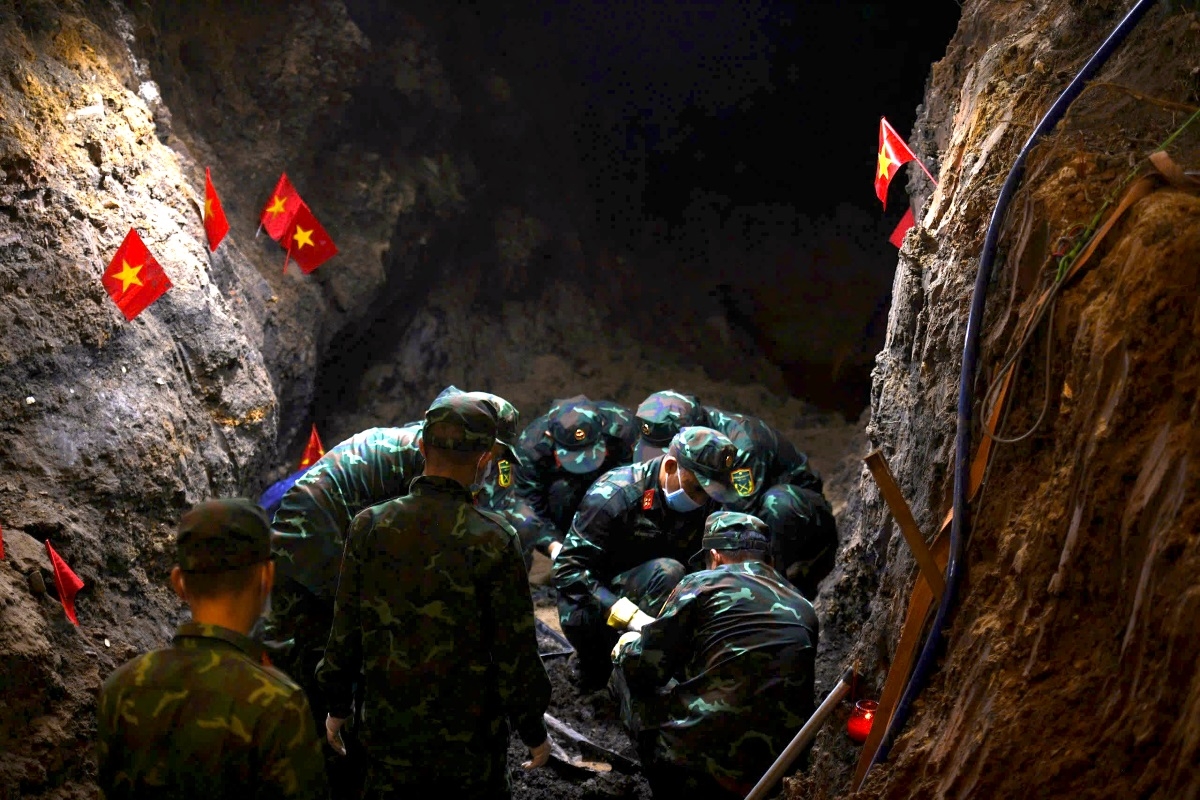
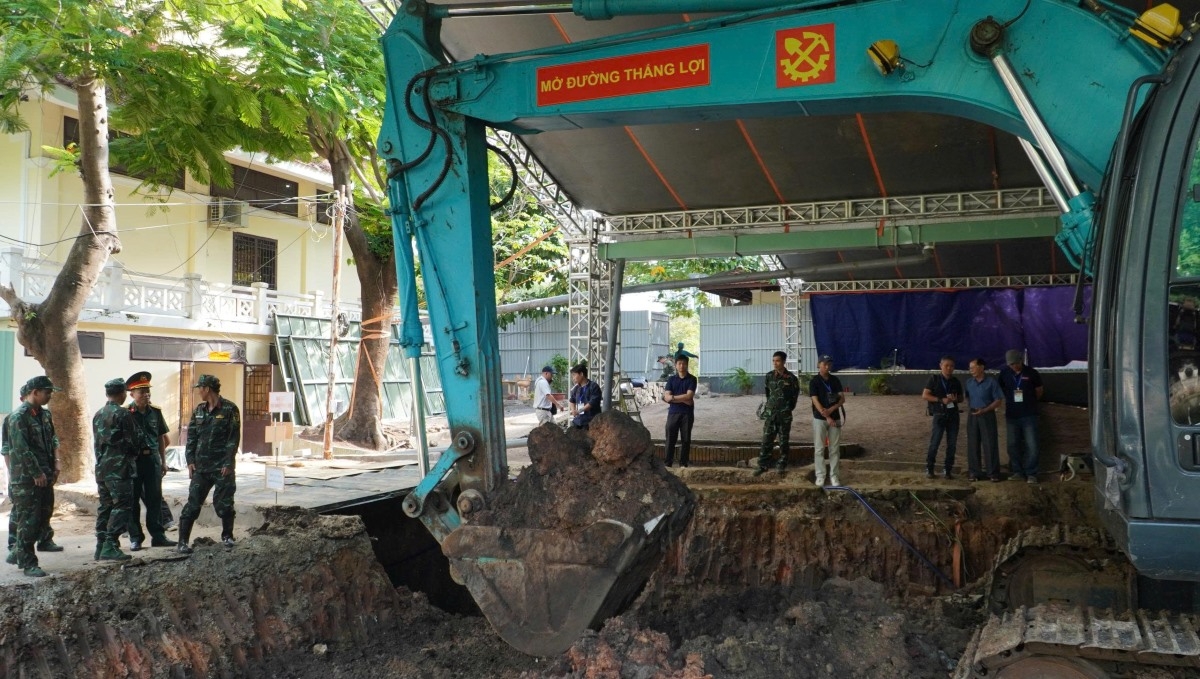
In Le Thi Rieng Park today, workers and officers are carefully unearthing layers and layers of soil, hoping to find the remains of the heroic martyrs who laid down their lives during the 1968 Tet Offensive, identify them, and return them to their loved ones after decades of waiting.