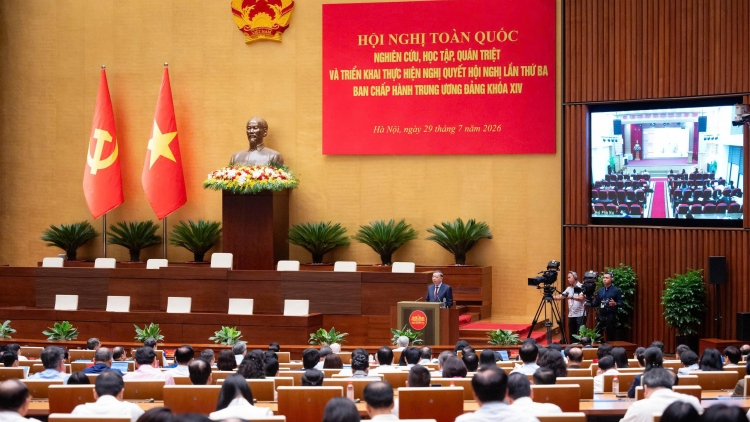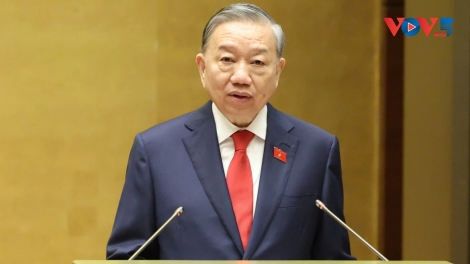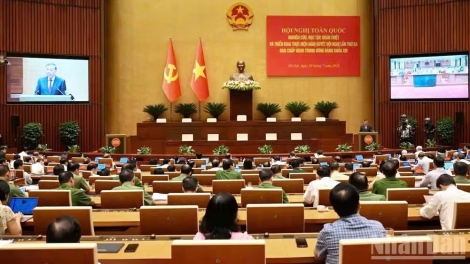




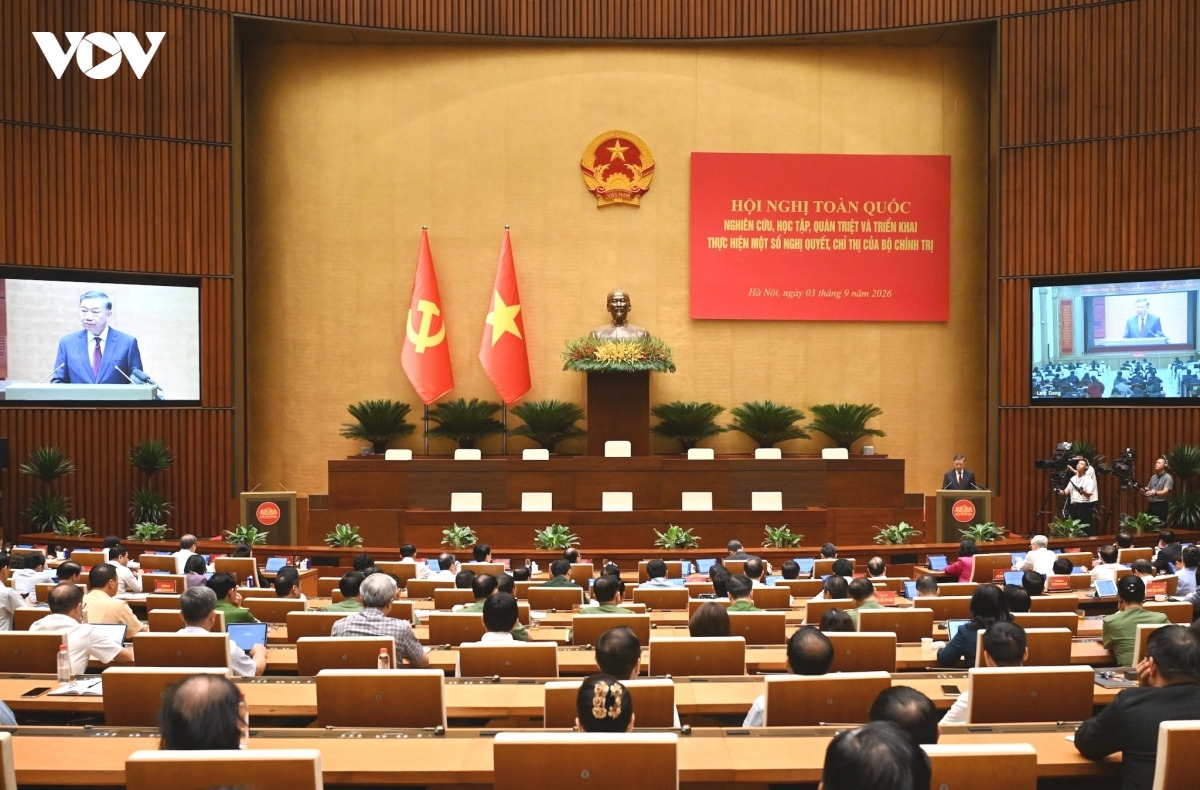
Attendees included General Secretary of the Communist Party of Vietnam Central Committee and President To Lam; Prime Minister Le Minh Hung; National Assembly President Tran Thanh Man; and Standing Member of the Secretariat Tran Cam Tu. The conference connected to over 35,000 locations, with more than 3.7 million delegates participating.
In his address at the conference, General Secretary and President Lam emphasized that the event was not just about comprehending the five resolutions and one directive from the Politburo, but also about launching the decisive phase of implementation. The value of these documents must be demonstrated through their ability to address practical issues and create tangible changes that the people can perceive, Mr. Lam said. He urged for unified understanding and coordinated implementation of the six disseminated documents to generate combined strength.
The top leader called for the refinement of institutional frameworks, the clear delineation of authority, the assurance of resources, and effective risk management. Specifically, institutional development must take the lead, uphold strict discipline and order, and pave the way for development. The decentralization of power must be accompanied by the provision of human resources, finance, data, and technology, alongside mechanisms for power oversight, according to Mr. Lam. He added that substantive changes must be fostered in personnel work, the sense of pioneering, the responsibility to set an example, and the culture of execution, which are considered decisive factors in bringing the resolutions and directives to life.
“Directive No. 07 marks the strong shift toward regular practice and an emphasis on the Ho Chi Minh method. It means thoroughly grasping and studying realities before making decisions; selecting the right key tasks; working in a democratic and scientific manner; and relying on, listening to, and accepting oversight from the people. This method must become a daily professional competency and an integral part of the leadership, public service, and behavioral culture of cadres and Party members.”
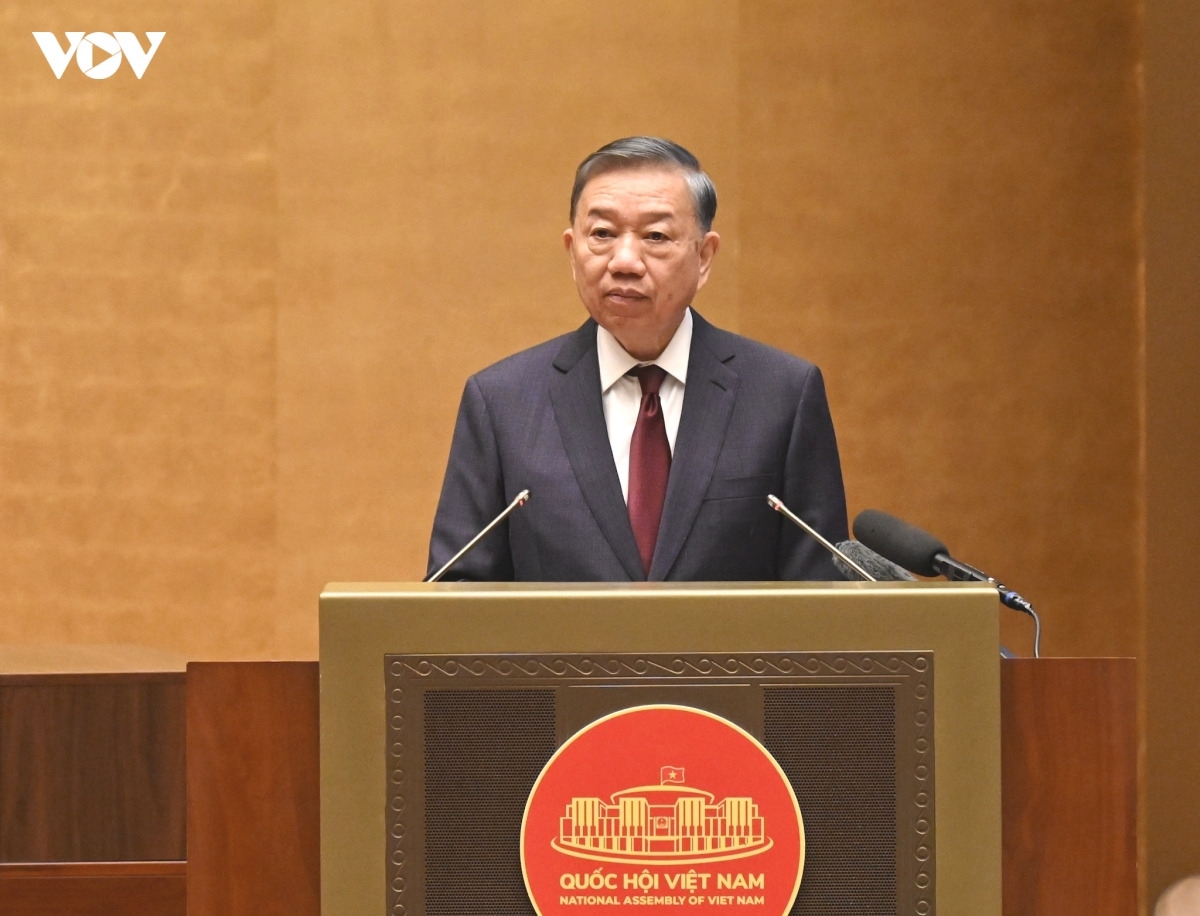
General Secretary and President Lam stressed the need to reorganize development space and resources in alignment with the overall national interest, while linking regional and tourism development with the leveraging of resources from the overseas Vietnamese community.
“Regional development is a method of organizing national growth, not merely an aggregation of local plans. It requires a shift from administrative boundaries to a multi-layered, multi-polar development space defined by functions, comparative advantages, and value chains, integrating land, sea, airspace, underground areas, digital space, and emerging development domains," according to Mr. Lam.
"Tourism development must be embedded within the national development strategy and regional economic landscape, serving as a new growth engine and a means to enhance soft power. It should be organized as an integrated, cross-sectoral, and inter-regional economic ecosystem. A decisive shift is needed from a focus on quantity to one prioritizing quality, value-added, and competitiveness; leveraging culture, identity, and experiences as advantages; and science, technology, innovation, digital transformation, and the green transition as drivers.”
Concurrently, efforts to harness the resources of the overseas Vietnamese community must shift from outreach and support to active partnership, enabling mechanisms, and resource connectivity. This entails refining policies and simplifying procedures; building databases and global Vietnamese networks; supporting compatriots in securing stable legal status and enhancing citizen protection. It’s essential to preserve the Vietnamese language, identity, and cultural roots; listen to constructive feedback—including differing viewpoints that do not harm national interests—and set aside past prejudices to look toward the future.
The General Secretary and President affirmed that all six documents aim to enhance the Party’s leadership capacity, governing ability, and combat strength; build a contingent of cadres who are pioneering, exemplary, and willing to take responsibility; ensure seamless governance; reorganize development spaces; transform tourism into a growth engine; and mobilize all national resources. Every document must translate into concrete actions with designated individuals held accountable and results serving as verification. Ultimately, the outcome must be a stronger nation, a better life for the people, and strengthened confidence, the top leader added.
Documents disseminated at the Sep. 3 national conference include:
- Directive No. 07 dated July 13, 2026, on “Promoting the study and practice of Ho Chi Minh’s ideology, morality, methodology, and style in the new stage of development”
- Resolution No. 23 dated August 2, 2026, on “Overseas Vietnamese affairs”
- Resolution No. 25 dated August 22, 2026, on “Ideological work strategy in the new context”
- Resolution No. 24 dated August 22, 2026, on “Promoting the pioneering and exemplary role, as well as the sense of innovation, daring to think, daring to act, and daring to take responsibility among cadres and Party members in the new era”
- Resolution No. 26 dated August 22, 2026, on “Developing Vietnam’s tourism into a spearhead economic sector in the new era”
- Resolution No. 27 dated August 28, 2026, on “Developing regions and organizing national development space in the new period”.