



The mission has begun not only with maps and records, but with memories — memories kept in old notebooks, carried by witnesses, and preserved by people who still remember where their comrades fell. They are becoming precious clues, leading search teams back to forgotten battlefields and bringing the fallen one step closer to home. VOV has a story:
For more than half a century, battlefields have become fields and gardens, and roads and houses now cover places where fierce fighting once took place. Yet beneath the changing landscape of Vietnam, traces of the war remain – and so do the stories of those who never returned.
In Quang Ngai, a small, yellowed notebook, preserved for nearly 60 years by former medic Dao Ngoc Thanh and his wife pharmacist Mai Thi Kim Ngan, has now become a major clue for families searching for their missing relatives. The notebook contains information about 181 soldiers who died at B23 Field Hospital from 1968 onward, including their names, hometowns, units, dates of death and treatment records. For decades, it remained a personal wartime keepsake.

When the family of Tran Thi Le heard about the notebook, they travelled to meet Mr. Thanh and compare its content with the documents they had kept over the years. At number 46 in the notebook, they found the name Tran Thi Le – exactly matching the death notification in the family’s possession. For Tran Thi So, Tran Thi Le’s younger sister, the discovery brought renewed hope after years of uncertainty.
“I was very happy when I heard about the information that Mr. Thanh posted on social media. Finding the name Tran Thi Le clearly made me extremely happy. I hope that, thanks to the campaign now being carried out, they can find my sister’s remains and bring her home to be laid to rest at the martyrs’ cemetery in the commune,” said Tran Thi So.
At 96, Dao Ngoc Thanh remains clear-minded. He is residing in Cam Thanh ward, Quang Ngai province, and used to work at the B23 Field Hospital during the resistance war against the US. Thanh still remembers the hospital and the places where many of his comrades were buried. His notebook records the dates when soldiers died at the field hospital. Those dates can sometimes differ from the dates on official death notifications, providing additional clues for families and search teams. Thanh said e also still remembers Tran Thi Le.
“Unless there has been any change in the information from the Tra Bong District Military Command, Tran Thi Le is in Ca Dam area. Definitely! I am certain of that. I was directly involved in the case, and that is what I told her family,” said Dao Ngoc Thanh.
An old notebook cannot by itself reveal where a missing soldier lies. But it can point the way. Senior Colonel Trinh Cong Son, Deputy Political Commissar of the Quang Ngai provincial Military Command, visited Thanh’s family in person and examined the carefully preserved notebook.

He talked about about how the information will be verified: “Based on this information, the Quang Ngai provincial steering committee will continue reviewing and comparing it with information already provided and checking it against field maps. In particular, we will rely on the conclusions of local investigations and the history of Quang Ngai during the war to filter the information and continue field inspections.”
Memories are not only preserved on paper. In other parts of Quang Ngai, they live in the minds of people who survived the war and remember places that have long since changed. At Go Tram, once a shelter for soldiers during the resistance war, in Nghia Giang commune, 86-year-old Truong Thi Quy and her 90-year-old husband Le Huu Phuoc recall bombs and artillery strikes that killed soldiers and local guerrillas, as well as the trenches, gardens and fighting positions from his combat days. When the search teams arrived, Phuoc accompanied them for several days.
“I felt deeply moved and saddened. These were our martyrs who sacrificed their lives like that, and now finding them makes me happy as well. I was so moved that I went with the search teams for a couple of days and showed them the places,” said Le Huu Phuoc.
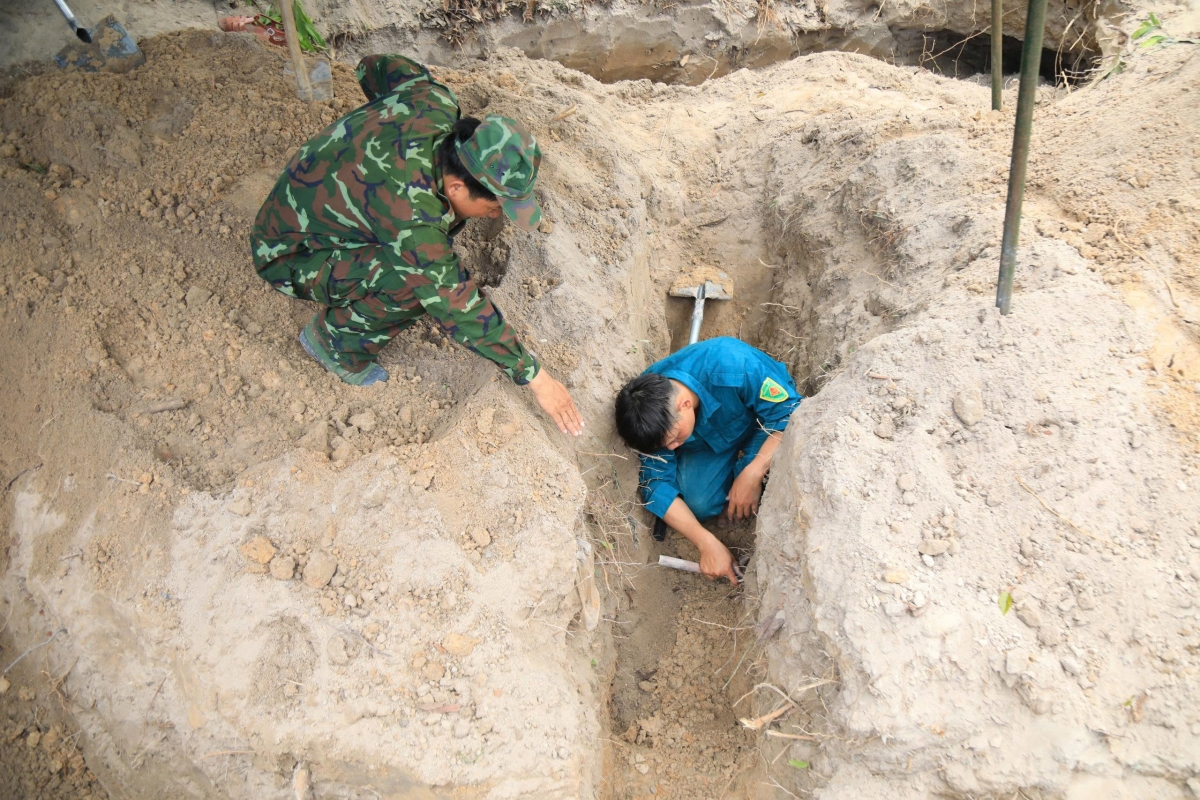
But after 57 years, little remained on the surface to show where the fighting had taken place. The teams had to dig through cultivated land and vegetation, combining machinery with painstaking manual work. After more than two days, small wartime objects began to emerge from the soil including a pen, a rubber sandal, a spoon, buttons and a belt. Then, at around 11:30 am on August 22, they found the first remains. Lieutenant Colonel Ngo Nhu Vu, Deputy Political Commissar of the Nghia Giang Commune Military Command, remembers well that moment.
“Among the remains, the first thing we found was a pen. After the pen, we found a rubber sandal underneath. We were very happy. My heart was beating very fast. Everyone looked at me and said, ‘Mr. Vu! We’ve found them!’ Then we had a strong belief that we will do everything within our ability and will not miss a single artefact or piece of evidence, no matter how small,” said Lieutenant Colonel Ngo Nhu Vu.
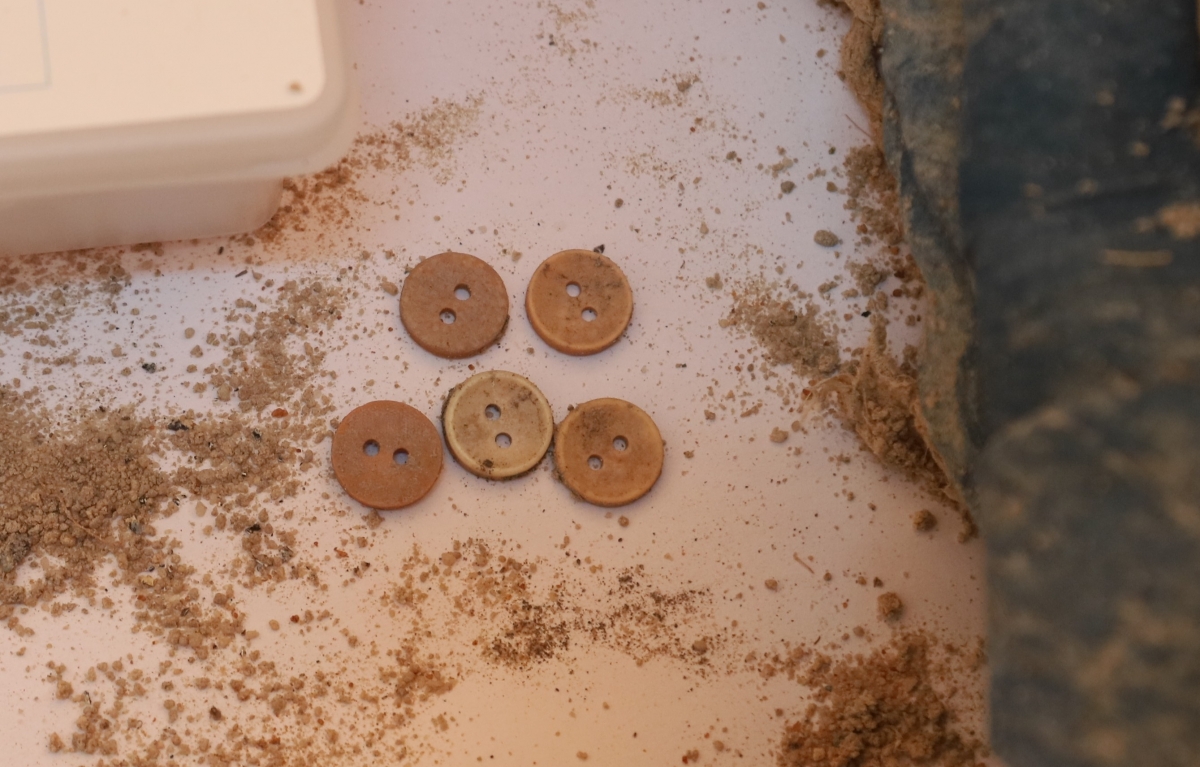
Two days later, three more sets of remains were found about one metre apart, around 1.2 metres underground. Fragments of cluster bombs were also discovered, some lodged in the clothing of the fallen. The four sets of remains recovered from Go Tram are believed to belong to soldiers and local guerrillas who died in 1969.
Local residents whose land lies within the excavation area helped by clearing away trees and crops to make way for the search teams. Meanwhile, witnesses have provided another clue: information about a wartime shelter in the area, believed to have been used by many soldiers and guerrillas. Its exact location has yet to be confirmed, so Nghia Giang authority is working with the witnesses to identify the site and its coordinates.
Nguyen Tan Luc, Chairman of the Nghia Giang Commune People’s Committee, said: “We keep working with the witnesses to re-examine the location and coordinates of the shelter. According to the information we have, although it has not yet been officially confirmed, many soldiers and guerrillas once sheltered there. We will continue the search with determination, hoping to find the martyrs who died in this area and bring them to the martyrs’ cemetery.”
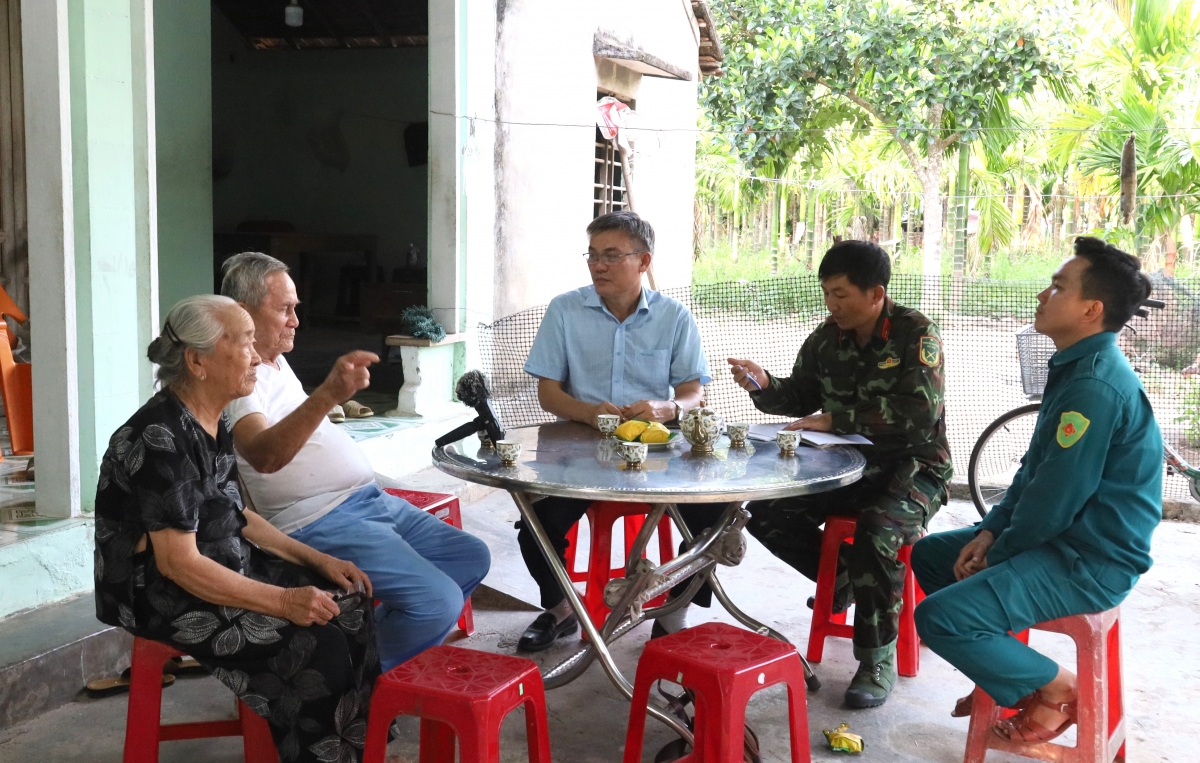
The search at Go Tram is one example of how a battlefield can disappear from the landscape but remain alive in the memories of those who witnessed it. And in Dak Pek, a mountainous commune in Quang Ngai province, those memories are again leading search teams into the hills.
At the end of July, soldiers, militia members, young volunteers and local residents searched a hillside in Dak Pek commune. On July 29, they found the first set of remains, about 80 centimetres underground and outside Dak Glei Martyrs’ Cemetery, wrapped in a hammock. By August 10, ten sets of remains were recovered, along with canvas shoes, canteens, belts, buttons, hammocks, raincoats and pieces of parachute fabric. One of the people who helped identify the search locations was former soldier Bui Dinh Lai. He had lived in Dak Pek for more than 40 years and, around the year 2000, noticed traces that he believed were linked to soldiers’ graves. When the search campaign began in March 2026, he shared those memories with the military.
“As part of the 500-day-and-night campaign to identify the martyrs, the military personnel asked us, and we pointed out the locations. Once they are identified as martyrs, they will be burried in the cemetery. Then DNA testing begns to find their relatives. If relatives are found and come to receive them, that will be very meaningful,” said Bui Dinh Lai.
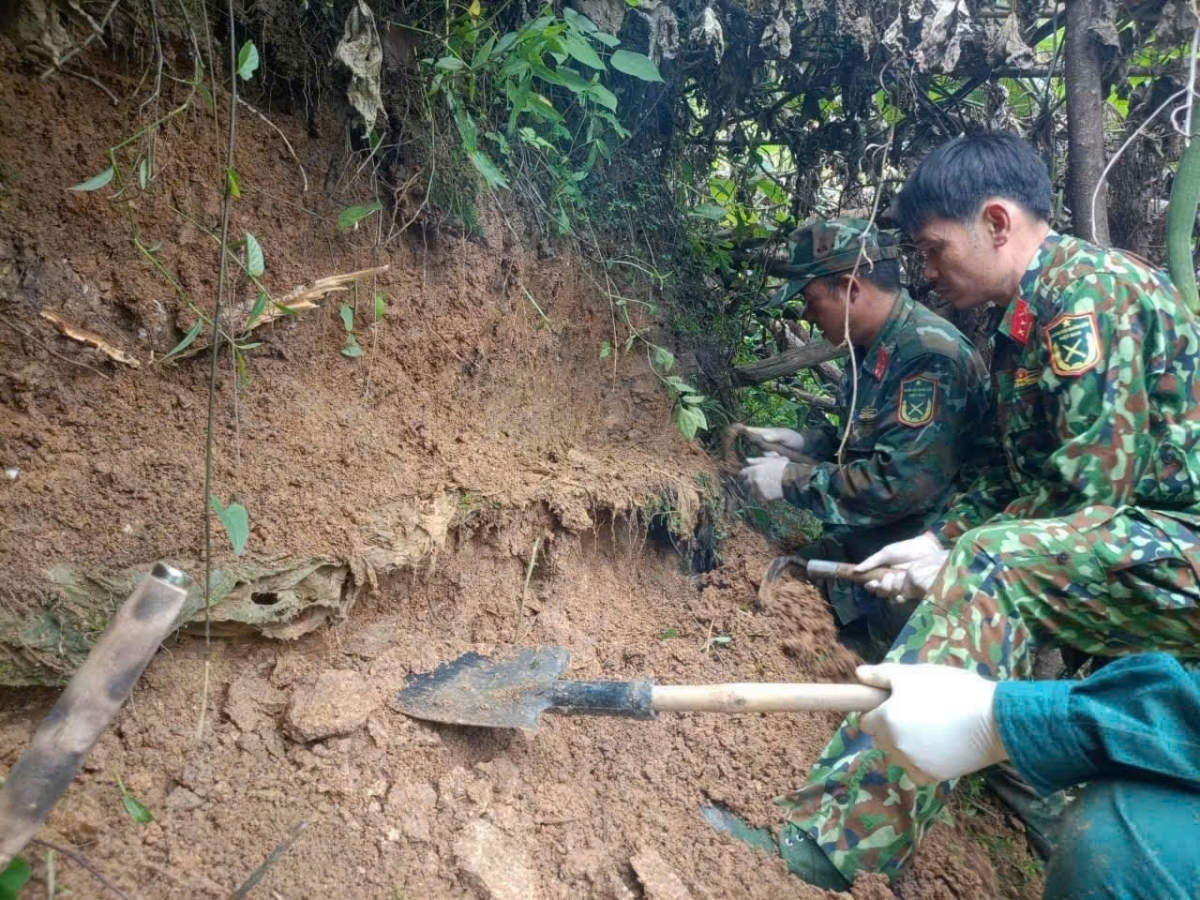
Another former soldier, Tran Duy Lieu, also reported a location he remembered from the late 1980s. He had once found remains wrapped in a hammock and moved them about 15 metres before burying them again. The exact remains have not yet been found, but another martyr was discovered nearby during the recent search. For the search teams, every such memory helps narrow down where to look. Lieutenant Colonel Nong Viet Dung, a political assistant at the Dak Pek Commune Military Command, says the work has a deeply personal meaning for those carrying it out.
“The graves are located about one metre apart in some places and up to two metres apart in others, following the different levels of the hillside. After recovering the first martyr in the commune, it was a moment of joy and encouragement for us. We feel deeply moved because the work we are doing express our gratitude to the heroic martyrs who fought and sacrificed their lives here,” said Lieutenant Colonel Nong Viet Dung.
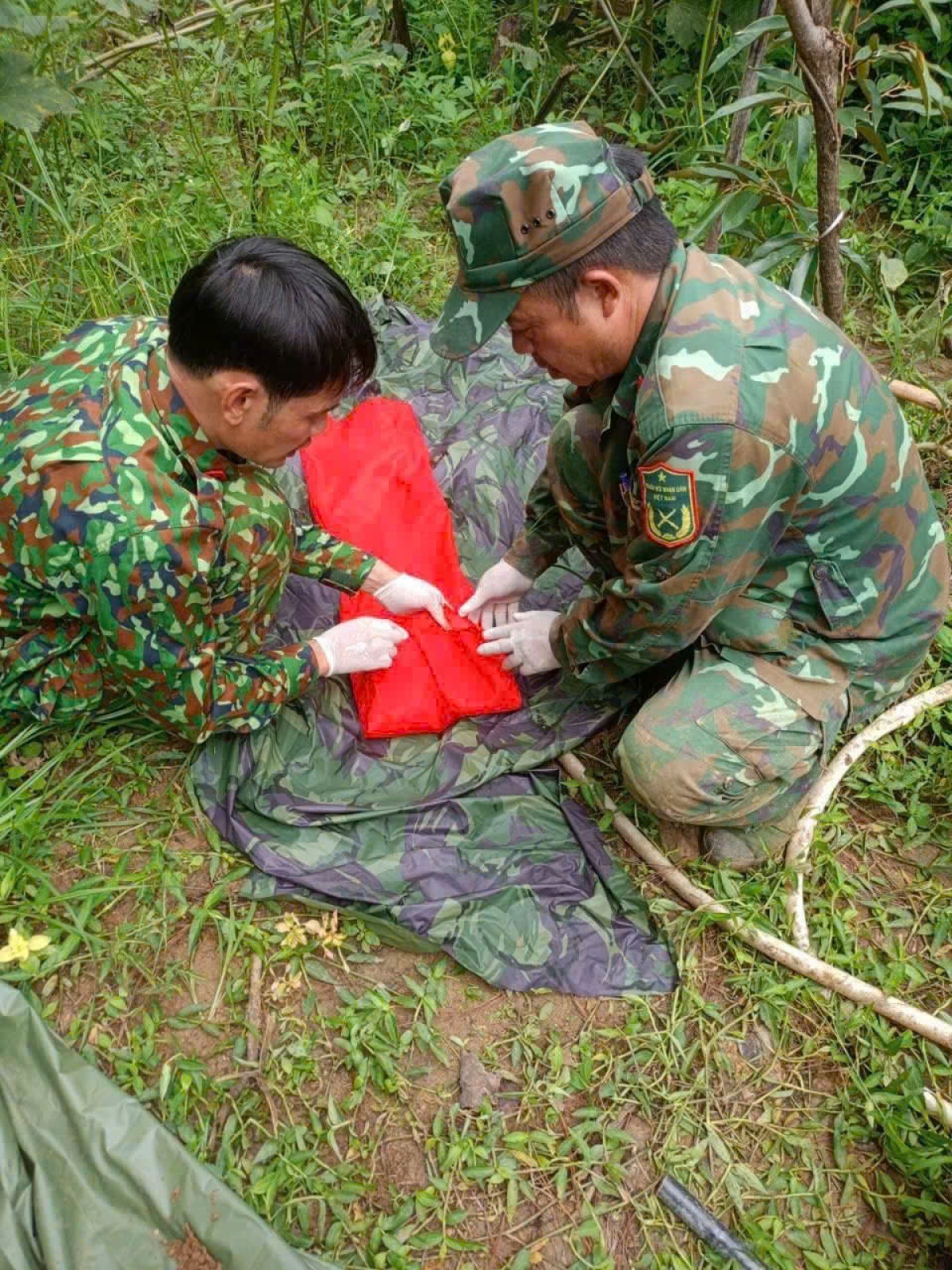
By August 14, the ten sets of remains had been laid to rest at Dak Glei Martyrs’ Cemetery. Local residents stood along the road with flags and flowers as the martyrs were taken to the cemetery. Five more locations remain to be searched. The sites, identified through information from former soldiers and from Steering Committee 515, an organization responsible for directing the search, collection, and identification of the remains of fallen soldiers from past wars, have already been cleared of mines. But harsh weather continues to challenge the teams.
Lieutenant Colonel BLong Nham, Commander of the Dak Pek Commune Military Command, said: “We still have five locations based on the coordinates provided by the Steering Committee 515 and former soldiers after they surveyed the sites. We have carried out bomb and mine clearance at all of them. During the process, continuous rain and strong winds have made the work difficult. We will continue the search.”
More than half a century after the war, the people who survived it are growing older. There are fewer and fewer witnesses who can point to an old trench, remember a battlefield or identify a place where someone was buried. That makes every memory more precious. An old notebook, a witness’s recollection, a small object found in the soil — each can become a clue when carefully checked against records, maps and the ground itself. For families who have waited for decades, those clues can bring a loved one one step closer to coming home.
You’ve been listening to the Sunday Show on the Voice of Vietnam. This week, we’ve told the story of the 500-day-and-night campaign, where old memories, wartime records, and personal keepsakes are helping search teams find the remains of fallen soldiers and bring them home.
We welcome your feedback at: English Service, VOVWORLD, the Voice of Vietnam, 45 Ba Trieu Street, Hanoi, Vietnam. Tune in to our English program on the internet at vovworld.vn. Goodbye. See you next time.