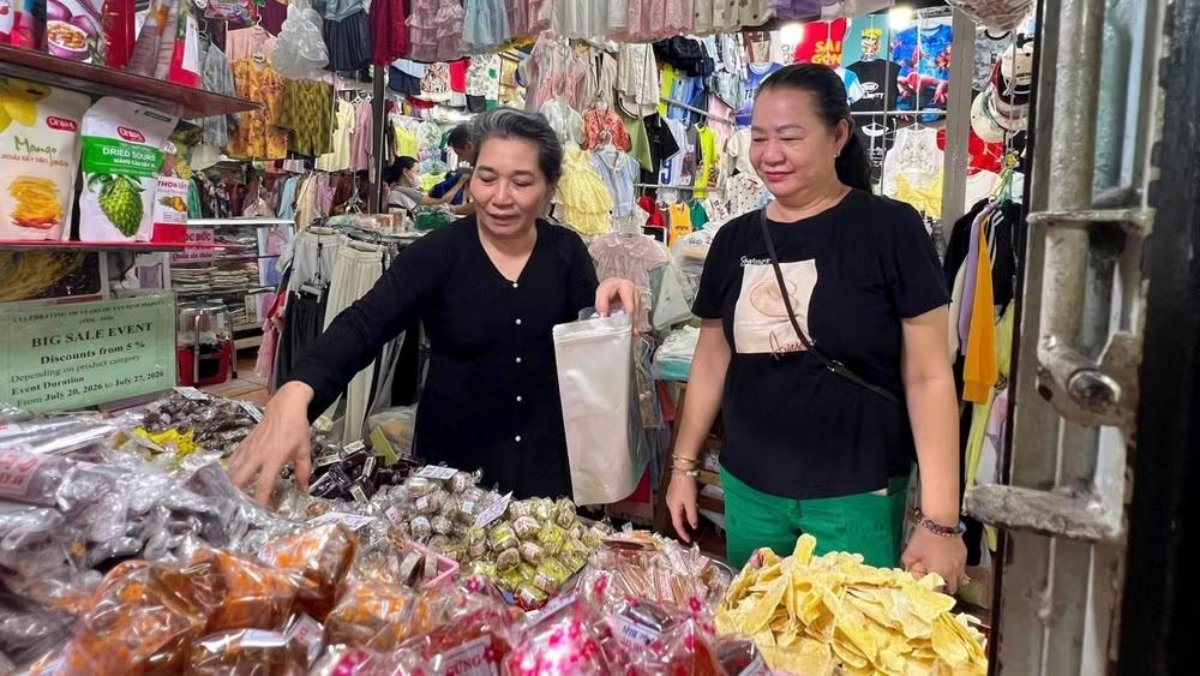
At the entrance to Tan Dinh Market, one of Ho Chi Minh City's long-established traditional markets, dry-goods stalls have been serving customers for decades.
"Nowadays, people pay more attention to product origins, expiry dates, and food safety, so we also have to change our suppliers and select goods that meet their expectations. Keeping customers happy and making them want to return is the only way to build a loyal following," said Tran Thi Xuan Thao, who has been a vendor here for more than 50 years.
As customers' expectations evolve, vendors must adapt. Beyond the growing demand for quality products, traditional markets retain another advantage: the personal relationships that keep regular customers coming back.
"We treat our customers with genuine warmth and affection. Regulars keep coming back because, whatever comes up, we can always talk things through openly," said Thao.
For vendors, customer loyalty depends not only on products and prices, but also on personal connections built over time. This human touch remains one of the defining strengths of traditional markets.
In a section of Ben Thanh Market, another iconic Ho Chi Minh City landmark, rolls of fabric fill the stalls. Shoppers can buy ready-made clothes or choose fabric, have garments tailored on the spot, and pick out shoes and accessories to complete an outfit.
The wide variety of goods and services available under one roof is another advantage of traditional markets, allowing customers to meet multiple shopping needs in one place.
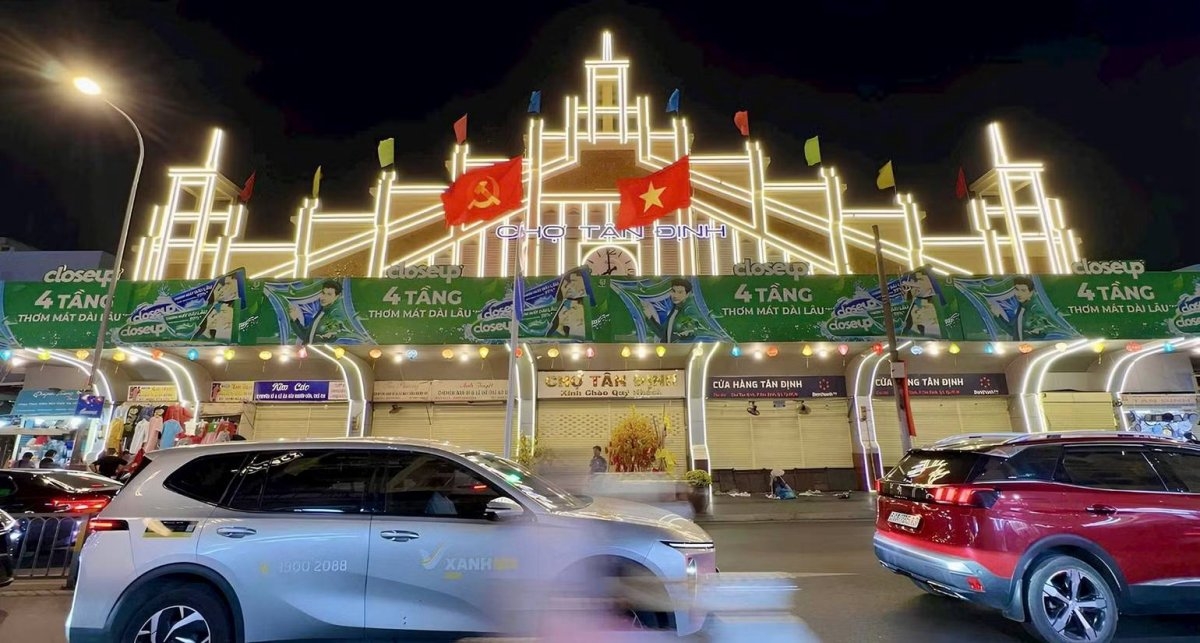
Smartphones and QR code payment displays have become a familiar sight on vendors' counters. Social media platforms including Facebook and Zalo have also become important sales channels. Here, traditional and modern ways of doing business coexist, from cash transactions at the counter to digital payments made with a tap on a screen.
Vendor Doan Thi My Chi said technology has given sellers another way to reach customers. "Whatever customers want, we send them photos. But when it comes to fabric, they still prefer to come in person, touch it, and check the quality for themselves. People still want to visit the market, and that's something online shopping simply cannot replace."
Tran Nhu Quynh, head of the Trade Management Division under the Ho Chi Minh City Department of Industry and Trade, said that traditional markets play an essential role in the city's distribution and supply chains.
“They also serve as cultural and social institutions that evolve alongside the city. But they have faced numerous challenges in recent years, particularly in attracting customers. Policies are therefore needed to support these markets, sustain their operations, and help them adapt and develop sustainably," said Quynh.
Technology offers traditional markets new ways to engage customers and improve their operations. Its potential extends beyond online sales and livestreaming to include market management, digital payments, and better connections between vendors and buyers.