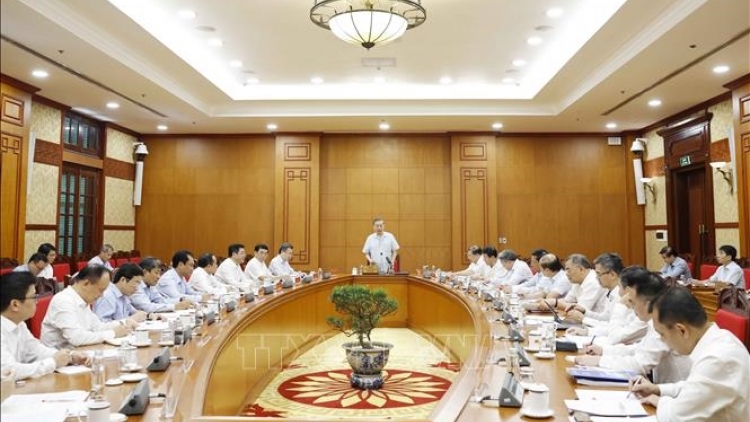



Speaking at the June 8 working session reviewing Politburo Resolution 36 on Vietnam’s Strategy for the Sustainable Development of the Marine Economy to 2030, with a vision to 2045, the top leader outlined a new way of thinking and a long-term strategic approach to Vietnam’s maritime development.
According to Mr. Lam, with the new maritime mindset, the sea must be promoted as a strategic national development space where economic growth, national defense, security, science and technology, and international integration converge. He called for working on a new resolution to enable breakthrough shifts in maritime mindset, institutions, and development models.
Toward a modern national ocean governance model
The Party and State leader stressed that the new resolution should provide strategic directions for studying and proposing a modern, unified, and interconnected ocean governance model based on data and national marine spatial planning.
Right from the drafting process, action programs must clearly define major tasks, national initiatives, flagship projects, measurable targets, and the responsibilities of agencies, sectors, and localities at all levels.
The overarching goal is to transform the sea into a genuine strategic development space that generates new momentum for rapid and sustainable growth, contributes to the successful implementation of the 14th National Party Congress Resolution, and supports Vietnam’s aspiration to become a high-income developed nation by 2045.
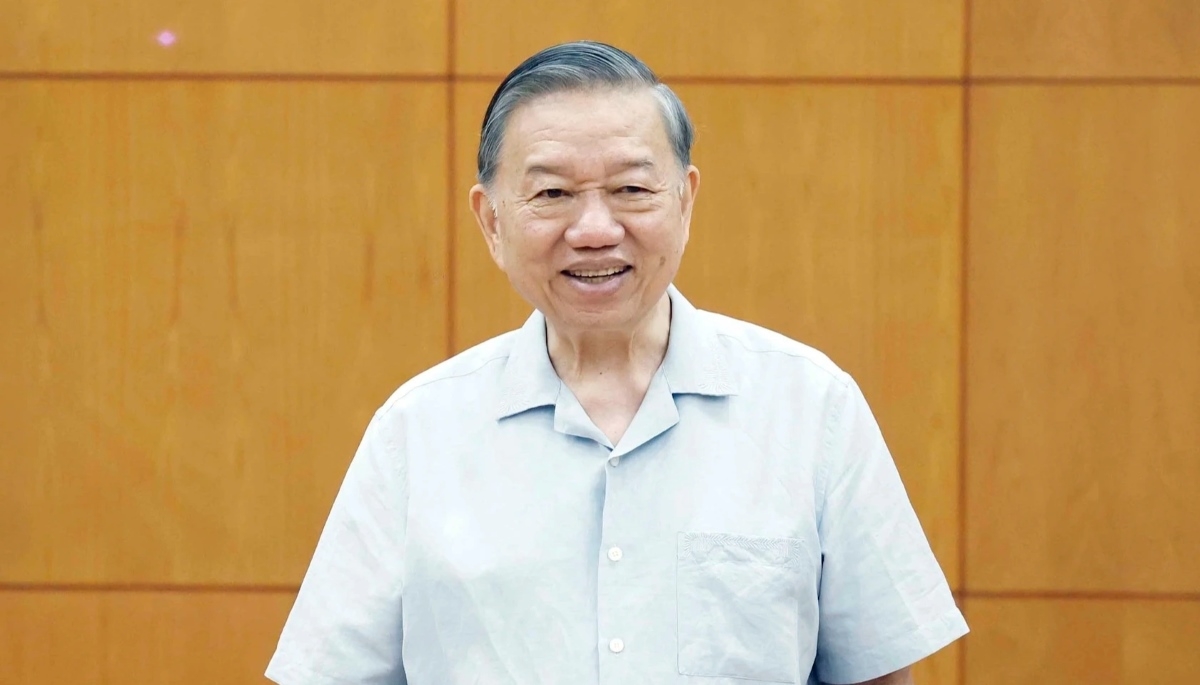
Party General Secretary and State President To Lam said: “The sea is not just a place for resource exploitation or developing some economic sectors, it must serve as a strategic national development space where economic interests, national defense, security, science and technology, and international integration converge. Therefore, the new resolution should clarify how to develop marine economic sectors and address a broader issue of how Vietnam can effectively exploit, govern, and maximize the maritime domain to serve national development in the coming decades.”
Whereas the sea was previously aligned to fisheries, oil and gas, ports, tourism, and maritime transport, the new approach places maritime development within a broader framework that integrates economic growth, national defense and security, science and technology, environmental protection, foreign affairs, and the livelihoods of coastal communities.
The shift aims to help Vietnam overcome fragmented development practices based on sectors, localities, or isolated projects. While Vietnam’s marine economy has achieved notable progress, challenges remain, including overlapping planning schemes, weak regional connectivity, inadequate infrastructure, and increasing pressure on marine ecosystems. The new approach aims to ensure a more efficient and sustainable development of maritime, coastal, and island spaces.
This approach also opens up new growth opportunities for Vietnam in the new period. The sea has now become a catalyst for emerging industries driven by science, technology, innovation, and green growth.
A strong maritime nation in the 21st century
Vietnam’s aspiration to become a “strong maritime nation in the 21st century” is the overarching strategic goal in all of its maritime development policies.
This vision entails building a nation with advanced marine science and technology, a highly skilled maritime workforce, and strong capabilities for international cooperation in ocean affairs. It also requires an integrated and unified marine governance system, a rapidly growing green and sustainable marine economy, and robust maritime defense and security capabilities capable of safeguarding Vietnam’s sovereignty, sovereign rights, and legitimate interests at sea.
Experts say achieving these goals will require institutional and policy reforms and greater application of marine science, technology, and digital transformation in maritime development and governance. Establishing a national marine data system and accelerating the use of digital technologies in managing, exploiting, and protecting marine resources will be essential to improving governance effectiveness and supporting the modernization of marine industries.
Marine economic sectors, particularly those operating in deep-sea and offshore areas, must follow a path of industrialization and modernization while maritime defense and security forces must be improved to effectively control Vietnam’s airspace, sea surface, and subsea domains.
A strong marine economy, supported by modern infrastructure, high-value-added maritime industries, and an effective presence of lawful economic activities at sea, will create new growth engines for Vietnam. It will also strengthen national capabilities and reinforce the close linkage between economic development and the protection of sovereignty, sovereign rights, and national interests in the maritime domain in the new era.