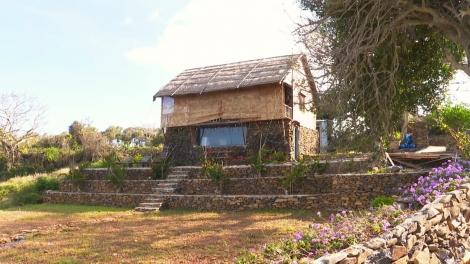




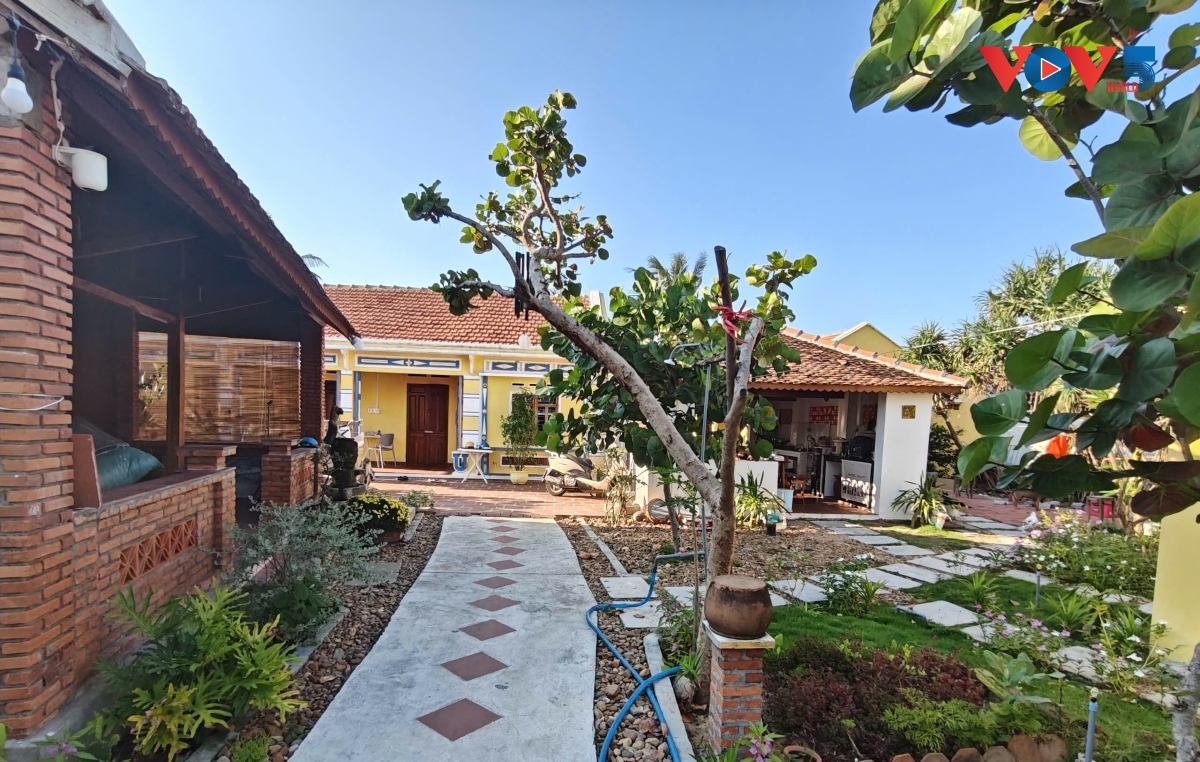
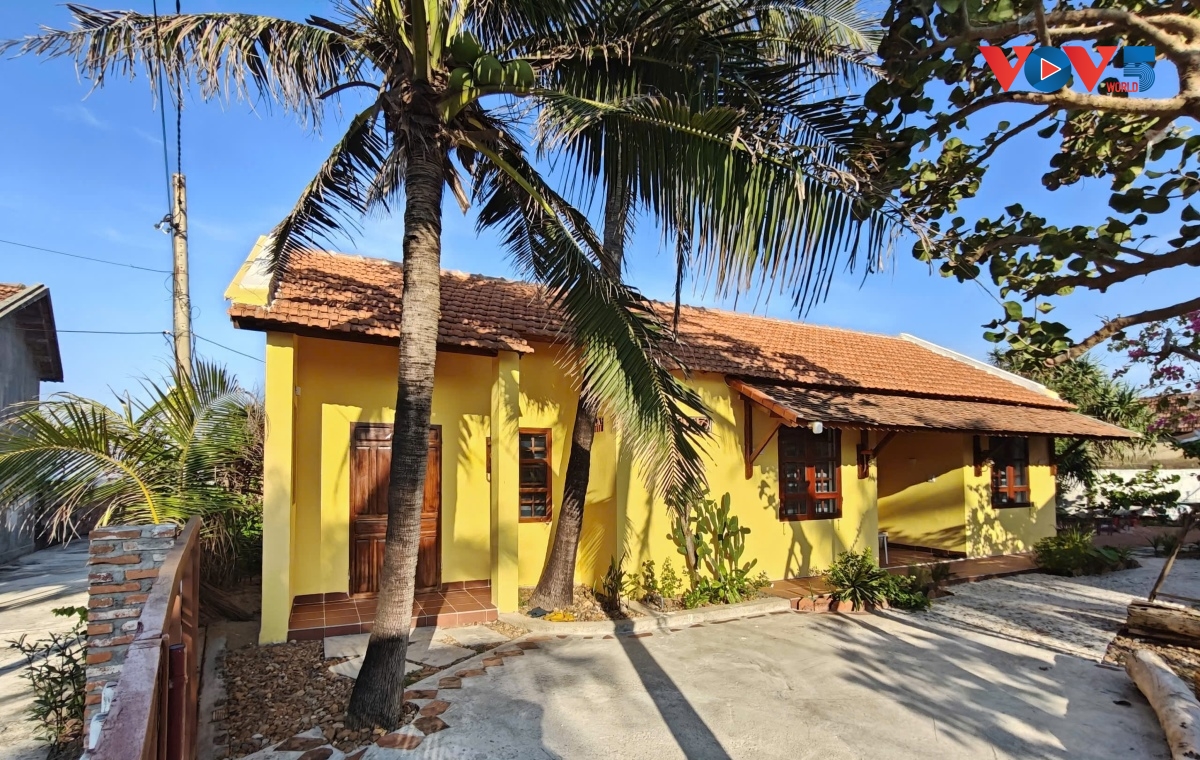
Lo village has thousands of red-tiled roofs standing close together by the sea, looking over a fishing dock, which is always busy with seafood trading every early morning and late afternoon. Golden sandy beaches and emerald waters complete the scenery.
In recent days, the village has welcomed many young architects from across Vietnam coming here to join the community project called “Sketching Heritage.” They capture familiar images narrow alleys, red-tiled roofs, three-compartment houses, verandas, wells, and the fishing dock in their sketchbooks.
Architect Le Ngoc Tung, the project initiator, said: “I want to turn these sketches into postcards that tourists can buy. I plan to introduce them at homestays and tourist villas and print them as publications so that each house will have its own story for visitors to read and better understand this village.”
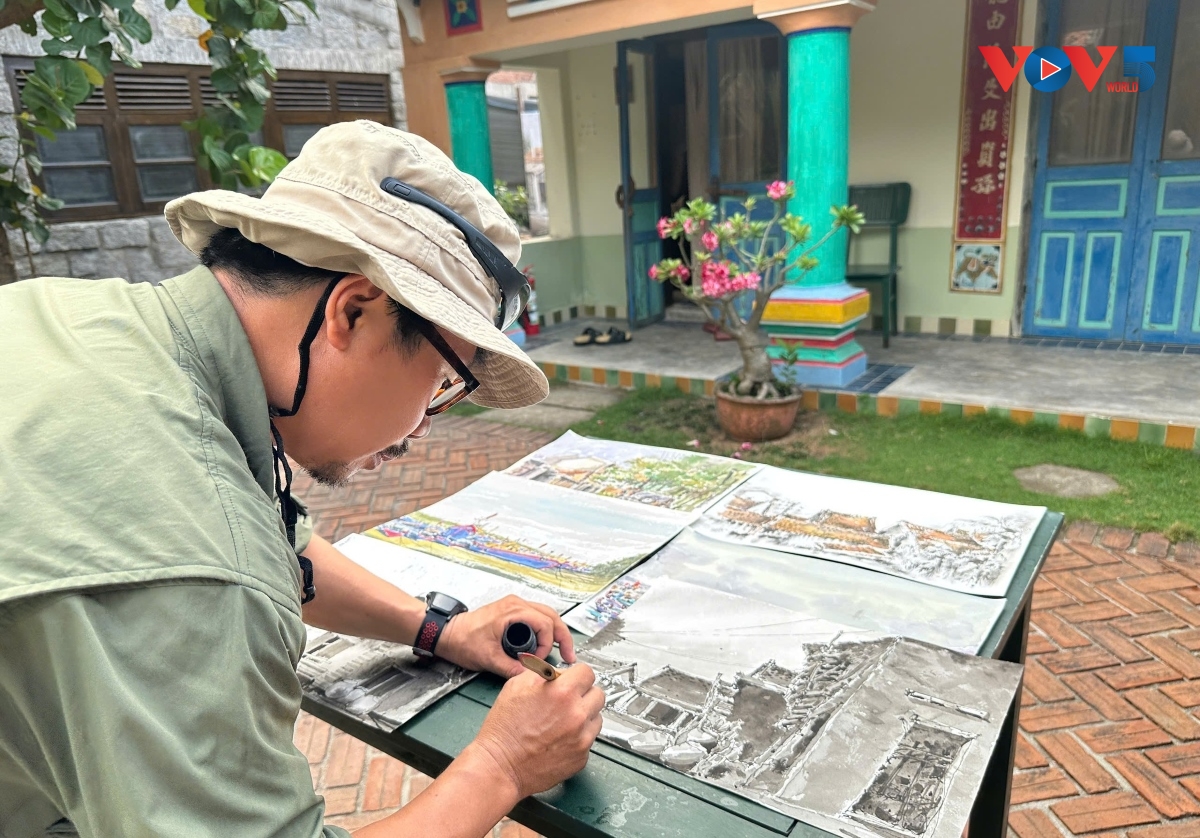
Architect Vu Duc Chien, head of the architect group participating in the project, said: “The first sketch I drew was of a very old house. The homeowners felt extremely happy to see my drawing. I believe we have spread a love for heritage to the locals.”
Architect Phan Dinh Trung from Ho Chi Minh City has been to Lo village several times: “Most of the houses have still preserved their original tiled roofs. The roads and alleys are very clean and civilized. The village has a rich cultural value, long history, and very distinctive identity, which gives it great tourism potential.”
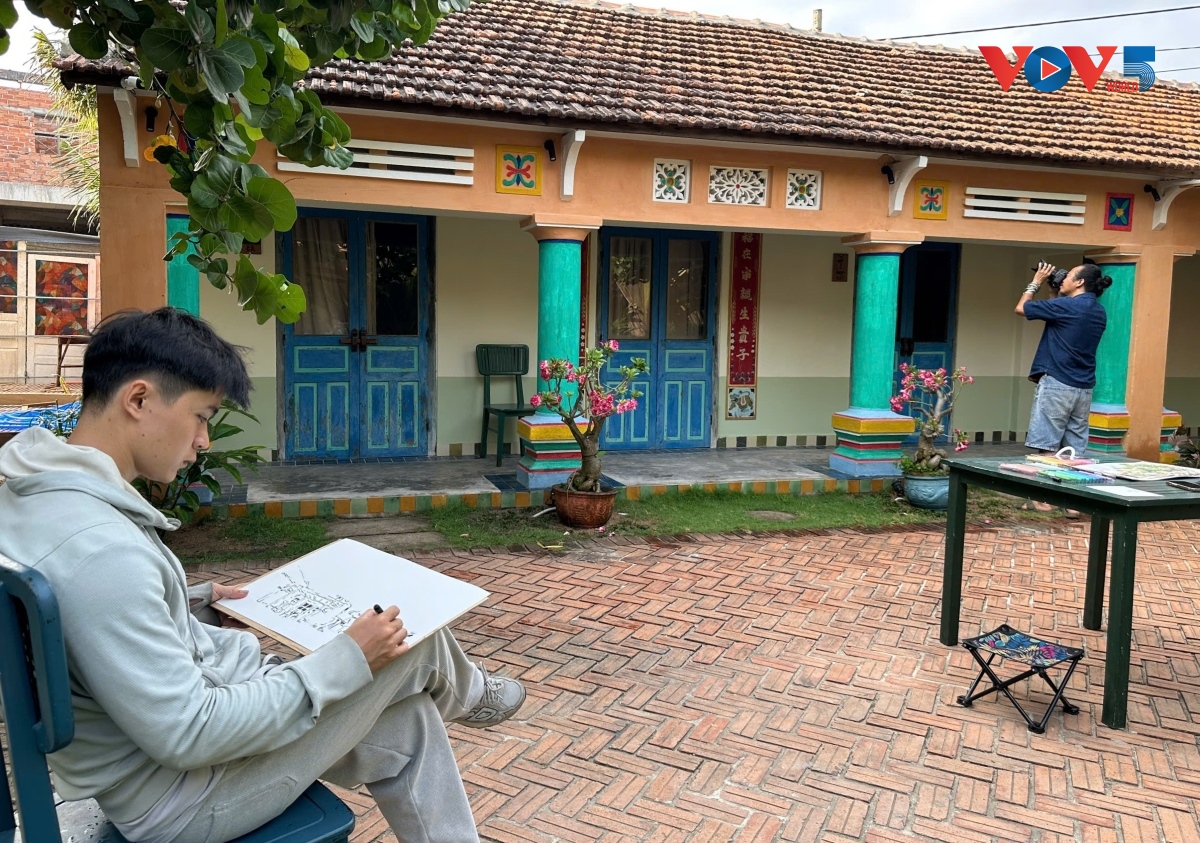
Architect Le Quang Hieu, a resident of former Phu Yen province, now part of Dak Lak province, said: “I want to contribute a small part to attracting more attention to the village. Hasty tourism and development with high-rise buildings or excessive expansion of usable space would cause Lo village to lose its uniqueness. Tourism development must be carried out carefully and sensitively.”
Beyond documentation, the “Sketching Heritage” project also creates connections between the creative community and local residents. It helps inspire love and pride in heritage values among local people, laying a foundation for heritage preservation linked with sustainable tourism development.
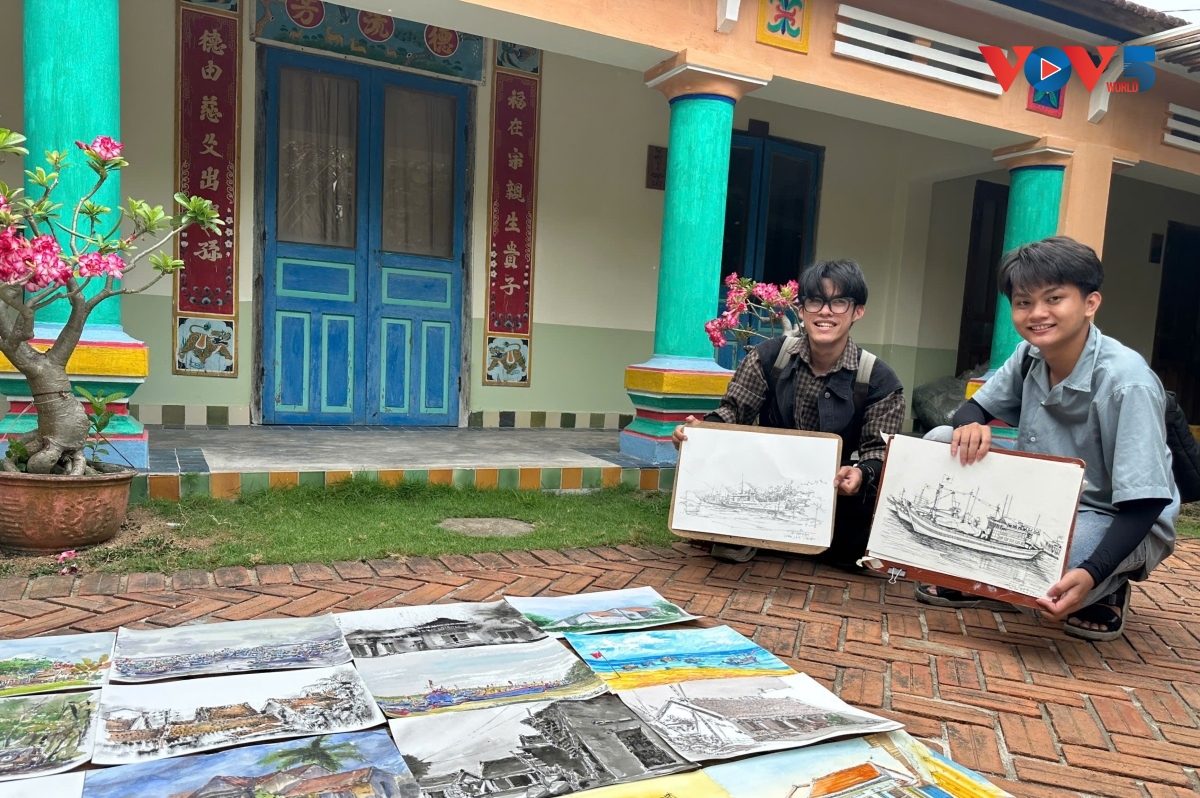
The sketching program has also impressed visitors staying in Lo village. Dinh DZu, an artist from Da Lat, said: “Villages with such plain architecture are becoming increasingly rare. Activities aimed at preserving architecture are very meaningful because the images recorded today will remain for a long time.”
Lo village is inhabited by 1,500 households. Many of the houses have traditional three-compartment structure with red-tiled roofs built in the 1960s and 1970s. This architectural style is well suited to the coastal climate. The “Sketching Heritage” project is like a precious gift to the villagers because these old houses hold their childhood memories and images of their loved ones.