



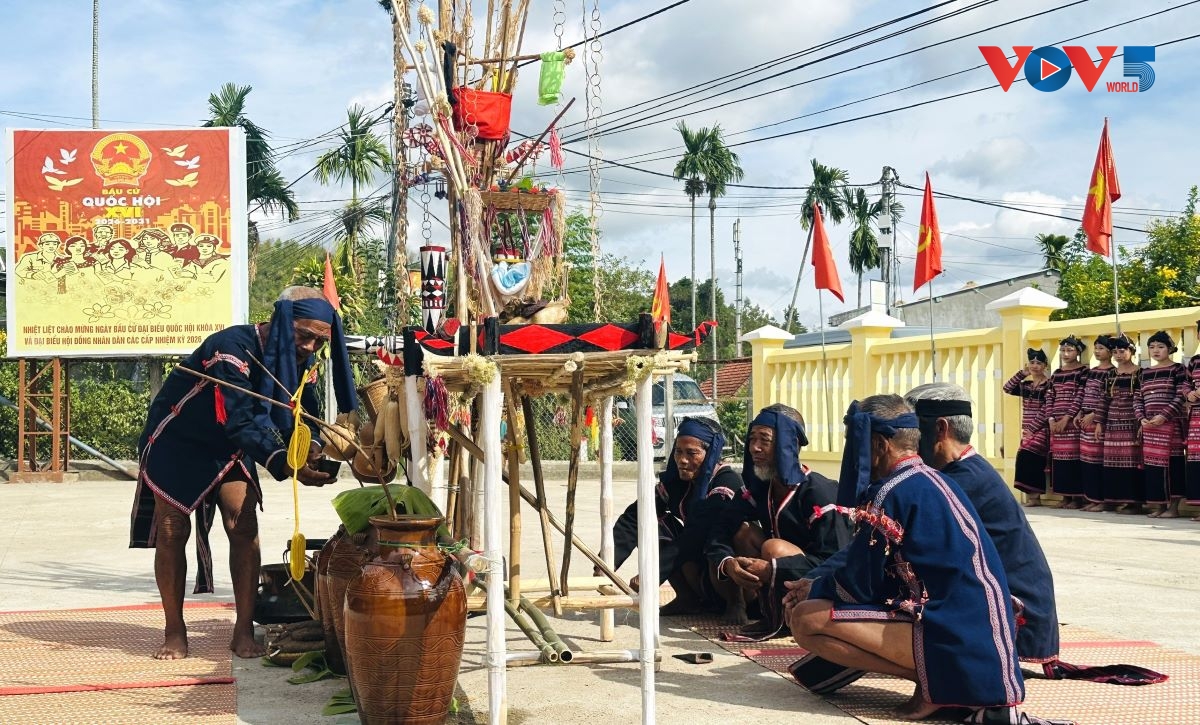
This year's harvest worship ceremony was held at Xi Thoai village’s community cultural house on July 25. Early that morning, the Neu, a ceremonial bamboo pole, was erected in the centre of the courtyard, beside an altar displaying offerings to the deities, including rice liquor, betel and areca nuts, a pig, a rooster, and cooked rice, among other items.
Once everything was ready, a troupe of drum and gong players performed ritual music to invite the deities and announce the ceremony to the community. Dressed in traditional costume, the master of ceremony and his assistants entered the sacred ritual area to begin the ceremony.
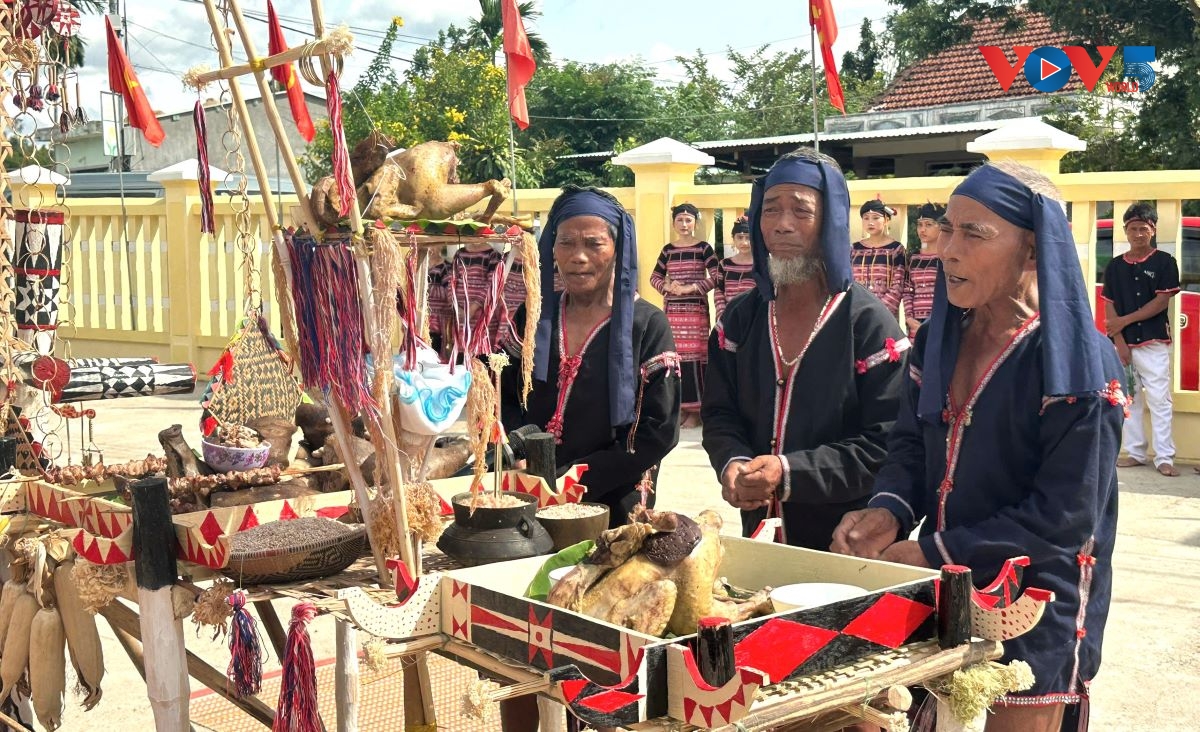
“This ceremony has been passed down from our ancestors. Around May and June, when the weather is favorable, we begin planting sugar cane, rice, cassava and other crops. Every year we perform the ceremony in accordance with the Ba Na’s customs and traditions,” said Xau Dun Linh, the master of ceremony.
During the ceremony, the shaman performs three rituals: a prayer of gratitude to the deities, a prayer for a good harvest, and a prayer for good health. The ritual prayers begin by notifying the supreme deity and other deities of the ceremony and inviting the spirits of the mountains, rivers, and rain, the community’s guardian deities, as well as ancestors and village benefactors, to attend. The shaman then presents offerings prepared by local families and the community as a gesture of gratitude to the deities and ancestors, and in appreciation of the land, water sources, and rice that sustain their way of life.
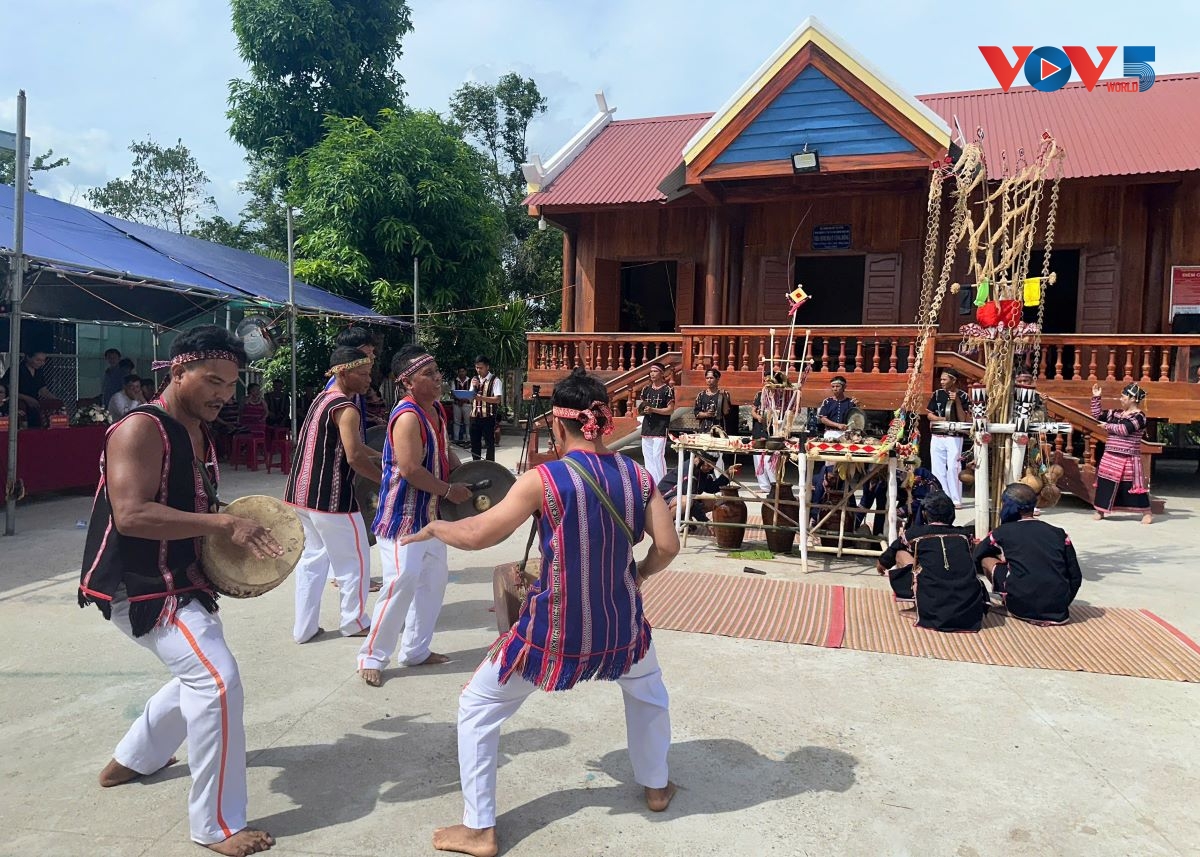
Village elder Nguyen Ngoc Truong said that the ceremony is usually organised with contributions from all villagers. “Everyone is excited because the harvest worship ceremony is a prayer for prosperity. We pray for healthy livestock and abundant crops of cassava, rice, maize, and sweet potatoes. We hope for a bumper harvest and a prosperous year, so that every villager may live in happiness and prosperity.”
In Xi Thoai village, traditional practices including weddings, the health praying ceremony, the grave abandoning ceremony, the new rice celebration, and the drum and gongs festival have been carefully preserved through generations. Since Xi Thoai was recognised as a community-based cultural tourism village, many traditional Ba Na ceremonies have been recreated in stage performances to entertain local people and visitors.
“As a Ba Na folk dance performer, I will do my best to preserve our traditional dances and pass them on to future generations,” said villager La Thi Yen.
Another villager Le Van Khuong said, “As a member of the younger generation, I always encourage the villagers to preserve our traditions. The ceremony is held every year so that the Ba Na traditions in Xi Thoai village will never fade away.”
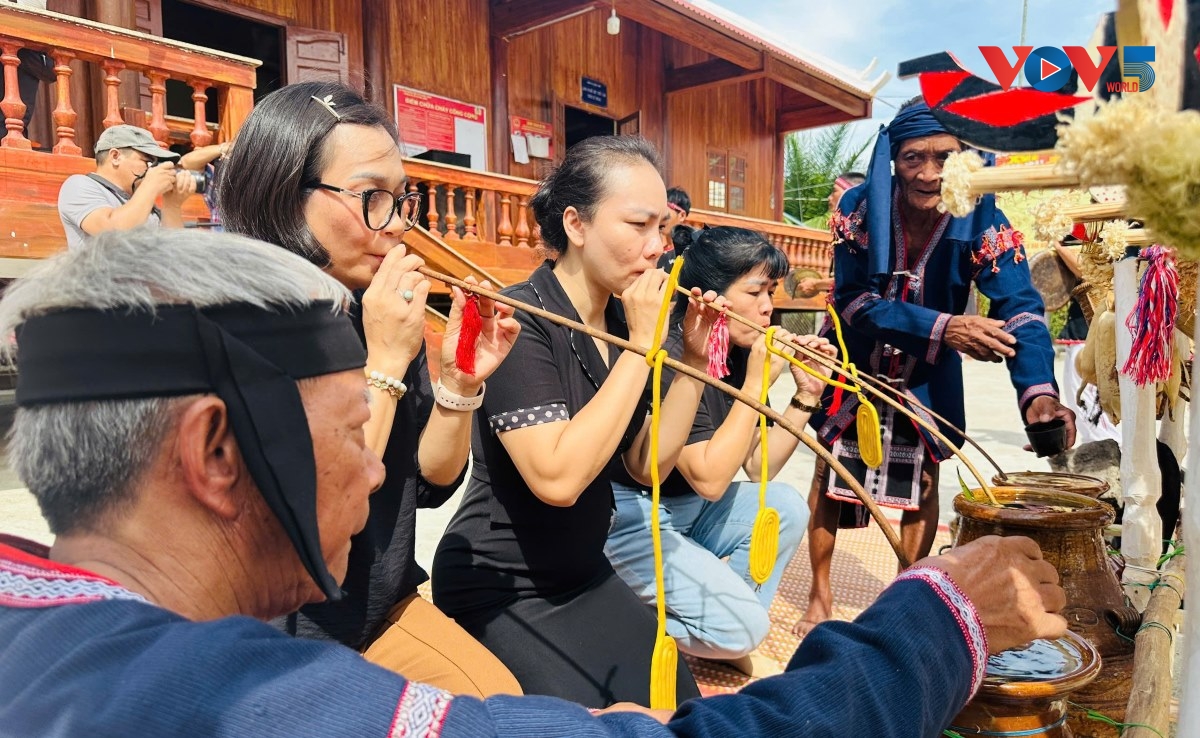
“We are working on an action plan to implement the national target program on cultural development through to 2030. We will help each ethnic group identify their preservation priorities,” said Nguyen Thuy Phuong Hieu, Deputy Director of the Dak Lak provincial Department of Culture, Sports and Tourism.
The ceremony to pray for a good harvest of the Ba Na in Xi Thoai village and many other traditional rituals of ethnic minority communities in Dak Lak Province are being restored and digitally documented. These efforts will provide an important foundation for preserving and passing on these cultural treasures to future generations.