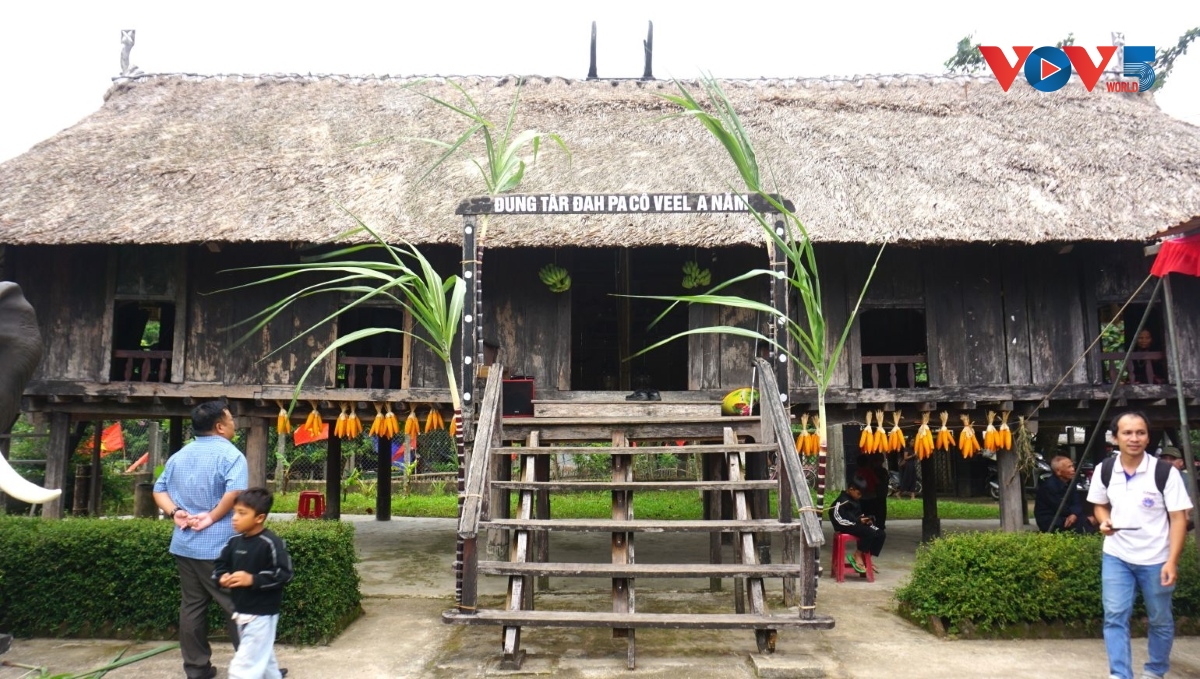
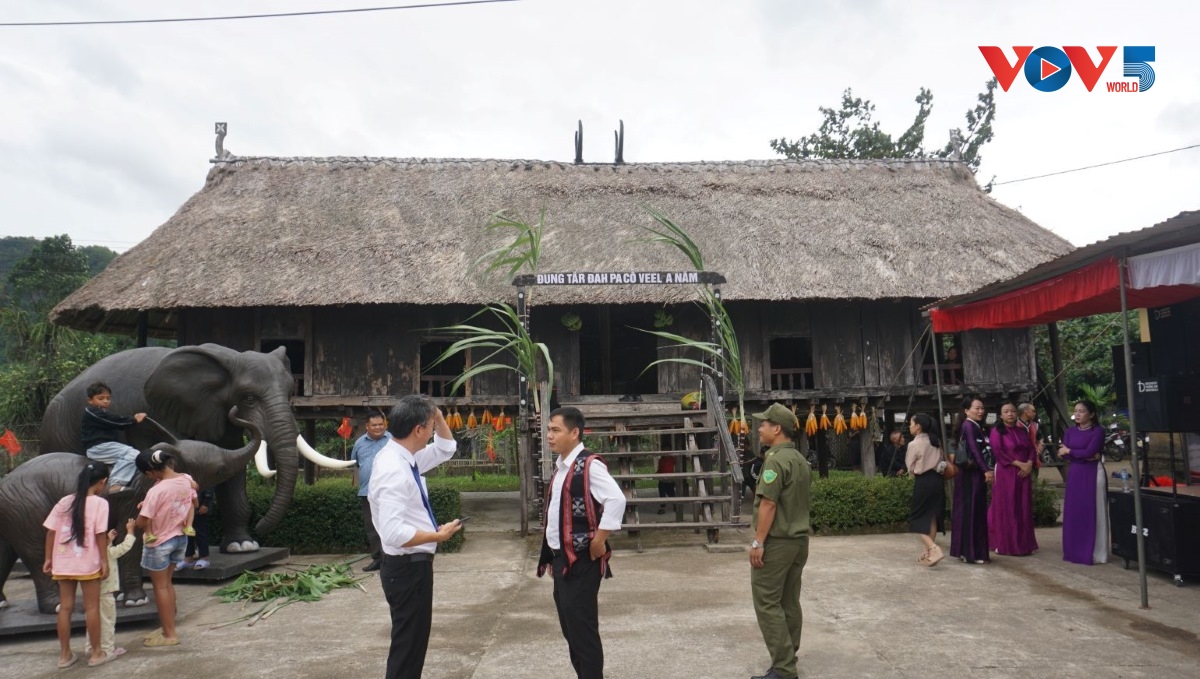
Traditional Moong houses are built from wood, bamboo and rattan, with sturdy designs to withstand the harsh mountainous climate. On the thatched roof, two sets of buffalo horns are placed at the centre, with two more at either end of the gable. Another distinctive feature is the wooden motif carvings of four-petalled white flowers, which symbolise solidarity in Pa Co culture.
In front of a Moong House is a pair of mother-and-calf elephant statues made of wood or concrete. They represent prayers for peace, protection for the house, prosperity and strong family bonds. For the Pa Co, elephants are symbols of strength and trusted companionship.
The Moong house has shared areas for children playing and for drying farm produce. The length of the house and the number of sections depend on the number of families in the clan, which are arranged according to family hierarchy.
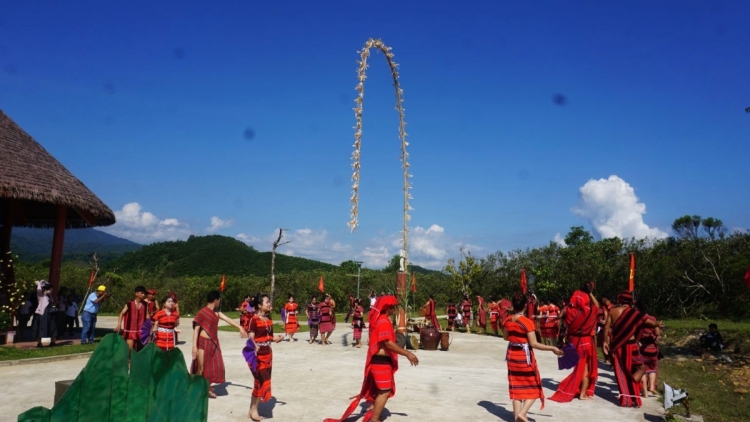
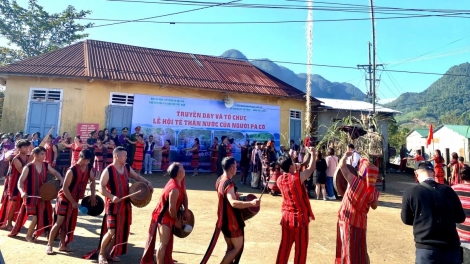
“The Moong house is a venue for family gatherings and ceremonies, such as the Arieu Piing ceremony, which is held to honor ancestors, and the Aza Koonh ceremony, which celebrates the New Year and new rice. These are also seen as community events,” said Le Thanh Tuoc, head of A Nam village, A Luoi 1 commune.
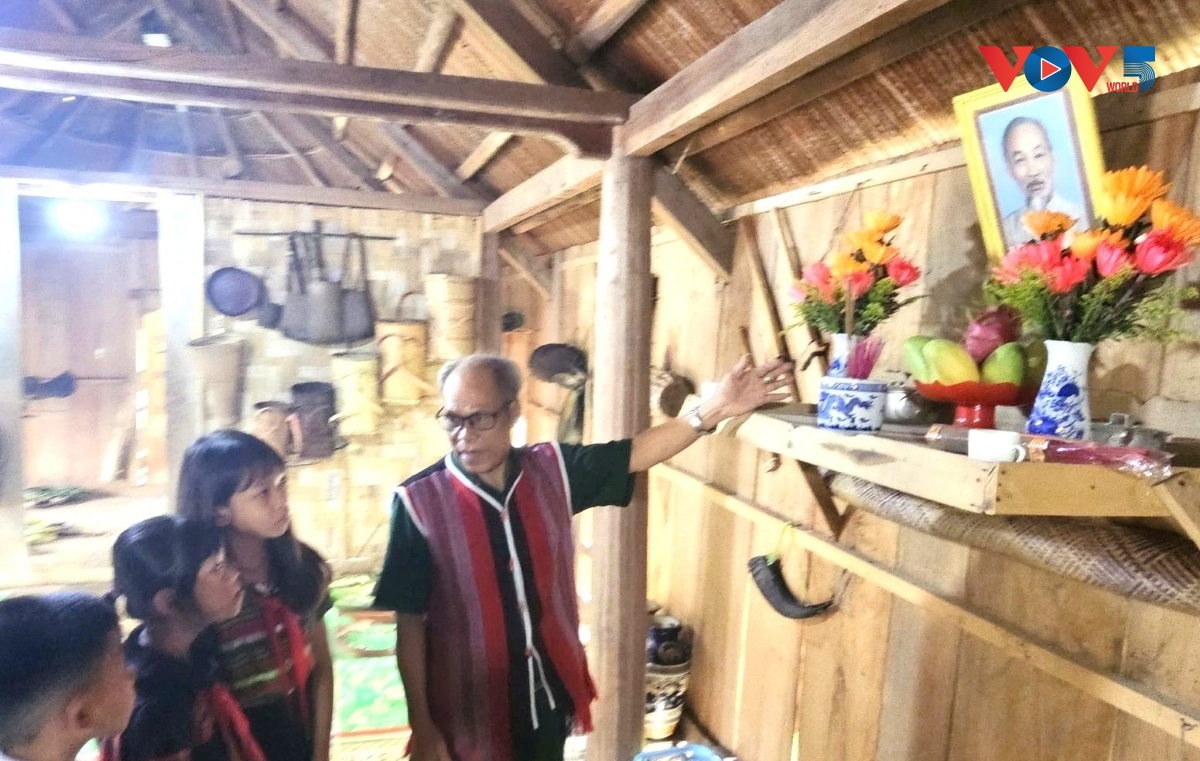
A Moong house usually has five separate chambers. The central chamber is the most important, and is reserved for the village elders, the organisation of ancestral worship and the reception of special guests. In this main chamber, there is an altar dedicated to President Ho Chi Minh. For decades, the Pa Co people have taken his surname, Ho, as their family name. At the centre, a large wooden pillar rises straight to the roof, decorated with spears, machetes and other traditional weapons.
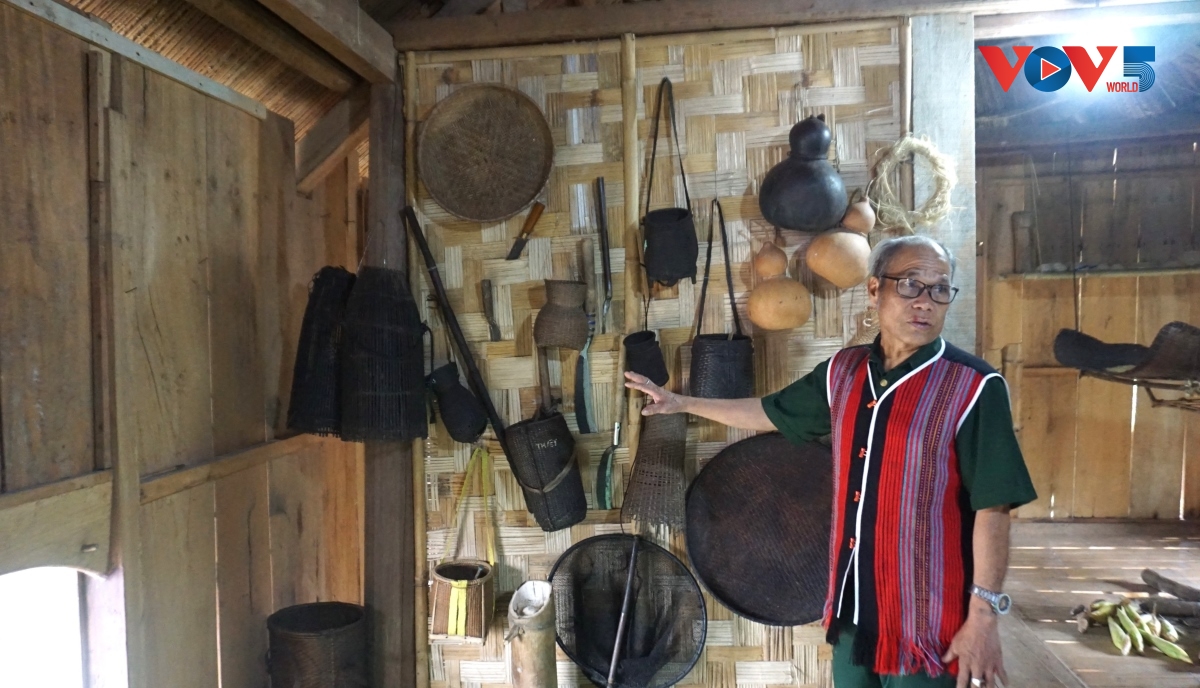
The two chambers on either side of the central chamber are used for family and community meetings, including guests from other villages. The two outermost chambers at either end of the long house are separate spaces for individual households. In the past, whenever a family member got married, the Pa Co would build an additional room onto the gable end.
Before the 1960s, A Nam village had 12 Moong houses. Over the years, these houses gradually deteriorated and disappeared. It was not until 2012, as part of efforts to restore indigenous traditional values, that two brothers, Ho Chan and Ho Tuong Van, mobilised villagers to contribute their labour and finance to rebuild a Moong house.
“After my brother and I researched the design and submitted the proposal to the authorities, all the villagers supported us to rebuild an old Moong House. My elder brother, Ho Tuong Van, encouraged the villagers to donate money and become involved in the construction,” said village patriarch Ho Chan.
The traditional Moong house in A Nam village has recently been recognized as a city-level historical relic.
“We are very proud of the recognition. The older generations built this traditional house, and we will pass its values on to our children,” Ho Van Thoi from the A Nam village Fatherland Front said.
Le Hoang Vu Hai Quang, Vice Chairman of the A Luoi 1 Commune People’s Committee, said, “The recognition of the Moong House as a city-level historical relic is highly significant for preserving and promoting the cultural values of the Pa Co people. In recent years, local authorities have worked closely with the villagers to manage the house and ensure its sustainability.”
Ho Thien Nga, a student at Hong Van Secondary and High School in A Luoi 1 commune, said, “I am very proud of the Pa Co’s distinctive cultural identity. I hope these cultural traditions will be promoted widely and become known to more people.”
Following the inauguration of the Moong House in A Nam Village, the Hue City History Museum handed over more than 100 documents and artefacts featuring the daily life and traditional livelihoods of the Pa Co people to the authorities of A Luoi 1 Commune. The traditional house now serves not only as a place to preserve and showcase Pa Co cultural heritage, but also as a rewarding destination for community-based tourism.