






Ede’s health worship for elderly
(VOVWORLD) - The Ede in the Central Highlands show their filial piety for grandparents and parents through a health worship ceremony. Family members gather for the ritual to the joyful sound of gongs, the aroma of wine, and the color of special clothes for elderly people.

Ede’s health worship for elderly
Ede’s health worship for elderly
(VOVWORLD) - The Ede in the Central Highlands show their filial piety for grandparents and parents through a health worship ceremony. Family members gather for the ritual to the joyful sound of gongs, the aroma of wine, and the color of special clothes for elderly people.
Wedding ritual of the Nung in Lao Cai province
(VOVWORLD) - Young Nung boys and girls make friends and date when they work in the fields or go to market fairs. Luon singing sessions at night are also good opportunities for them to find a partner. When a boy and a girl fall in love, the boy’s family sends a matchmaker to make a proposal to the girl’s family.

Wedding ritual of the Nung in Lao Cai province
Wedding ritual of the Nung in Lao Cai province
(VOVWORLD) - Young Nung boys and girls make friends and date when they work in the fields or go to market fairs. Luon singing sessions at night are also good opportunities for them to find a partner. When a boy and a girl fall in love, the boy’s family sends a matchmaker to make a proposal to the girl’s family.
Ngo boat race of the Khmer
(VOVWORLD) - The Khmer’s Ok-om-bok Festival ended with the Ngo boat race over the weekend. Scores of Ngo boats from southern provinces took part in the race in Soc Trang province, which drew thousands of spectators.

Ngo boat race of the Khmer
Ngo boat race of the Khmer
(VOVWORLD) - The Khmer’s Ok-om-bok Festival ended with the Ngo boat race over the weekend. Scores of Ngo boats from southern provinces took part in the race in Soc Trang province, which drew thousands of spectators.
Improved living conditions add more joy to Cham people’s Kate Festival
(VOVWORLD) - The Cham ethnic people live mainly in the south central provinces of Ninh Thuan and Binh Thuan. Their traditional culture centers in festivals, architecture, costumes, pottery craft, and brocade weaving. The annual Kate Festival, which took place between Oct 15 and 17 this year, is a community event for Cham people to honor their ancestors and unite with their families. 2020 celebrations were even more cheerful as the Cham enjoy a better life.
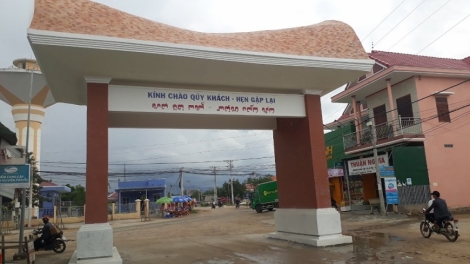
Improved living conditions add more joy to Cham people’s Kate Festival
Improved living conditions add more joy to Cham people’s Kate Festival
(VOVWORLD) - The Cham ethnic people live mainly in the south central provinces of Ninh Thuan and Binh Thuan. Their traditional culture centers in festivals, architecture, costumes, pottery craft, and brocade weaving. The annual Kate Festival, which took place between Oct 15 and 17 this year, is a community event for Cham people to honor their ancestors and unite with their families. 2020 celebrations were even more cheerful as the Cham enjoy a better life.
Yin-Yang tile of the Tay, Nung in Lang Son
(VOVWORLD) - The Tay and Nung ethnic people in Lang Son province are famous for the craft of making yin-yang tiles. They are trying to preserve their trade in the face of competition from other roofing products such as fibre cement sheets.

Yin-Yang tile of the Tay, Nung in Lang Son
Yin-Yang tile of the Tay, Nung in Lang Son
(VOVWORLD) - The Tay and Nung ethnic people in Lang Son province are famous for the craft of making yin-yang tiles. They are trying to preserve their trade in the face of competition from other roofing products such as fibre cement sheets.
Costumes of Mong people in Sa Pa
(VOVWORLD) - The Mong comprise more than half of the population of the popular resort town of Sa Pa in northern Vietnam. They belong to different Mong branches, including Black Mong, White Mong, and Flowery Mong, but all wear indigo clothing.
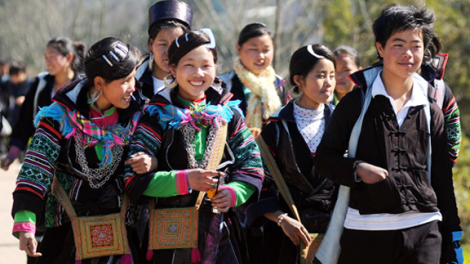
Costumes of Mong people in Sa Pa
Costumes of Mong people in Sa Pa
(VOVWORLD) - The Mong comprise more than half of the population of the popular resort town of Sa Pa in northern Vietnam. They belong to different Mong branches, including Black Mong, White Mong, and Flowery Mong, but all wear indigo clothing.
Hang Pinh Fullmoon Festival of the Tay and Nung
(VOVWORLD) - The Tay and Nung people in Lang Son province celebrate the Hang Pinh Fullmoon Festival from the 12th to the 15th day of the 8th lunar month. People from near and far go to the festival to buy baked cakes as gifts for their parents and as Fullmoon offerings and to join singing sessions to find partners.

Hang Pinh Fullmoon Festival of the Tay and Nung
Hang Pinh Fullmoon Festival of the Tay and Nung
(VOVWORLD) - The Tay and Nung people in Lang Son province celebrate the Hang Pinh Fullmoon Festival from the 12th to the 15th day of the 8th lunar month. People from near and far go to the festival to buy baked cakes as gifts for their parents and as Fullmoon offerings and to join singing sessions to find partners.
Ancestor worship, a sacred rite of the Lo Lo in Ha Giang province
(VOVWORLD) - The Lo Lo ethnic minority people live mostly in Lung Cu commune, Ha Giang province. They live harmoniously with other ethnic groups of the Dong Van stone plateau while maintaining their ancient customs and traditions. The local authorities have organized a festival of Lo Lo culture that features their traditions and worship rituals.

Ancestor worship, a sacred rite of the Lo Lo in Ha Giang province
Ancestor worship, a sacred rite of the Lo Lo in Ha Giang province
(VOVWORLD) - The Lo Lo ethnic minority people live mostly in Lung Cu commune, Ha Giang province. They live harmoniously with other ethnic groups of the Dong Van stone plateau while maintaining their ancient customs and traditions. The local authorities have organized a festival of Lo Lo culture that features their traditions and worship rituals.
Tomb house of the Co Tu
(VOVWORLD) - A tomb house built on the grave of a dead person is typical of folk belief of the Co Tu ethnic minority who live in Vietnam’s central region. The house of a dead person is decorated with wood statues and the household utensils he used when he was alive.
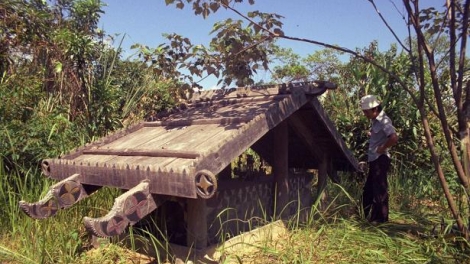
Tomb house of the Co Tu
Tomb house of the Co Tu
(VOVWORLD) - A tomb house built on the grave of a dead person is typical of folk belief of the Co Tu ethnic minority who live in Vietnam’s central region. The house of a dead person is decorated with wood statues and the household utensils he used when he was alive.
Kinh man preserves ethnic minority’s gongs
(VOVWORLD) - Duong Van Tho is a member of the Kinh ethnic majority who lives in Cư Drăm commune, in Dak Lak province. Having fallen in love with the gongs and dances of the Ede minority in the Central Highlands, he has invited artisans to teach young Ede people in his commune to play gongs and perform the traditional Ede dances.

Kinh man preserves ethnic minority’s gongs
Kinh man preserves ethnic minority’s gongs
(VOVWORLD) - Duong Van Tho is a member of the Kinh ethnic majority who lives in Cư Drăm commune, in Dak Lak province. Having fallen in love with the gongs and dances of the Ede minority in the Central Highlands, he has invited artisans to teach young Ede people in his commune to play gongs and perform the traditional Ede dances.

