






Wedding of the Giay in Lao Cai
(VOVworld) – The Giay people care a great deal about marriage and the continuation of the family line. Their least concern is a family’s wealth or poverty. For them, the most important things are morality, family tradition, and respect.

Wedding of the Giay in Lao Cai
Wedding of the Giay in Lao Cai
(VOVworld) – The Giay people care a great deal about marriage and the continuation of the family line. Their least concern is a family’s wealth or poverty. For them, the most important things are morality, family tradition, and respect.
Giay ethnic group in Lao Cai
(VOVworld) – The Giay ethnic group, which has about 38,000 people, lives mainly in Lao Cai, Ha Giang, Lai Chau, and Cao Bang provinces. They are called by different names such as Dang, Pau Thin, and Xa. Like other minorities of the Tay-Thai group, the Giay grow wet rice and raise domestic animals and fowls.

Giay ethnic group in Lao Cai
Giay ethnic group in Lao Cai
(VOVworld) – The Giay ethnic group, which has about 38,000 people, lives mainly in Lao Cai, Ha Giang, Lai Chau, and Cao Bang provinces. They are called by different names such as Dang, Pau Thin, and Xa. Like other minorities of the Tay-Thai group, the Giay grow wet rice and raise domestic animals and fowls.
Custom of asking for wedding presents of the Tay
(VOVworld) - Like many other ethnic groups, the Tay people consider marriage an important event of the family and the whole clan. They uphold several marriage rules and rituals. The man has to show his love, intelligence, and honesty to make his wife happy. Customarily, the groom’s family pays almost all the wedding costs and the bride’s family contributes a small sum. In order to show that the groom’s family will firmly support the daughter-in-law, the groom’s family has to try to provide all the wedding gifts the bride’s family asks for.

Custom of asking for wedding presents of the Tay
Custom of asking for wedding presents of the Tay
(VOVworld) - Like many other ethnic groups, the Tay people consider marriage an important event of the family and the whole clan. They uphold several marriage rules and rituals. The man has to show his love, intelligence, and honesty to make his wife happy. Customarily, the groom’s family pays almost all the wedding costs and the bride’s family contributes a small sum. In order to show that the groom’s family will firmly support the daughter-in-law, the groom’s family has to try to provide all the wedding gifts the bride’s family asks for.
Long tong festival of the Tay in Lang Son
(VOVworld) – At the beginning of the lunar year, about 200 Long tong, Going to the field, festivals are organized in Tay hamlets in Lang Son province. The festival takes place in the first lunar month to pray for the new crop.

Long tong festival of the Tay in Lang Son
Long tong festival of the Tay in Lang Son
(VOVworld) – At the beginning of the lunar year, about 200 Long tong, Going to the field, festivals are organized in Tay hamlets in Lang Son province. The festival takes place in the first lunar month to pray for the new crop.
“Second Damsel” festival: a typical religious ritual of the Tay
(VOVworld) - The Nang Hai, which means Second Damsel or Damsel of the Moon, festival is a time-honored festival reflecting ancient Vietnamese people’s hope for fertility. VOV introduces highlights of the festival organized by the Tay people in Cao Bang.

“Second Damsel” festival: a typical religious ritual of the Tay
“Second Damsel” festival: a typical religious ritual of the Tay
(VOVworld) - The Nang Hai, which means Second Damsel or Damsel of the Moon, festival is a time-honored festival reflecting ancient Vietnamese people’s hope for fertility. VOV introduces highlights of the festival organized by the Tay people in Cao Bang.
First rites in the lifespan of the Tay people
(VOVworld) – The Tay people believe that during a person’s lifespan he must meet all his relatives in 4 ritual ceremonies: his 1st month ceremony as a newborn, his wedding, his housewarming, and his funeral. VOV will look at the 1st month ceremony which launches a baby on his new life.

First rites in the lifespan of the Tay people
First rites in the lifespan of the Tay people
(VOVworld) – The Tay people believe that during a person’s lifespan he must meet all his relatives in 4 ritual ceremonies: his 1st month ceremony as a newborn, his wedding, his housewarming, and his funeral. VOV will look at the 1st month ceremony which launches a baby on his new life.
“Then” singing of the Tay in Binh Lieu
(VOVworld) – “Then” is a ritual singing and dancing genre of the Tay. Female and male Then singers perform Then in front of the altars at sacred places. The Tay in Binh Lieu, Quang Ninh province, sing Then when young boys and girls court each other, when house owners welcome guests, and when people make wishes at wedding ceremonies.

“Then” singing of the Tay in Binh Lieu
“Then” singing of the Tay in Binh Lieu
(VOVworld) – “Then” is a ritual singing and dancing genre of the Tay. Female and male Then singers perform Then in front of the altars at sacred places. The Tay in Binh Lieu, Quang Ninh province, sing Then when young boys and girls court each other, when house owners welcome guests, and when people make wishes at wedding ceremonies.
Stilt-house of the Tay in Ha Giang province
(VOVworld) – Ha Thanh, a community-based cultural tourism village in Phuong Do commune, Ha Giang province, has preserved several traditional stilt-houses of the Tay. The stilt-house reveals several cultural and spiritual values of the Tay people.
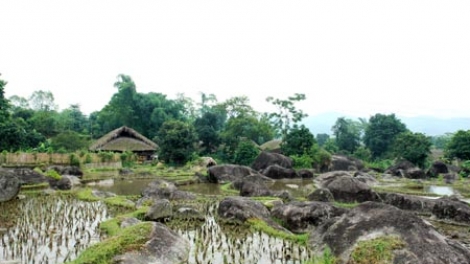
Stilt-house of the Tay in Ha Giang province
Stilt-house of the Tay in Ha Giang province
(VOVworld) – Ha Thanh, a community-based cultural tourism village in Phuong Do commune, Ha Giang province, has preserved several traditional stilt-houses of the Tay. The stilt-house reveals several cultural and spiritual values of the Tay people.
Tay people earn a living from chestnuts
(VOVworld) – Chestnuts grown in Trung Khanh district, Cao Bang province, have long been considered the best in Vietnam. But recently people in several northern provinces and Hanoi have a new appreciation for chestnuts grown by the Tay people in Quang Lac commune, Lang Son province. Nguyen Trung Hieu and his family are the first household in Lang Son to grow chestnut trees.
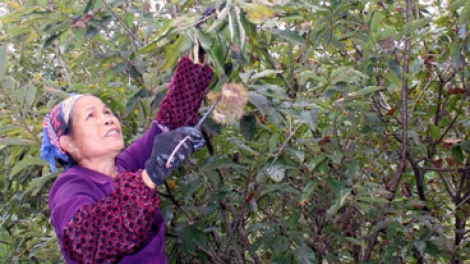
Tay people earn a living from chestnuts
Tay people earn a living from chestnuts
(VOVworld) – Chestnuts grown in Trung Khanh district, Cao Bang province, have long been considered the best in Vietnam. But recently people in several northern provinces and Hanoi have a new appreciation for chestnuts grown by the Tay people in Quang Lac commune, Lang Son province. Nguyen Trung Hieu and his family are the first household in Lang Son to grow chestnut trees.
Tay’s culture and belief
(VOVworld) – With around 1.7 million people, the Tay are the biggest ethnic minority group in Vietnam. They live mainly in Vietnam’s northern and northwestern provinces - Cao Bang, Bac Can, Lang Son, Ha Giang, Thai Nguyen, and Lao Cai. They live along rivers in mountain foothills.
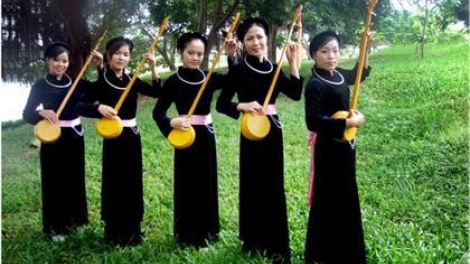
Tay’s culture and belief
Tay’s culture and belief
(VOVworld) – With around 1.7 million people, the Tay are the biggest ethnic minority group in Vietnam. They live mainly in Vietnam’s northern and northwestern provinces - Cao Bang, Bac Can, Lang Son, Ha Giang, Thai Nguyen, and Lao Cai. They live along rivers in mountain foothills.

