






Religious rituals of the Muong
(VOVworld) – The Muong in Hoa Binh worship their ancestors and practice polytheism. Shamans are respected people who perform religious rituals for families and the community. The Muong consider shamans messengers of the gods.
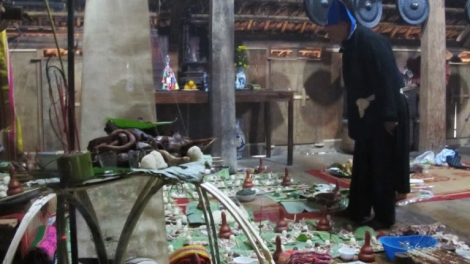
Religious rituals of the Muong
Religious rituals of the Muong
(VOVworld) – The Muong in Hoa Binh worship their ancestors and practice polytheism. Shamans are respected people who perform religious rituals for families and the community. The Muong consider shamans messengers of the gods.
Doi calendar of the Muong
(VOVworld) – The Doi calendar, which once was used by all Muong branches, is now used only by shamans of the Muong Bi in Tan Lac district, Hoa Binh province.
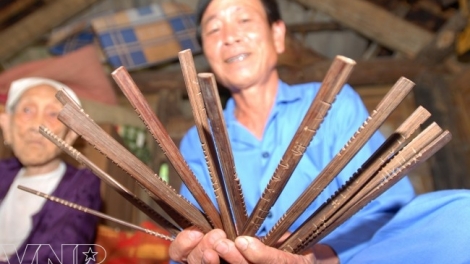
Doi calendar of the Muong
Doi calendar of the Muong
(VOVworld) – The Doi calendar, which once was used by all Muong branches, is now used only by shamans of the Muong Bi in Tan Lac district, Hoa Binh province.
Muong cuisine
(VOVworld) – Muong cuisine has a unique flavor because it is made from ingredients found in the forest and springs. Muong women have always depended on the natural, fresh taste of these ingredients whether cooking a daily meal or a feast for a worshipping ceremony or festival.
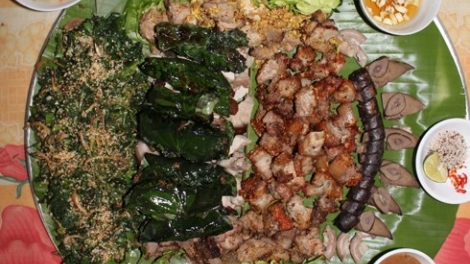
Muong cuisine
Muong cuisine
(VOVworld) – Muong cuisine has a unique flavor because it is made from ingredients found in the forest and springs. Muong women have always depended on the natural, fresh taste of these ingredients whether cooking a daily meal or a feast for a worshipping ceremony or festival.
Stilt house of the Muong Bi in Hoa Binh
(VOVworld) – The Muong have maintained their traditional construction techniques in building stilt houses - choosing an orientation, building, and decorating the house.
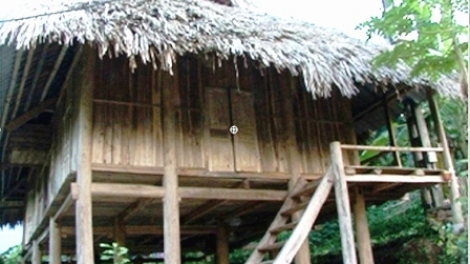
Stilt house of the Muong Bi in Hoa Binh
Stilt house of the Muong Bi in Hoa Binh
(VOVworld) – The Muong have maintained their traditional construction techniques in building stilt houses - choosing an orientation, building, and decorating the house.
Unique weaving of the Muong
(VOVworld) – Weaving is an age-old custom of the Muong. They perform every step manually - growing cotton, raising silkworms, weaving, dyeing, and making clothing items. The Muong produce brocade products that bear their cultural hallmark.

Unique weaving of the Muong
Unique weaving of the Muong
(VOVworld) – Weaving is an age-old custom of the Muong. They perform every step manually - growing cotton, raising silkworms, weaving, dyeing, and making clothing items. The Muong produce brocade products that bear their cultural hallmark.
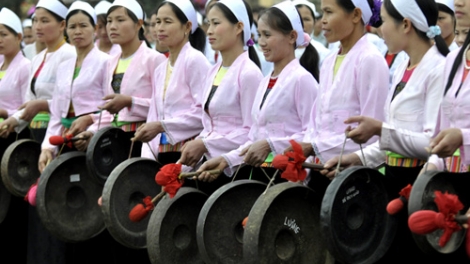
Gongs in the life of the Muong
(VOVworld) - The gong as a musical instrument is an important cultural item in the life of the Muong. It appears in all community activities and throughout a person’s lifetime. The Muong consider gongs valuable possession to be preserved from generation to generation.
Gongs in the life of the Muong
Gongs in the life of the Muong
(VOVworld) - The gong as a musical instrument is an important cultural item in the life of the Muong. It appears in all community activities and throughout a person’s lifetime. The Muong consider gongs valuable possession to be preserved from generation to generation.
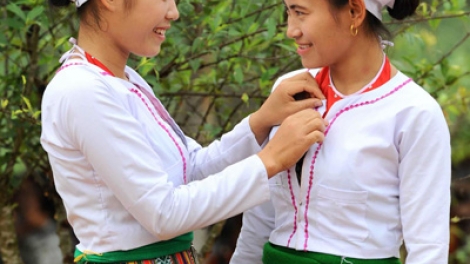
Interesting wedding ritual of the Muong
(VOVworld) – The Muong culture is expressed in the group’s lifestyle, customs, and beliefs. The wedding ritual of the Muong in Hoa Binh shapes the formation and development of the family and clan.
Interesting wedding ritual of the Muong
Interesting wedding ritual of the Muong
(VOVworld) – The Muong culture is expressed in the group’s lifestyle, customs, and beliefs. The wedding ritual of the Muong in Hoa Binh shapes the formation and development of the family and clan.
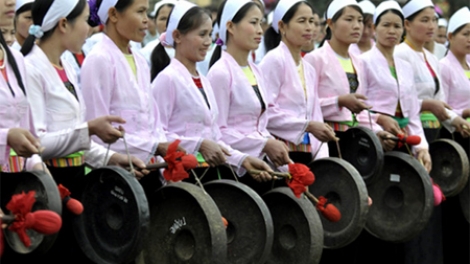
The Muong group and their typical culture
(VOVworld) – The Muong have a population of around 1 million who live mainly in northern provinces like Hoa Binh and Thanh Hoa. The Muong culture is related to Hoa Binh culture dating back more than 10,000 years. Today VOV’s Colorful Vietnam – Vietnam’s 54 Ethnic Groups takes a look at Muong culture.
The Muong group and their typical culture
The Muong group and their typical culture
(VOVworld) – The Muong have a population of around 1 million who live mainly in northern provinces like Hoa Binh and Thanh Hoa. The Muong culture is related to Hoa Binh culture dating back more than 10,000 years. Today VOV’s Colorful Vietnam – Vietnam’s 54 Ethnic Groups takes a look at Muong culture.
The M’nong’s community organization and custom
(VOVworld) – The M’nong have maintained many traditional customs which have helped enhance their communal bond.

The M’nong’s community organization and custom
The M’nong’s community organization and custom
(VOVworld) – The M’nong have maintained many traditional customs which have helped enhance their communal bond.
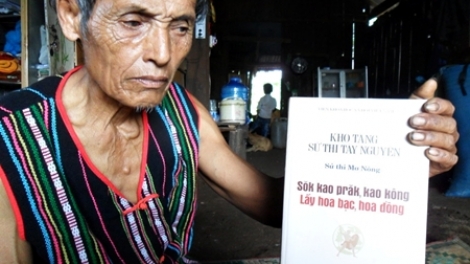
Preserving epics of the M’nong
(VOVworld) – The M’nong have a system of diverse epics. The “Ot N’Rong”, the oldest epic, reflects the social history of the M’nong. Vietnam’s cultural researcher have worked with localities to collect and preserve the M’nong’s unique cultural values, especially their epics.
Preserving epics of the M’nong
Preserving epics of the M’nong
(VOVworld) – The M’nong have a system of diverse epics. The “Ot N’Rong”, the oldest epic, reflects the social history of the M’nong. Vietnam’s cultural researcher have worked with localities to collect and preserve the M’nong’s unique cultural values, especially their epics.

