



From a historical perspective, renewing the national development model seems an inevitable progression for a nation that has consistently overcome adversity to endure and rise.
From national liberation to unleashing development potential
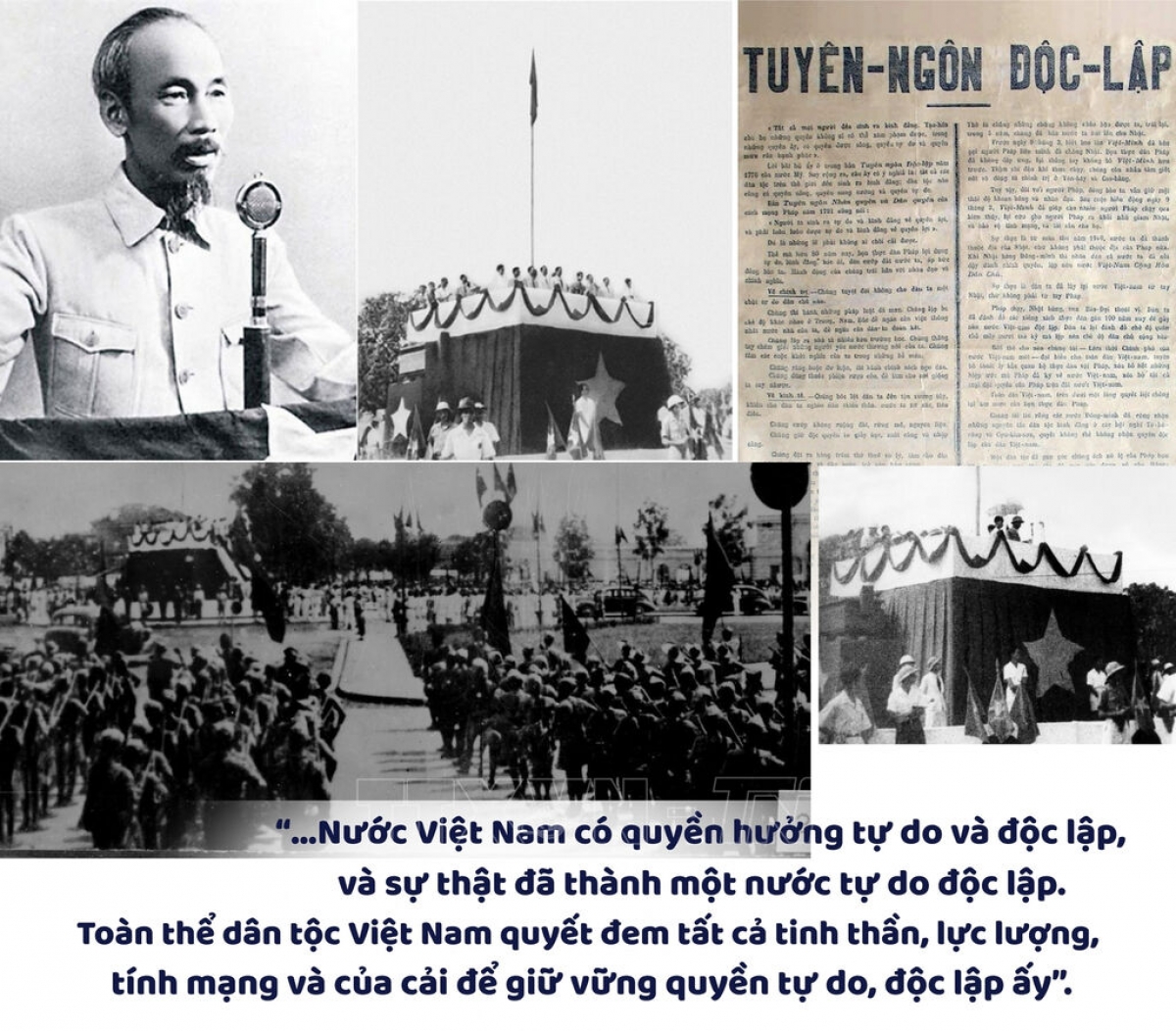
In 1945, at Ba Dinh Square in Hanoi, President Ho Chi Minh read the Declaration of Independence, addressing the Vietnamese people's aspirations for independence and freedom.
In 1986, the 6th National Congress of the Communist Party of Vietnam initiated Doi Moi (Renewal), shifting from a centrally planned economy to a socialist-oriented market economy. This process unleashed productive forces. 40 years later, Vietnam has achieved historic milestones: rising from a state of poverty to a country with a GDP of 514 billion USD in 2025, ranking 32nd globally and 4th within ASEAN. With a Gross National Income (GNI) per capita of 4,970 USD in 2025, Vietnam was recently classified by the World Bank as an upper-middle-income country.
In 2026, following the 14th National Party Congress, and in order to realize its aspiration of becoming a developed, high-income nation by 2045, steadily advancing toward socialism, Vietnam is shifting from a simple model of economic growth to a comprehensively reformed national development model.
Chairman of the Central Council for Theoretical Studies Nguyen Xuan Thang said, “Renewing the development model is the prerequisite for Vietnam to move beyond outdated mindsets and growth constraints, generate new momentum, and enhance capacity, strategic autonomy, self-confidence, and resilience in a world characterized by constant and unpredictable changes.”
Synergizing to generate resources
The 14th National Party Congress clearly defined the objective of establishing a new growth model aimed at boosting the economy's productivity, quality, efficiency, value-added output, and competitiveness. This model positions science, technology, innovation, and digital transformation as primary drivers, while fostering high-quality productive forces and new modes of production, with a focus on a data economy, a digital economy, a green economy, and a circular economy.
The 3rd Plenum of the 14th Party Central Committee further developed and concretized this vision by adopting Resolution No. 19 on renewing Vietnam's growth model. “Renewing Vietnam’s development model entails a comprehensive overhaul of the development mindset, the methods of national leadership and governance, the organization of society, and the approaches to mobilizing and allocating all resources. This transformation is the foundation for perfecting Vietnam’s model of socialism and the path toward socialism. Within this new development model, people are the goal, the driving force, and the internal strength of development,” said Mr. Thang.
In this new model, economic growth remains a goal but is no longer the sole objective. Development is balanced and coordinated across the economy, society, culture, people, the environment, national defense, security, and external relations.
“We’re aiming to develop a model of rapid, sustainable, inclusive, and people-centered development. To achieve this goal, science and technology, digital transformation, innovation, and the human factor are the most critical pillars. We also need to pay attention to two additional factors–the reform of national governance and the mobilization and allocation of resources,” according to economist Can Van Luc.
A broad view of recent policy decisions reveals a consistent mindset of the Party Central Committee – reform must begin in close alignment with streamlining the administrative apparatus and implementing a two-tier local government structure; removing institutional bottlenecks in accordance with Resolution 66; leveraging technology as a driving force for breakthroughs under Resolution 57; and harnessing the intrinsic strength derived from culture and the people pursuant to Resolution 80.
President Ho Chi Minh’s declaration that "Vietnam has the right to enjoy freedom and independence", which resounded across Ba Dinh Square in the autumn of 1945, and the historic decision to "renew the national development model" are the testaments to the self-reliance and resilience of Vietnam, a nation that has never retreated in the face of adversity, and that constantly renews itself to endure and rise.