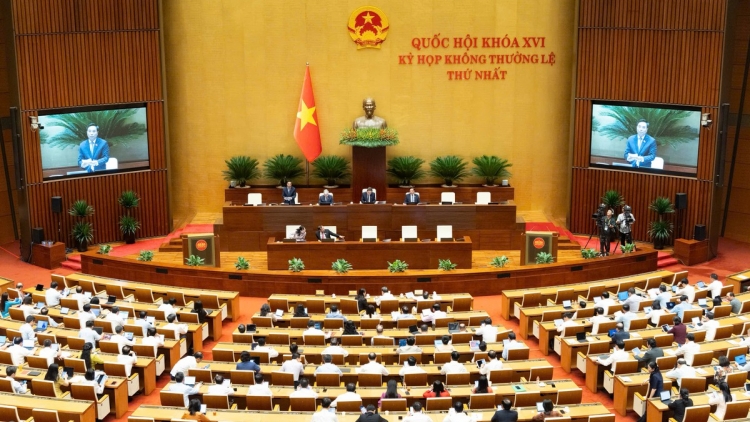




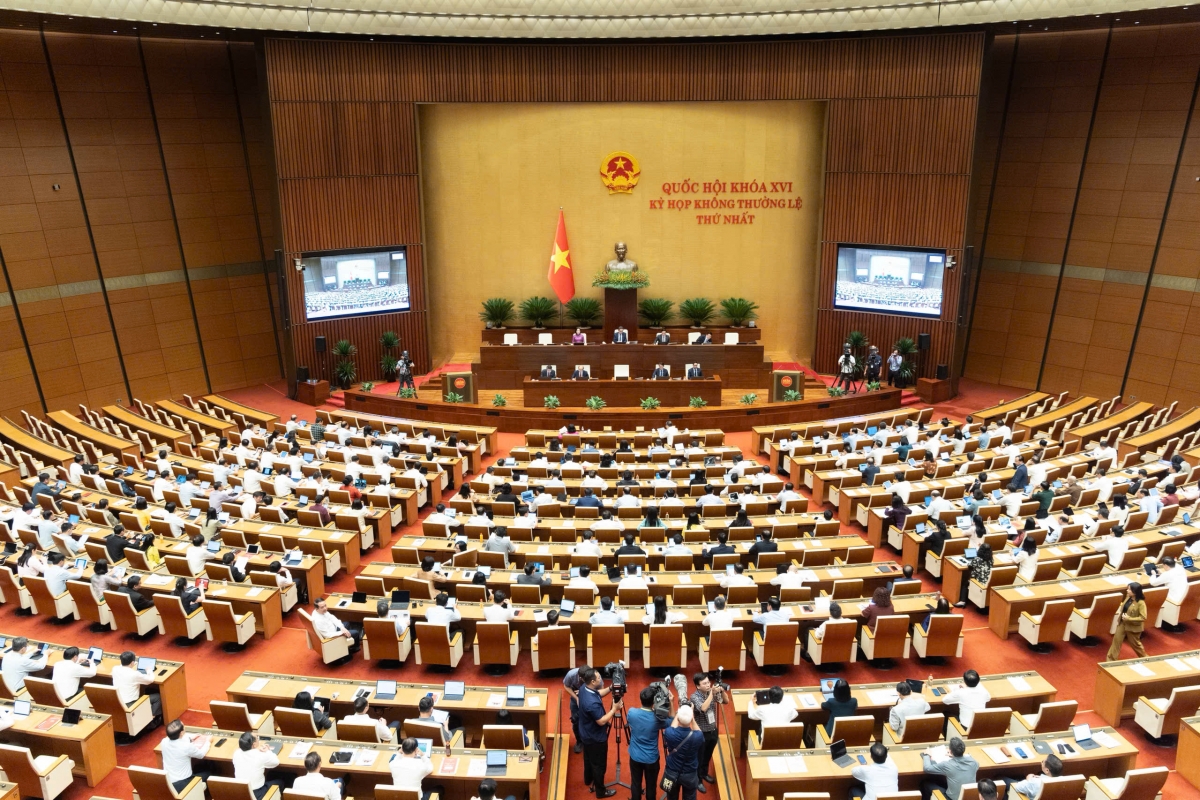
During its two-stage session, held from August 3 to 13 and from August 19 to 24, the National Assembly passed 15 laws and six resolutions, gave initial opinions on seven draft laws, and decided on a number of other important matters.
Legislation must begin with real-world problems
High on the agenda were urban development, land, petroleum, banking, technology, and telecommunications, as well as policies directly affecting businesses, workers, and ordinary citizens.
Every policy adopted had to address real-world problems, reduce overlaps, and create more favorable conditions for production, business activities, and people's daily lives.
National Assembly deputy Trinh Xuan An of Dong Nai province said: “We’re moving toward a process in which policy and implementation go hand in hand. What we’ve put forward will certainly be transformed into advantages and drivers of development, ensuring feasibility so that these policies can be put into practice immediately.”
The session demonstrated changes in the approach to lawmaking and new expectations for policymaking. Deputy Bui Hoai Son of Hanoi said the most notable change was a shift in legislative thinking, from an approach focused primarily on management to one focused on enabling development; from asking how to manage more tightly to asking what the law can do to unlock resources and create conditions for new ideas and initiatives to flourish.
“The workload is enormous, but the overall approach is not to make laws simply to meet numerical targets or complete an agenda, but to ensure that every law genuinely addresses problems in people's lives. Deputies were focused on whether the regulation will remove bottlenecks or create additional procedures, whether decentralization comes with adequate resources and clear responsibilities, how the rights of citizens and businesses are protected, and whether the law can actually be implemented at the grassroots level. Asking these questions made the legislative process more substantive,” said Mr. Son.
Legislative quality is measured by implementation
The close of the session marks the beginning of an important stage for the laws and resolutions adopted – implementation. This is where the effectiveness of lawmaking will ultimately be tested.
Deputy Son said: “The quality of a legislative session should be measured, not by the number of laws adopted, but by the obstacles removed, the resources unlocked, and the extent to which people and businesses experience greater convenience when the laws take effect. This reflects the spirit of paving the way for development that the National Assembly is demonstrating.”
To sustain and maximize the results of the session, not only must each law and resolution be effectively implemented, but the coherence of the legal system must continue to be improved.
Economist Nguyen Minh Phong said: “I believe that following this National Assembly session, we will be able to build an enabling ecosystem centered on people, with public satisfaction, economic development and business growth serving as the measures. The business community expects the session to bring greater liberalization, including at least a 30% reduction in business conditions. This is one of the important breakthroughs. We also need to cut administrative procedures, streamline processes, and reduce opportunity costs for businesses.”
The first extraordinary session of the 16th National Assembly has highlighted the need for further fundamental reform of lawmaking and law enforcement to make Vietnam's legal framework more coherent, stable, and responsive to development requirements so that the National Assembly's decisions will be real drivers of development in the next stage.