



With the overall re-organization of its political system and the implementation of a three-tier government model, Vietnam has gone through its biggest transition since the renewal period. This large-scale administrative restructuring is an experiment in governance approach, in which service efficiency for citizens and businesses is the central measure.
Figures confirm the effectiveness of the administrative reform
The administrative apparatus was consolidated from 63 provinces and cities to 34 administrative units. 696 district-level administrative units ceased operations and more than 10,000 commune-level units were consolidated into just over 3,300. Many intermediary agencies in the political system have been restructured to shorten the managerial distance between central and grassroots levels.
Public reactions were mainly positive: “People are happy and satisfied when coming to carry out administrative procedures. The officials are closer to the people, which are very much in line with the Party and State’s policy.”
“The local government is more dynamic and flexible, providing greater support for people in economic development. The community is united, and people are responding enthusiastically.”
Over the past year, hundreds of legal documents on decentralization and delegation of authority have been issued. Government agencies have delegated 1,400 tasks (71% of the total) to localities.
Deputy Prime Minister Pham Thi Thanh Tra said: “The Government has issued 1,300 legal documents and eliminated or simplified 40% of administrative procedures and business conditions. The share of administrative procedures handled by the Government, ministries, and central agencies has decreased to 27.4%. Those figures meet the targets set in the 14th Party Central Committee’s Conclusion 18 on socio-economic development, national finance, public debt, and medium-term public investment for 2026–2030, linked with the goal of achieving double-digit growth.”
The results reflect a fundamental shift in governance thinking. The central level now focuses on institution-building, policy formulation, and inspection and supervision, while localities are given greater autonomy in implementation and bear clearer responsibility for outcomes.
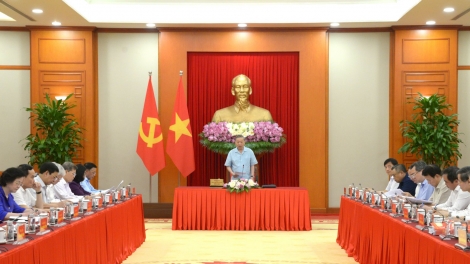
Nguyen Duy Ngoc, Head of the Party Central Committee’s Organization Commission, said: “After one year of operation, the new model has proven its superiority over the previous one, demonstrating its correctness in both theory and practice. It has strongly shifted thinking from administrative management to development-oriented governance."
"This is the renewed foundation of the Party’s leadership and governance, creating a qualitative transformation in modern national governance, linking decentralization with power control. Streamlining the apparatus has brought major changes in the political system, leadership methods, administration, and public service delivery,” said Ngoc.
Greater determination in implementation
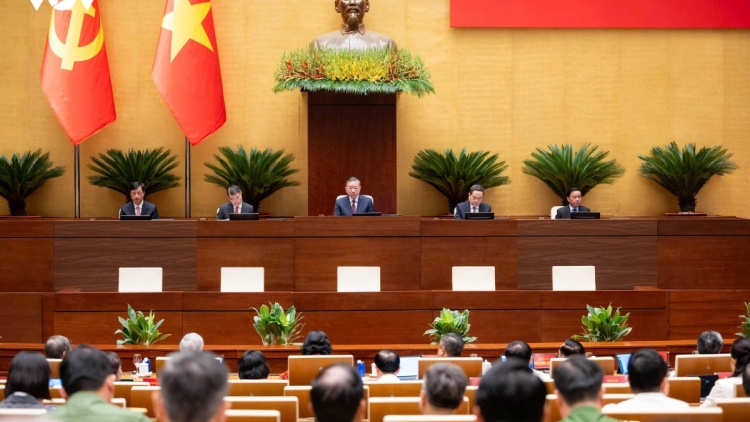
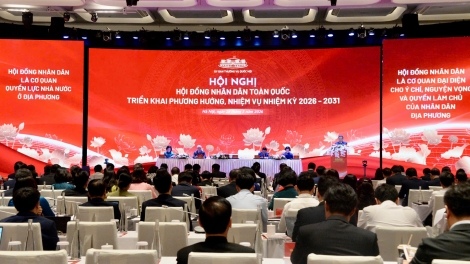
As General Secretary and State President To Lam said at a national conference in Hanoi on Wednesday to review one year of implementing the new political system model and three-tier government structure, this is just the first step.
The reform must continue with greater determination, a more scientific approach, and a stronger spirit of innovation. Vietnam will continue to improve institutions and laws, reorganize the political system, renew the Party leadership methods, promote decentralization and delegation of authority in regard to resource allocation and power control, and develop a cadre workforce that meets the needs of the new model.
Mr. Lam said: The reform of the political apparatus is a very large and complex task that must be carried out persistently, systematically, and scientifically. It can’t be rushed, shortsighted, or delayed in the face of actual shortcomings. A new structure must create new capacity; decentralization and delegation mean new responsibilities; and a new mindset must generate new governance methods. The new apparatus must improve service quality for citizens and businesses, and contribute to national stability and development.”
One year is not a long period for a major reform, but it’s long enough to show whether the new apparatus is better than the old one and ensures continuity of operations. The primary goal is to better serve the people while building a modern governance model and meeting the demand for rapid, sustainable national development in the new period.