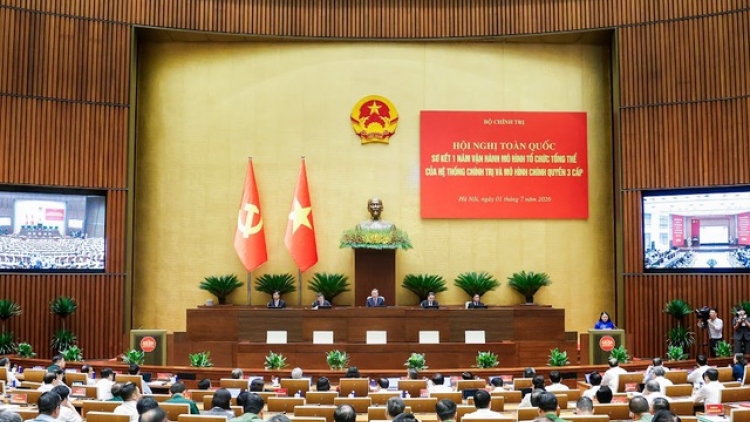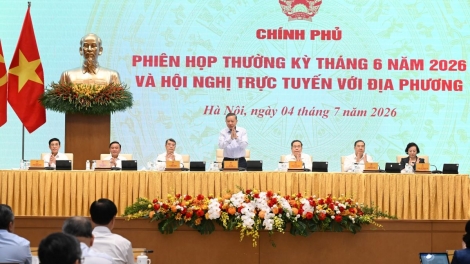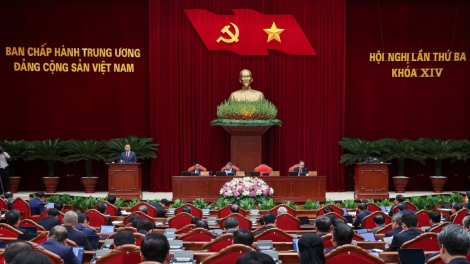



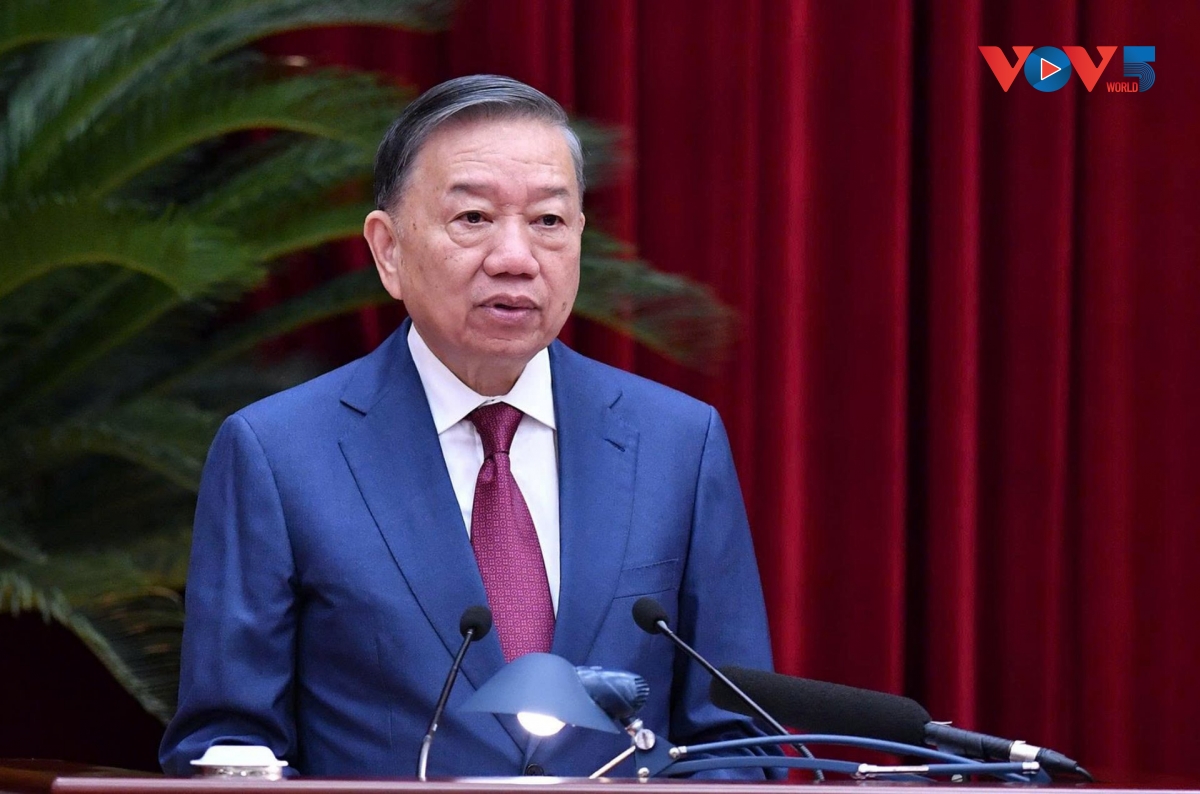
Party General Secretary and President To Lam's direction aims to develop a modern, effective and efficient national governance that better respond to the development requirements of the new era.
National resources are unified
Mr. Lam said that, in shifting from fragmented management to unified governance of the national development space and resources, administrative boundaries must not limit development. Land, seas, urban areas, infrastructure, natural resources, and data must be viewed as an integrated whole and organized in accordance with national strategy, regional advantages, and overall efficiency. Reform should create new development space, direct resources to where they can be used most effectively, harmonize the interests of the State, the people, and businesses, and connect local strengths to create national strength.
State governance should no longer be carried out within administrative boundaries. Localities should no longer focus only on their own jurisdictions, as many development issues are inter-regional and cross-sectoral and extend beyond administrative borders.
Professor Dr. Nguyen Tuan Anh, Editor-in-Chief of the Journal of Social Sciences and Humanities at the University of Social Sciences and Humanities, Vietnam National University, Hanoi, highlighted the Vietnamese top leader’s direction of shifting from fragmented management to unified governance of the national development space and resources.
“This is a strategic direction that requires national resources to be viewed as an integrated whole, organized in line with the national strategy, regional advantages, and overall development efficiency. Each locality should continue to build on its own strengths while remaining connected with other localities and aligned with the country's overall development goals,” Mr Anh said.
Professor Dr. Nguyen Tuan Anh believes that if this transformation is successfully implemented, Vietnam can effectively mobilize and utilize national resources, create new development space, strengthen regional connectivity, ensure harmony among the interests of the State, the people, and businesses, and lay a foundation for rapid, inclusive, and sustainable development.

A step forward in national governance mindset and capacity
Mr. Lam said that a leaner political apparatus structure has been established, but that "being lean is only a prerequisite."
The success of the reform should not be measured by the number of merged agencies or the reduction in administrative units and staff. Rather, it should be measured by faster decision-making, smoother coordination among agencies, simpler administrative procedures, and better services for people and businesses. He said the review of the first year of the new model should focus on leadership effectiveness, management efficiency, and the quality of public services.
Professor Dr. Anh said the Vietnamese top leader clarified the nature and the core aim of the apparatus restructuring. “The directive represents an advancement in the national governance mindset and capacity. First, it shifts the focus of evaluation from input indicators, such as the number of agencies, units, and staff positions reduced, to outcomes and impacts. A lean organizational structure is meaningful only if it improves leadership effectiveness, management efficiency, and the quality of public services. Second, the directive places people at the center. The performance of the political system should not be assessed solely from within the administrative apparatus, but also from the experiences of citizens. Important criteria should be the time required to complete administrative procedures, access to public services, transparency, responsiveness to public feedback, and citizen satisfaction.”
Modern national governance requires close coordination across levels and sectors, decentralization accompanied by appropriate authority, resources, personnel, and data, and greater accountability. Under the two-tier local government model, the commune level is closest to the people and directly handles most public services, so commune-level authorities must be given sufficient authority, resources, personnel, and tools to carry out their responsibilities.
The organizational reform has entered a phase in which the priority is to improve operational quality. Successful operation is the ultimate measure of the reform. Every policy decision must create new development capacity for the country.