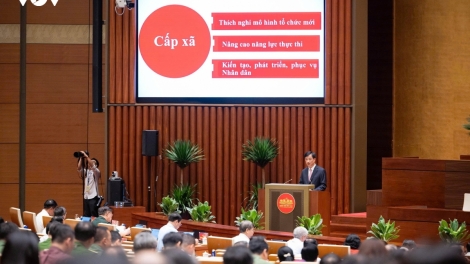





The reform aimed to reduce intermediary administrative layers and represented a fundamental shift in governance toward a public administration that places people and businesses at the center of public service.
Changes in governance
"The public servants gave us clear, courteous, and dedicated guidance. The procedures were completed quickly. Even the process of sending documents back to my hometown for verification was handled very efficiently by the local authorities."
"I came here to complete some administrative procedures. The officials were very helpful. Everything was completed successfully."
"The procedures used to be much more complicated. I had to go from one office to another, which took a lot of time. Now I simply fill out the application, and the official uploads the data to the database. Everything is processed much faster."
Public satisfaction over the past year is the measure of the effectiveness of the restructured administrative system. Many procedures have been simplified; processing times have been shortened; and administrative workflows have been digitalized and integrated across agencies. These improvements have enhanced the transparency and accountability of public institutions.
For the business community, especially foreign-invested enterprises, a smooth and efficient administrative system means greater business opportunities. An American investor said: “The stable environment is where you can make a longer-term decision. The less licenses you have, the lower the cost and the easier it is for foreign investors to get comfortable investing. That's one thing that, compared to 10 years ago, I think is improved dramatically. When we compare investing in Vietnam to some other markets in Asia, I think one thing that sets Vietnam apart is that the political stability and continuous reform in policies that are favorable to investors."
The reform has brought about more than procedural changes. It has transformed the public service culture. With a leaner administrative structure, every public official is expected to improve their professional capacity, sense of responsibility, and commitment to serving the public.
Nguyen Thanh Binh, Deputy Chairman of the Party Central Committee's Commission for Organization, said: "One year after restructuring the entire political apparatus, we can confidently say that the new structure is much leaner, with all intermediate layers removed. The system is now operating smoothly. Local governments have undergone a major transformation, shifting from an administrative management mindset to building a facilitating, development-oriented government."
Foundation of a modern digital administration
An efficient administrative system better serves Vietnam's nearly 100 million people and creates a more stable, transparent, and business-friendly environment for foreign investors. It also strengthens Vietnam's national competitiveness, fosters innovation, and promotes deeper integration into the global economy.
The initial results show that Vietnam’s administrative reform is closely linked to the national digital transformation, and is a foundation for building a modern and transparent digital administration.
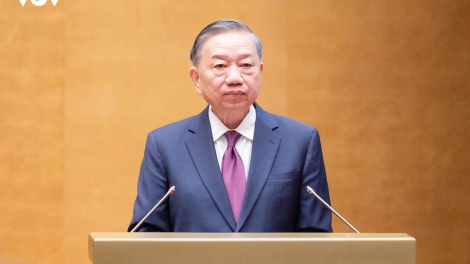
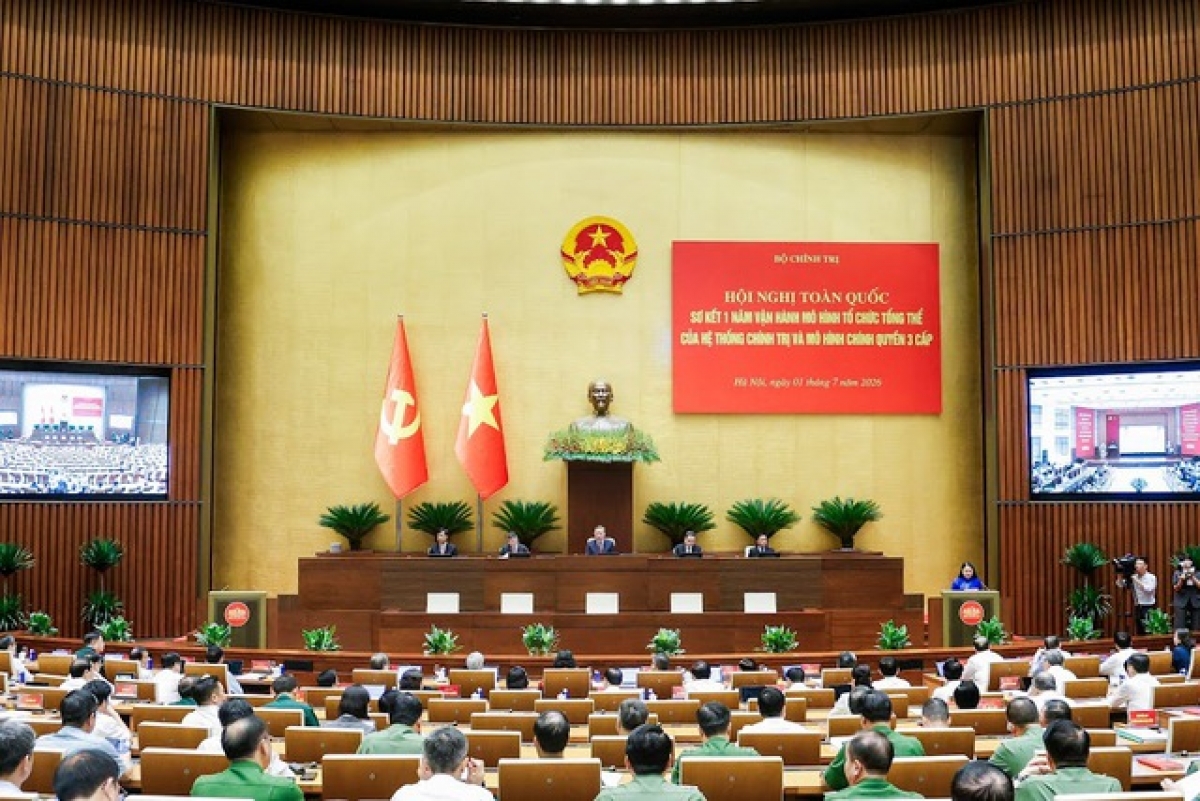
At a conference on July 1 to review one year of the 3-tier government model, Party General Secretary and State President To Lam emphasized that policy of making the political system lean and mean is absolutely correct, crucial and of strategic importance to Vietnam’s development. However, reform is an ongoing process and must remain flexible in addressing problems, Mr Lam said. The direction has been clearly defined, and the determination to continue reform is strong.
"Reforming the organizational structure of the political system is a momentous and challenging task that must be carried out persistently, methodically, and scientifically. Our consistent principle is that the new organizational structure must create new capabilities and new mechanisms for decentralization; delegation of authority must match new responsibilities; new data must enable new methods of governance; and the new administrative system must deliver higher-quality services for people and businesses," said Mr Lam.
The changes in the handling of administrative procedures demonstrate the right path to a service-oriented public administration. As the administrative system operates more smoothly, people receive better services, businesses gain better support, and development resources are unleashed. These will lay a foundation for Vietnam to continue building a modern, transparent, and sustainable system of governance in the new era.