



Vietnam aims to become an upper-middle-income country with modern industry by 2030 and a developed, high-income country by 2045. To achieve this objective, Vietnam needs more businesses that master technology, build trusted brands and develop production networks capable of competing internationally.
Developed businesses, prosperous nation
Vietnam has about 1.1 million active businesses that contribute 60% of GDP and 55% of state budget revenue and employ 17.6 million people.
Private businesses are increasingly involved in major transportation infrastructure projects, from expressways and airports to urban infrastructure. Hoa Phat is investing 386 million USD in a rail and steel manufacturing plant in Dung Quat that’s scheduled to produce its first high-speed railway rails in the first quarter of 2027.
Earlier this year, FPT established an advanced semiconductor chip testing and packaging plant in Bac Ninh and continues to expand its AI Factory on NVIDIA infrastructure. Viettel has designed its own 5G digital front-end (DFE) chip and developed a 5G equipment ecosystem.
Vietnamese businesses, it’s clear, are moving up the technology value chain into higher-value-added segments. Pham Trung Kien, General Director of Hong Ha Stationery Joint Stock Company, said: “Vietnamese entrepreneurs have strong aspirations to build wealth and to contribute to society. They’re proud that the Party and State have identified businesses as a frontline force on the economic front.”
Strategic vision of the Party and State
Over the past two years, the Party and State have issued a series of resolutions on socio-economic development and established a legal framework for business growth.
The Politburo’s Resolution 68, issued in May, 2025, identifies the private sector as a principal driver of the national economy and a pioneer in science and technology development, innovation, and digital transformation.
The Politburo’s Resolution 79, issued in January, 2026, reaffirms the leading role of the state-owned economy and calls for the development of state-owned enterprises capable of opening up new paths in strategic industries and sectors.
The Politburo’s Resolution 10, issued in June, 2026, identifies foreign direct investment (FDI) as an important part of the economy, a driver of both development and international integration.
Translating the Party’s Resolutions into law, the National Assembly adopted Resolution 198 on special mechanisms and policies for private-sector development. National Assembly Resolution 206 addressed legal obstacles affecting multiple investment projects.
The Government has abandoned thousands of cumbersome business conditions and licensing requirements and embraced a development-oriented, service-driven approach which uses business confidence as a measure of public-sector performance. By the end of September, the time needed to process administrative procedures had fallen 53% and compliance costs had fallen 55%, saving 9.7 billion USD.
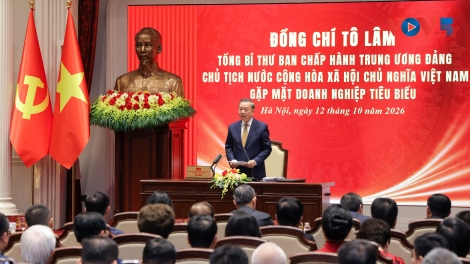
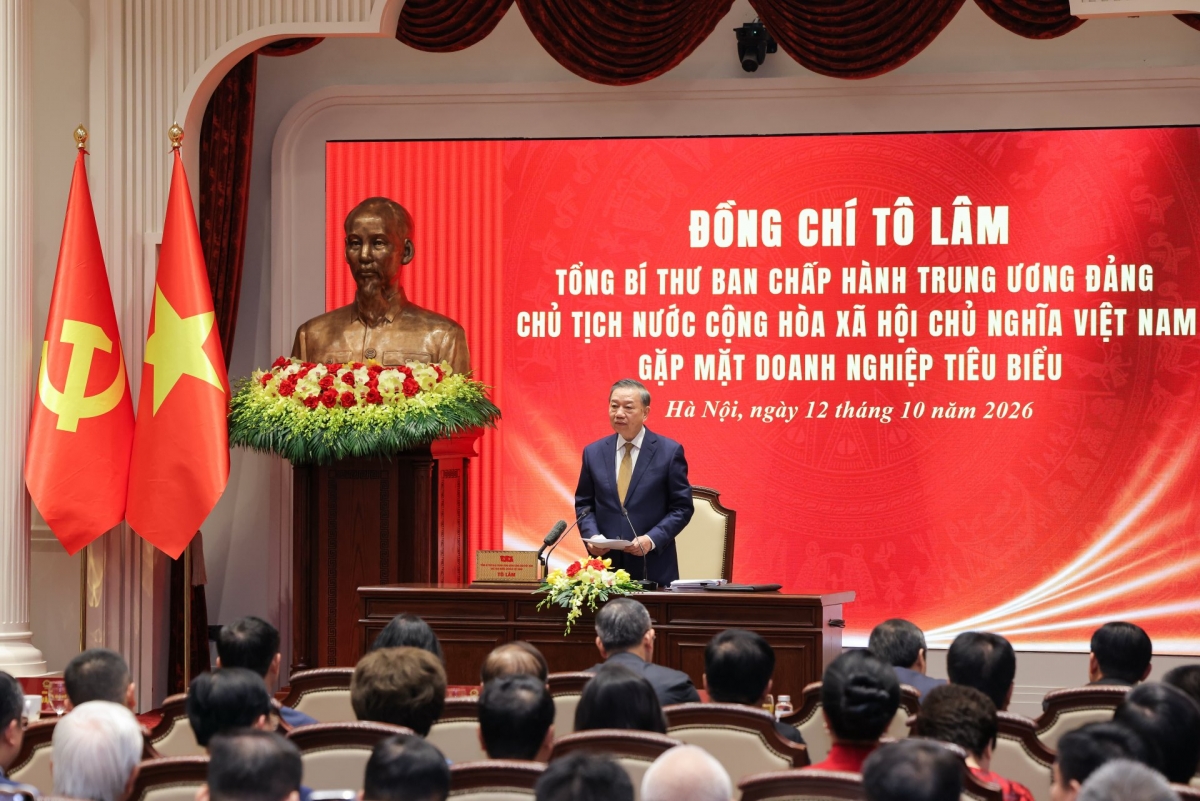
At a meeting with entrepreneurs in Hanoi on Monday, General Secretary of the Communist Party of Vietnam Central Committee and President To Lam stressed the need to address difficulties facing businesses: “The State must resolve the obstacles and shortcomings that fall within its responsibility, and businesses must innovate and strive to move forward. Trust must be built by both sides. The State must protect legitimate rights and honor its commitments, and businesses must invest for the long term, comply with the law, and share responsibility with their workers and the community.”
A strong, prosperous nation provides a solid foundation for businesses to move forward. In return, strong businesses reinforce the nation’s economic strength. The centenary of Vietnam’s founding in 2045 will commemorate its ambition to become a strong, prosperous, developed nation. The role of enterprises and entrepreneurs is indispensable in that journey.