



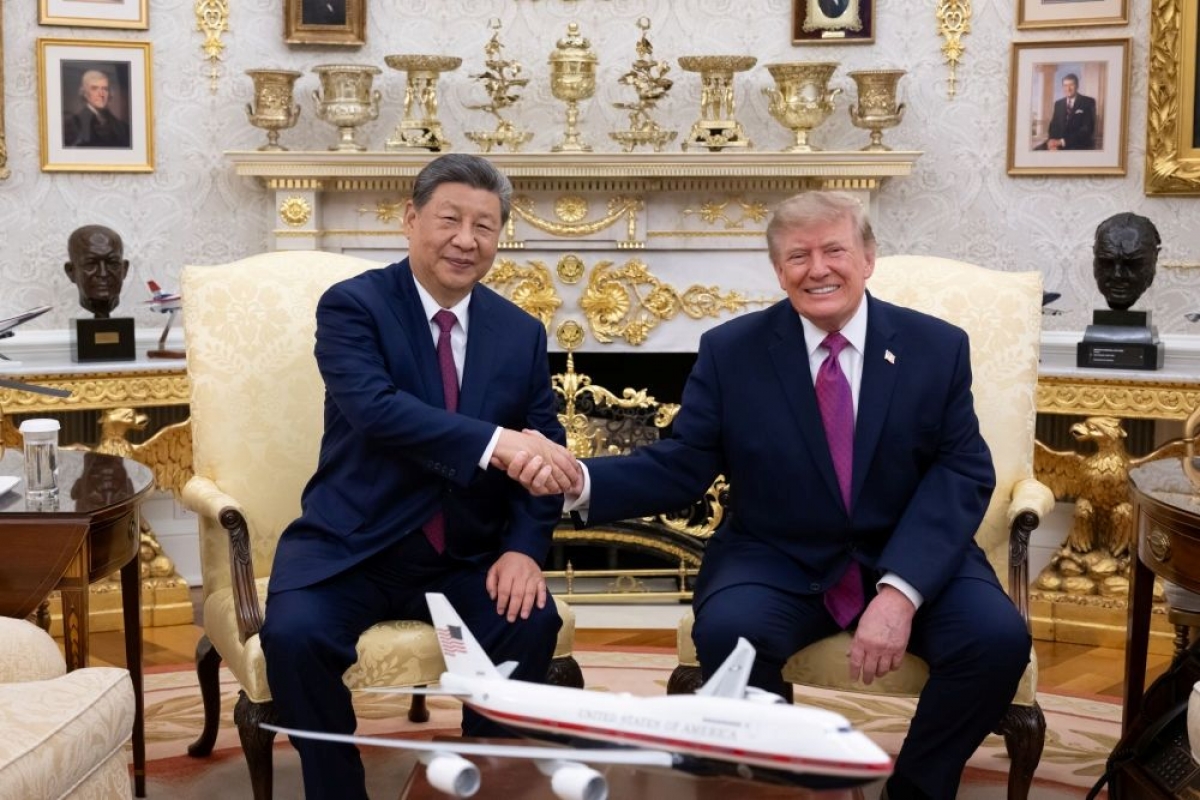
This is the second face-to-face meeting between the two leaders in less than six months, following their summit in Beijing in May. It was President Xi’s first visit to the United States in more than a decade.
Strategic stability
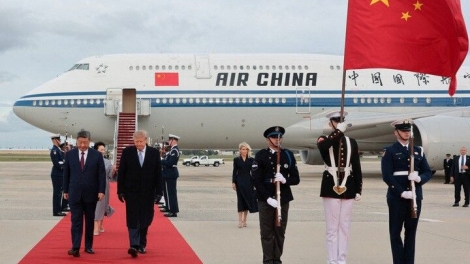
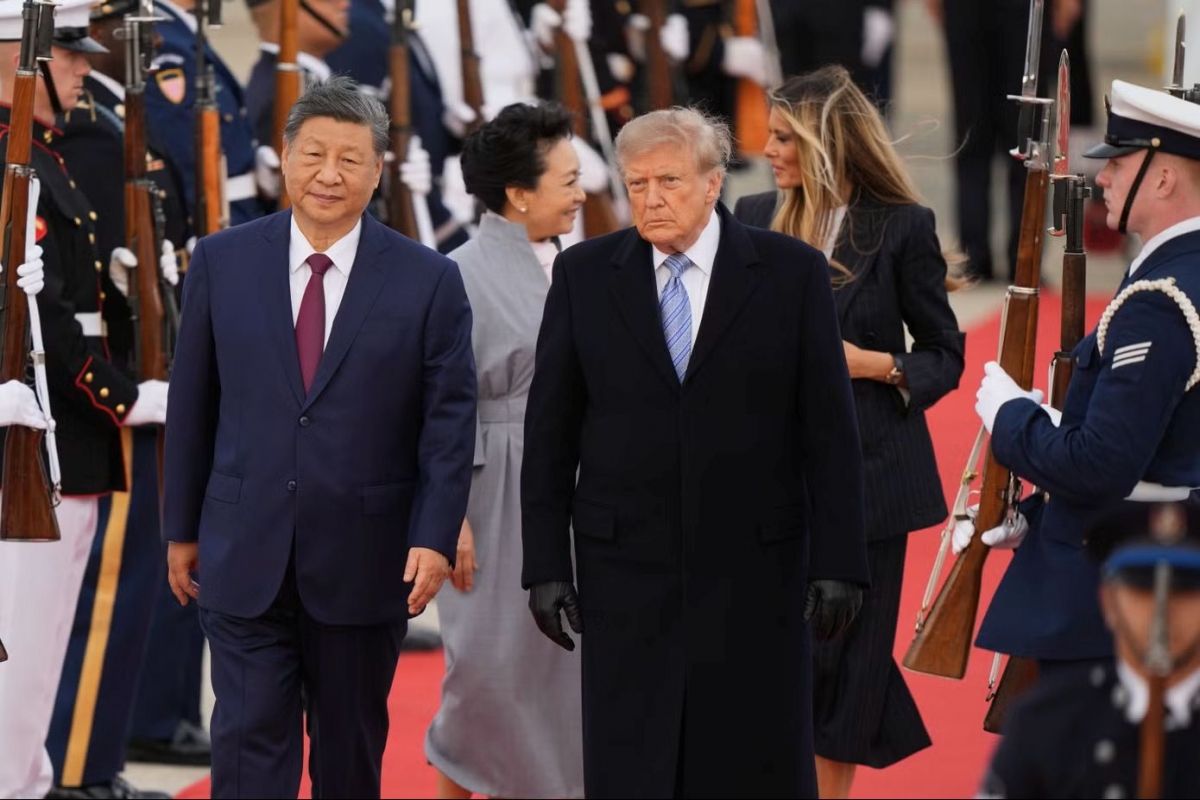
President Trump personally welcomed President Xi on the tarmac at Joint Base Andrews in Maryland on Wednesday. Such a gesture has rarely been made in the history of US presidential protocol. President Xi was subsequently honored with an elaborate military air display and a state dinner at the White House. The lavish reception reflected a diplomatic reciprocity – China previously extended a similar welcome to President Trump – and the importance the White House attaches to this summit in managing the complex and highly consequential relationship between the two countries.
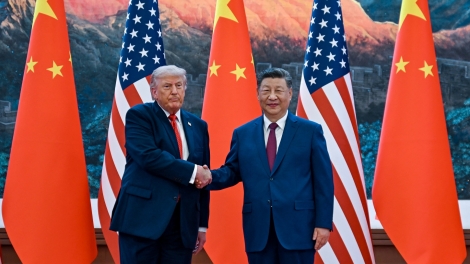
During their talks on Thursday, the two leaders emphasized strategic stability. President Xi said the US and China are both superpowers, and rather than confrontation, conditions for achieving the great rejuvenation of the Chinese nation and making America great again should go hand in hand.
He called for cooperation with Washington to avoid the “Thucydides trap”, a concept he referred to during their meeting in Beijing in May. President Trump said he and President Xi have made tremendous progress on the issues facing them and have a potential for even greater cooperation.
“If we focus on our common interests, I'm confident there is much we can achieve. Throughout history, pursuit of those common interests has connected our people across the vast oceans, those big, tremendous distances and many differences, and even made us allies in World War II,” said Mr. Trump.
The two discussed security, technology, and superintelligence (Trump’s preferred term for artificial intelligence). President Trump said the decisions they made in these areas today could promote peace and prosperity for decades to come.
President Xi said both China and the US are leaders in artificial intelligence. They have the responsibility to develop and manage AI for good and ensure that the development of AI is always under human control and serves the well-being of people.
Positive signals
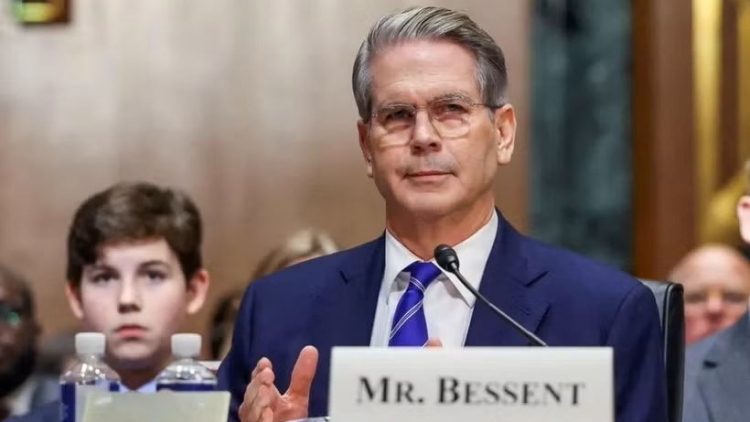
The US and China had demonstrated that their priority is maintaining stable relations through several important agreements reached earlier. US Treasury Secretary Scott Bessent said on Friday that the two countries agreed to extend by two months a trade truce that was due to expire on November 10. He noted that the extension to January 10, 2027, of the trade truce agreed in Busan, South Korea, in May would give the two sides more time to see what they can do on the economic front. Although the two-month extension is shorter than the six months many observers had expected, experts said the move was nevertheless a positive development.
Ruby Osman, a senior geopolitical adviser specialising in China at the Tony Blair Institute for Global Change, said, “I don't think this is a truce that's going to fix every issue in the relationship. But I do think the fact that both sides want some sort of truce, even if it's imperfect, is a recognition of quite how much power each side has to hurt each other. I think we really saw this at the peak of the tariff war last year. And I think in the short term, at least, there's no real appetite on either side to reopen that fight."
The US and China have also moved close to establishing an AI dialogue, which would create a bilateral mechanism to notify each other of AI-related incidents that could pose risks to national security.
Da Wei, Director of the Centre for International Security and Strategy at Tsinghua University in China, said the US-China AI dialogue is taking place amid growing calls to slow the pace of AI development. In theory, he said, this is not a bad idea. The challenge is how to verify that the other side has actually slowed down. Without a reliable verification mechanism, the initiative could become a “trap”, given the lack of mutual trust.
Overall, the US-China summit did not produce a breakthrough, as observers had largely anticipated. But the fact that both sides continued to prioritize stable relations and seek areas of agreement was seen as a positive signal for US-China ties and for the broader geopolitical and economic landscape.
President Trump and President Xi are expected to meet again in November, when China hosts the Asia-Pacific Economic Cooperation (APEC) Economic Leaders’ Meeting, and in December, when the G20 Summit is scheduled to take place in Miami.