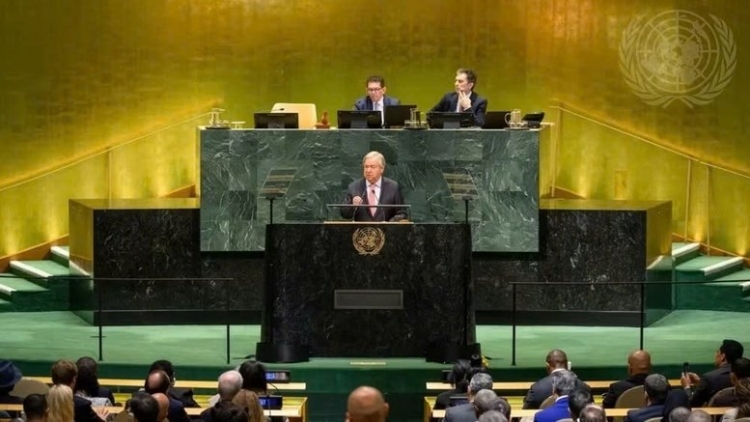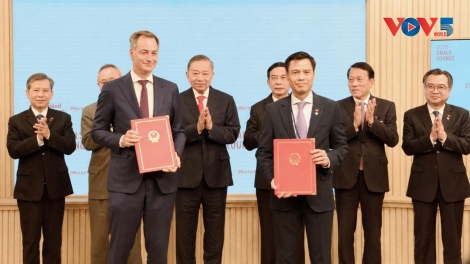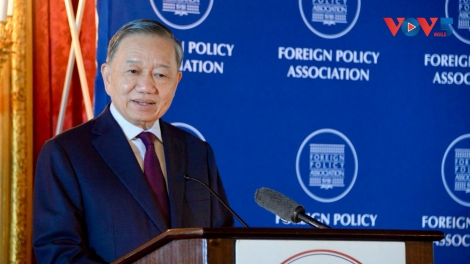




From nearly half a century of partnership with the United Nations to development orientations toward centenary goals, the message of General Secretary and President To Lam adhered to the theme – Vietnam is transforming its position, capabilities, and approach to development as it enters the new era.
Transformation in Vietnam’s global standing
The world is undergoing profound changes, marked by strategic competition, conflicts, climate change, new barriers to trade and investment, and the growing impact of science, technology, and artificial intelligence.
To build a more equitable, democratic, and inclusive international order, in which every country has a voice and every nation has an opportunity to develop, the Vietnamese top leader proposed four major orientations including restoring trust between nations on the basis of respect for the UN Charter and international law; promoting fair, humane, inclusive, and sustainable development; shaping technology governance so that progress serves people and shared development; and strengthening multilateralism and the central role of the United Nations.
Mr. Lam looked at these global issues through Vietnam’s experience. “Vietnam’s nearly half-century journey alongside the United Nations has reflected the transformation of our country. From being primarily a recipient of support during the years of post-war reconstruction and Doi moi (Renewal), Vietnam today is taking an increasingly proactive role in contributing to global affairs, enabling the Vietnam-UN relations to grow more deeply and substantively.”
Vietnam has actively and effectively participated in multilateral forums in multiple areas. Vietnam has deployed personnel to UN peacekeeping operations and served as a member of the UN Human Rights Council. It has consistently promoted the central role of ASEAN. Vietnam is preparing to undertake several international responsibilities in the coming years, including hosting APEC 2027. At international forums, Vietnam shares its lessons in poverty reduction, agricultural development, and climate change adaptation, which were once development challenges for Vietnam.
Ambassador Do Hung Viet, Head of Vietnam’s Permanent Delegation to the United Nations, said: “Vietnam has entered a new era of development. We’re not just participating in multilateral forums and supporting multilateral mechanisms. We’re proactively putting forward solutions to make increasingly substantive and effective contributions to a multilateral order that serves the common interests of humanity and our own development goals.”

New internal strength, new development space
A more proactive Vietnam in international affairs is underpinned by changes in its own development process. Vietnam has set new requirements for its growth model. Mr. Lam said: “With the goal of becoming a developing country with modern industry and upper-middle income by 2030 and a developed, high-income country by 2045, Vietnam is shaping a new development model based on productivity, quality, and added value; making science, technology, innovation, and digital transformation key growth drivers; and linking economic growth with cultural development, social progress and justice, and environmental protection.”
To achieve its development goals, Vietnam is generating new growth drivers and addressing challenges that arise in the development process – improving labor productivity, enhancing the quality of human resources, ensuring social welfare, and making effective use of resources. Self-reliance is an important foundation for this process.
Mr. Lam said: “Self-reliance means adapting to and cooperating with the world on an equal footing. Vietnam consistently pursues a foreign policy of independence, self-reliance, peace, friendship, cooperation, development, and diversification and multilateralization of external relations.”
The Vietnamese top leader said Vietnam chooses peace, cooperation, and development and is committed to working with other countries to strengthen the United Nations, respect international law, and translate shared commitments into tangible benefits for people. Vietnam is entering a new development era with new goals and new requirements that require it to strengthen domestic capacity, expand cooperation, and make substantive contributions to peace and shared development.