



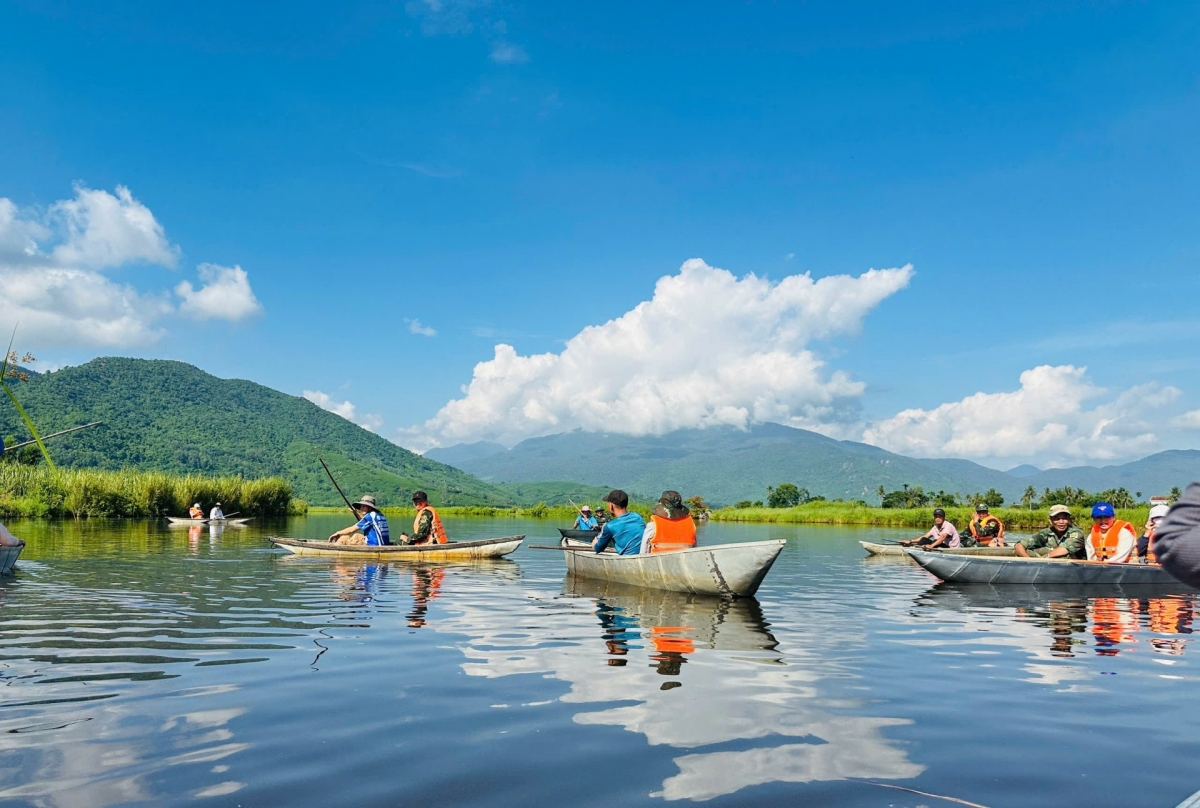
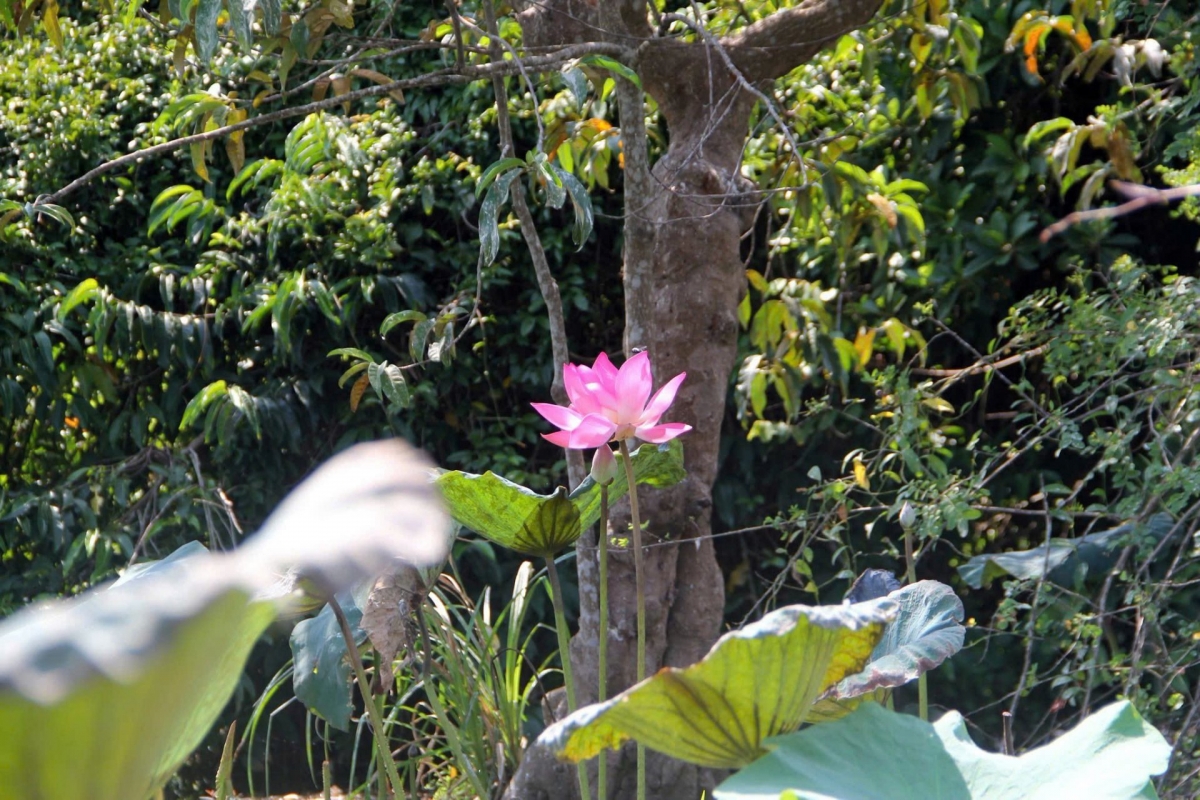
A small boat leaves the shore, carrying a handful of passengers to Bau Da. The calm, clear water reveals an abundance of aquatic plants beneath the surface. The boat glides past grassy islets, wooded hills, scattered boulders, and vast stretches of lotus and water lilies.
Locals say the area is home to monkeys, many species of birds and fish, and typical wetland plants, such as mangroves. The boatman told us: “The attraction of the Bau Da wetland is its monkeys, fish, birds, mangrove trees, lotus, and water lilies. There are all kinds of plants here. It’s a very beautiful place for tourism. The best time is from December through September or October of the following year.”
70-year-old Dao Kim Thong of My Dien hamlet knows these waterways and forest paths like the back of his hand. For Thong and many other elderly residents, Bau Da is deeply intertwined with memories of the war years. Its dense wetland forest and surrounding mountains and rocky caves once sheltered people seeking safety from the fighting.
Mr. Thong said: “When we were fleeing the enemy, people would take boats into the area and hide in small shelters under those big trees. Whenever we saw aircraft, we would crawl into the bushes and hide. After the General Uprising, until 1963 or 1964, we fled into this wetland to hide among the mountains and caves.”
The landscape, ecosystem, history, and local produce have become resources for community-based tourism. Phuong Van Lanh, Secretary of the Hoa Thinh Commune Party Committee, said: “The local authorities have piloted an experiential tour of Bau Da. We plan to develop a community-based tourism scheme operated by a tourism cooperative, involving people from My Dien village. They’ll row visitors in boats around the Bau Da wetland forest and introduce them to its natural beauty. The commune will also provide tourism and cultural training, equip villagers with boats and life jackets, diversify tourism services, and improve food and transportation services.”
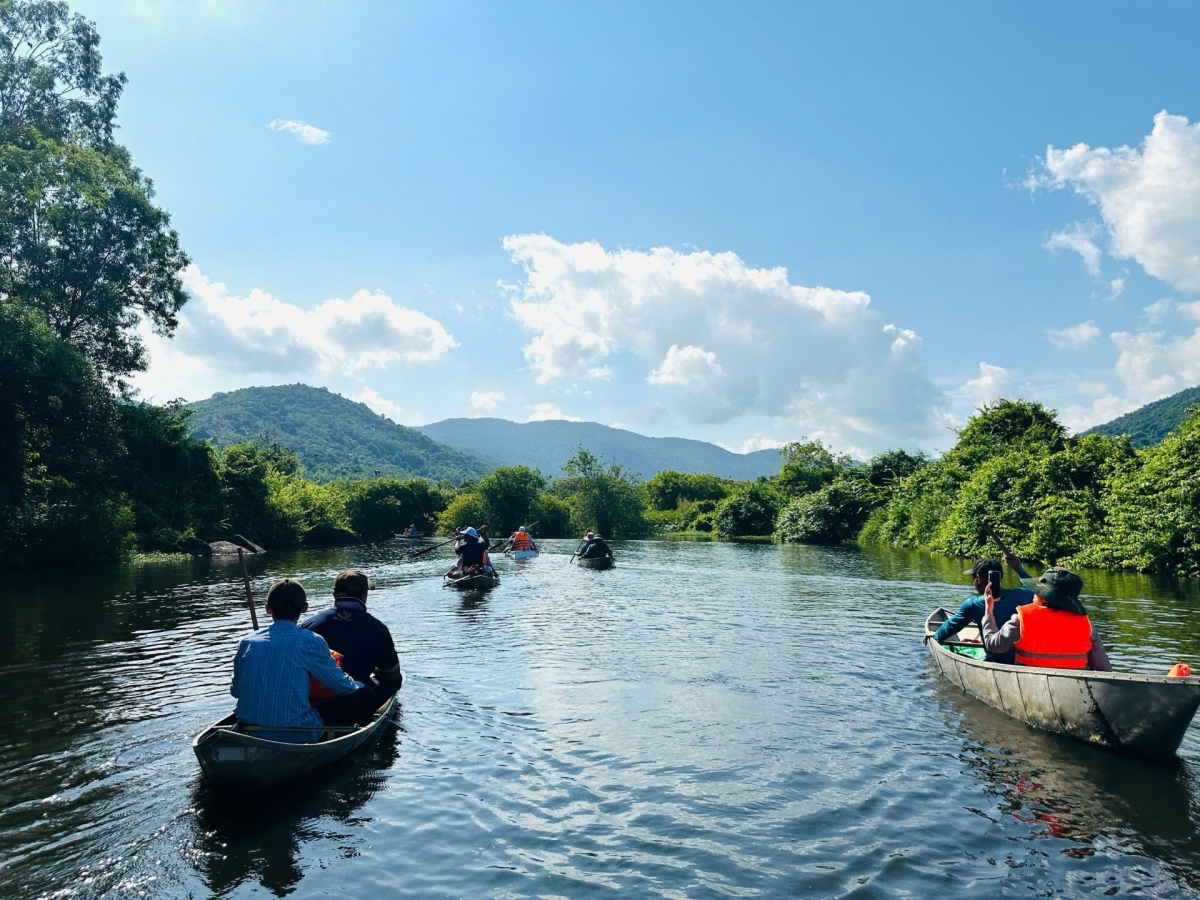
The plan has the support of local people. “Each household will have a boat to row visitors around and offer other services,” a resident said.
“We’ll buy boats and start doing community tourism like in the Trang An complex (in Ninh Binh province),” another local told VOV.
With proper organization and support, the villagers will become boatmen and storytellers, carrying visitors through Bau Da and sharing stories of their homeland — a wetland forest full of natural beauty, natural resources, and wartime memories.