



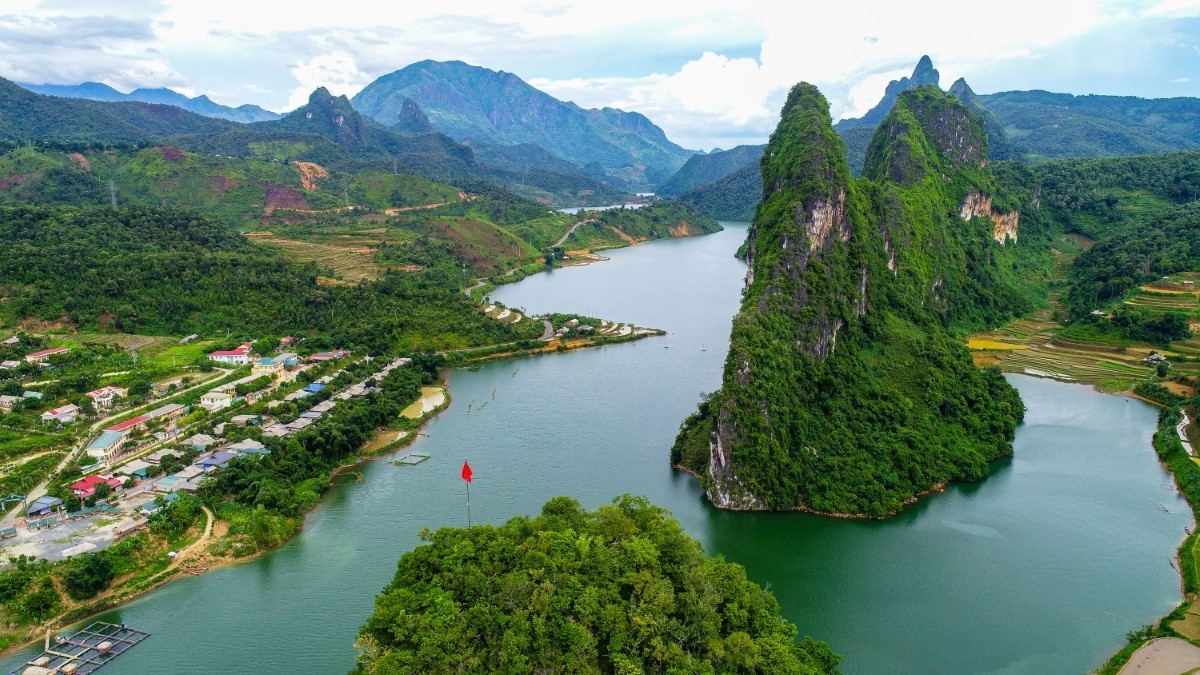
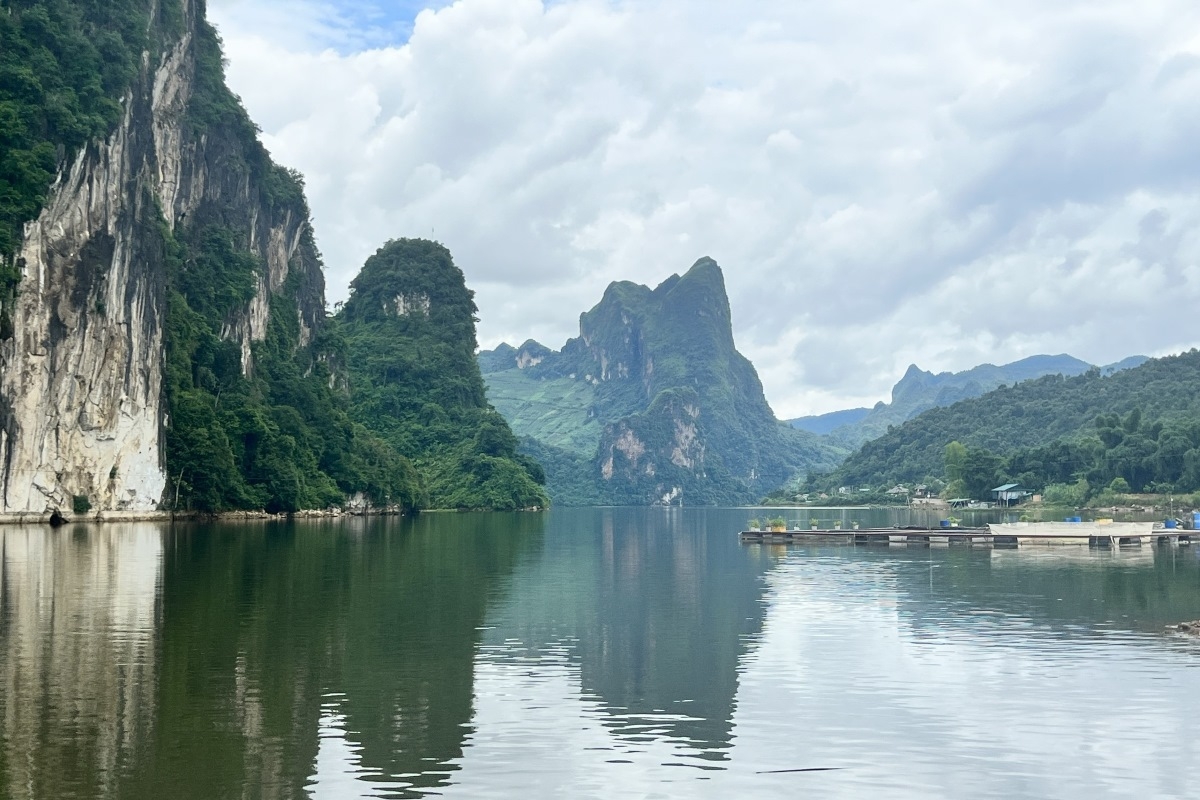
Located on a hydropower reservoir, Ta Gia Bay is often described as “Ha Long Bay in the northwestern mountains”. The deep blue waters stretch between mountain ranges. Clusters of limestone mountains rise from the water, and forests extend all the way to the horizon. Hidden in the forests on the limestone mountains are a number of caves. There are no large-scale tourist facilities, nor modern services. This rustic character is Ta Gia’s appeal.
Pham Thi Tung from Thai Nguyen province is visiting the bay for the first time. “Ta Gia Bay has beautiful, majestic mountains and picturesque landscapes. We travelled by boat and enjoyed the beautiful scenery. I hope to come back many more times to explore this wonderful landscape.”
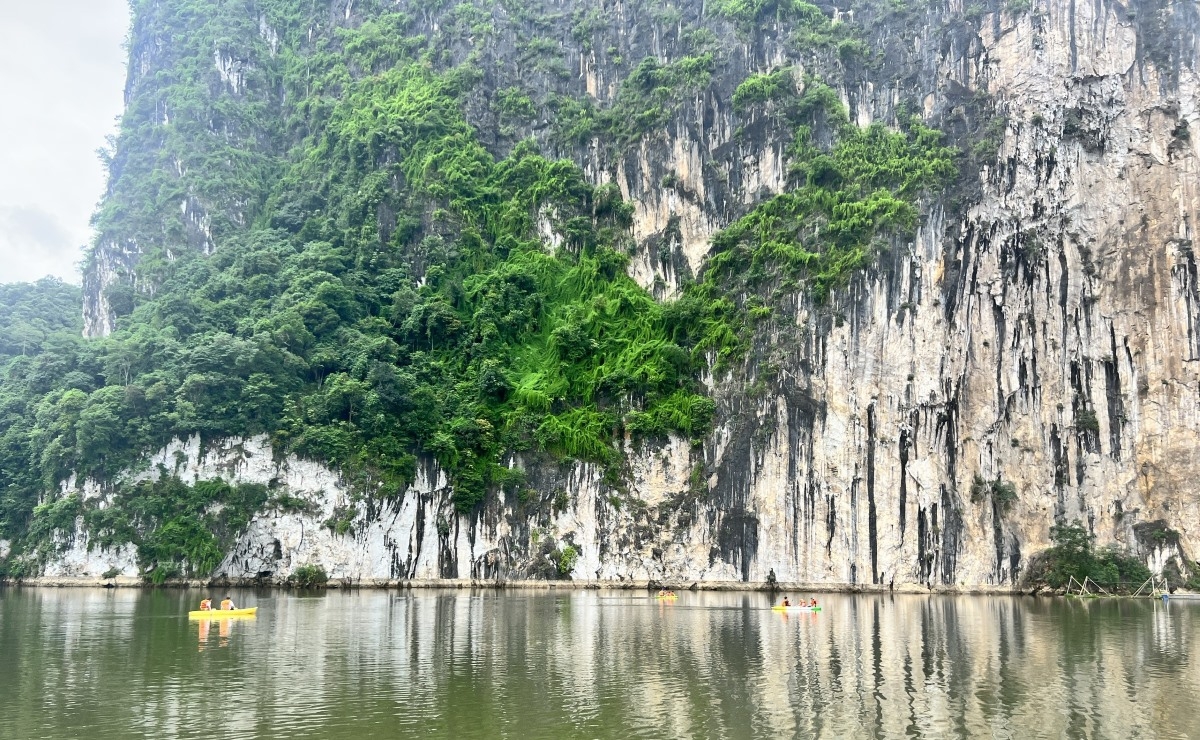
In the early morning, mist hangs over the lake, and the mountains appear and disappear in the haze. As the sun rises, the water gradually turns a brilliant blue, reflecting the limestone mountains on its calm surface.
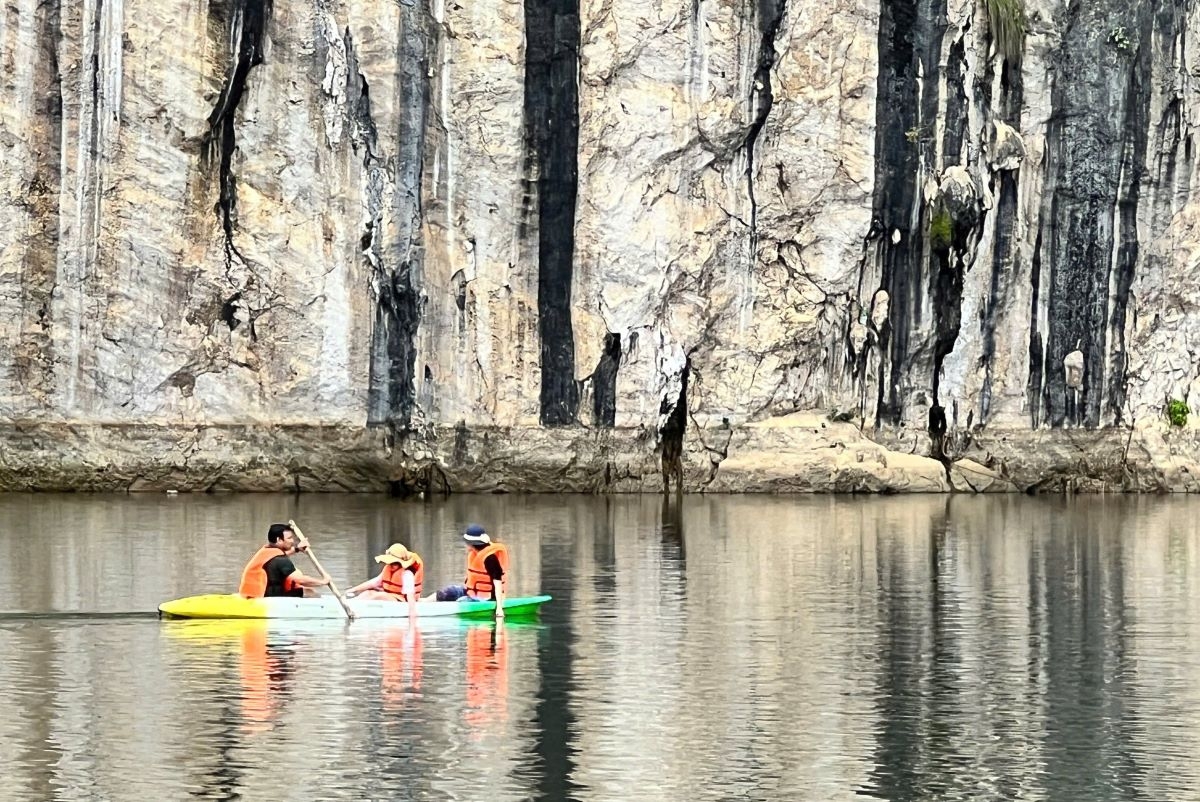
In the afternoon, as the sunlight softens, the lake takes on a tranquil, contemplative appearance. The calm waters make it safe for visitors to kayak around and explore the bay’s natural wonders.
16-year-old Bui Tuan Phong from Hanoi was for the first time captivated by the area’s beauty. “I’m spending my summer holiday visiting Ta Gia Bay and going kayaking. The air is very fresh, and I feel very comfortable here. It’s such a peaceful experience.”
After a day of exploring, visitors relax over dinner of delicious local dishes. Bagarius fish and prawns caught from the reservoir are prepared using the traditional cooking methods and local ingredients. Plain rather than elaborate, meals are appealing for their fresh ingredients and rustic flavours. In the cool mountain weather, sitting by the fire and enjoying grilled fish, conversations between hosts and guests feel intimate and friendly.
Nguyen Duy Hung, a visitor from Hanoi, said: “When we travel, we prefer places with natural beauty, pleasant weather, and friendly people. Many tourist destinations today are crowded and noisy, so I really like Ta Gia Bay with its unspoiled scenery. The people are friendly and the food is wonderful.”
According to Lai Chau’s tourism plan, Ta Gia Bay has strong potential for tourism development, along with Pa Khoang Bay, Muong Than Valley, and other destinations.
While the northwest is famous for its mountain passes, terraced rice fields, and seas of clouds above the peaks, Ta Gia offers a different way to experience the region – from the water.