




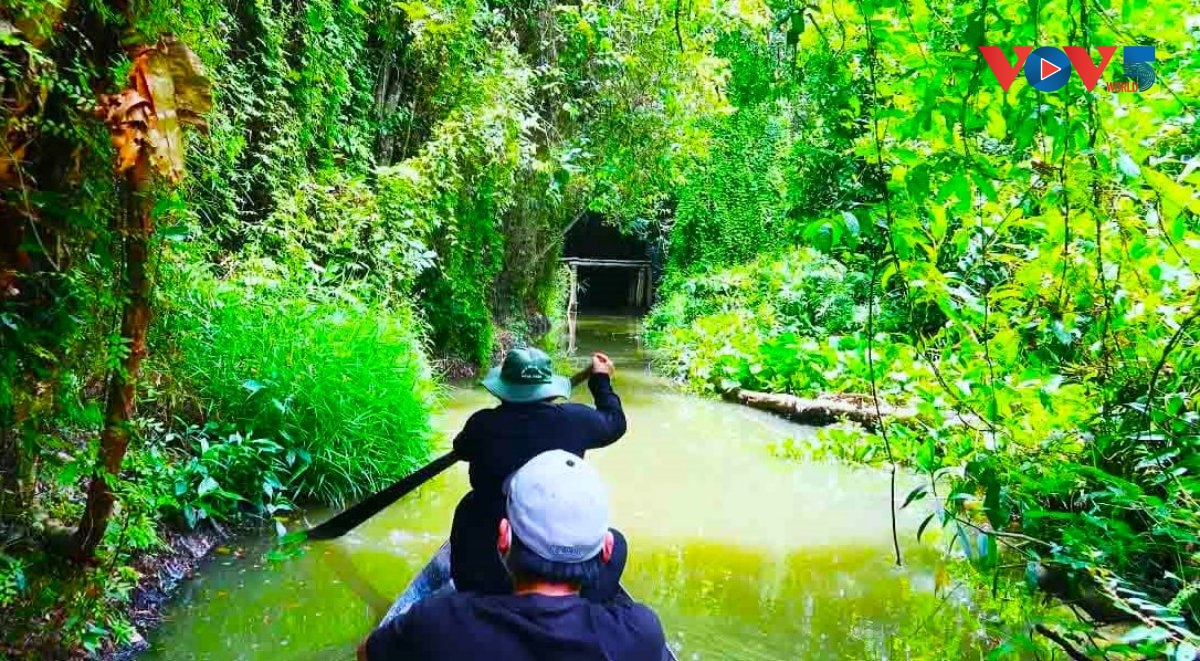
In 1960, with its swamps, dense plants and rugged terrain, Xeo Quyt was selected as the site of a revolutionary base, with facilities like the Z-shaped combat fortifications, Ca Tre (catfish) secret bunker, and blacksmith’s workshop.
Xeo Quyt boasts a diverse ecosystem with 170 plant species, including cajuput, reeds, lotus, and water lilies. Of particular note are more than 20 hectares of pristine cajuput forest, where trees that are several decades old continue to grow in their natural state. The site is home to 200 species of animals, including many rare species listed in Vietnam’s Red Book, such as Burmese pythons, Indo-Chinese rat snakes, box turtles, otters and broad-billed rollers.
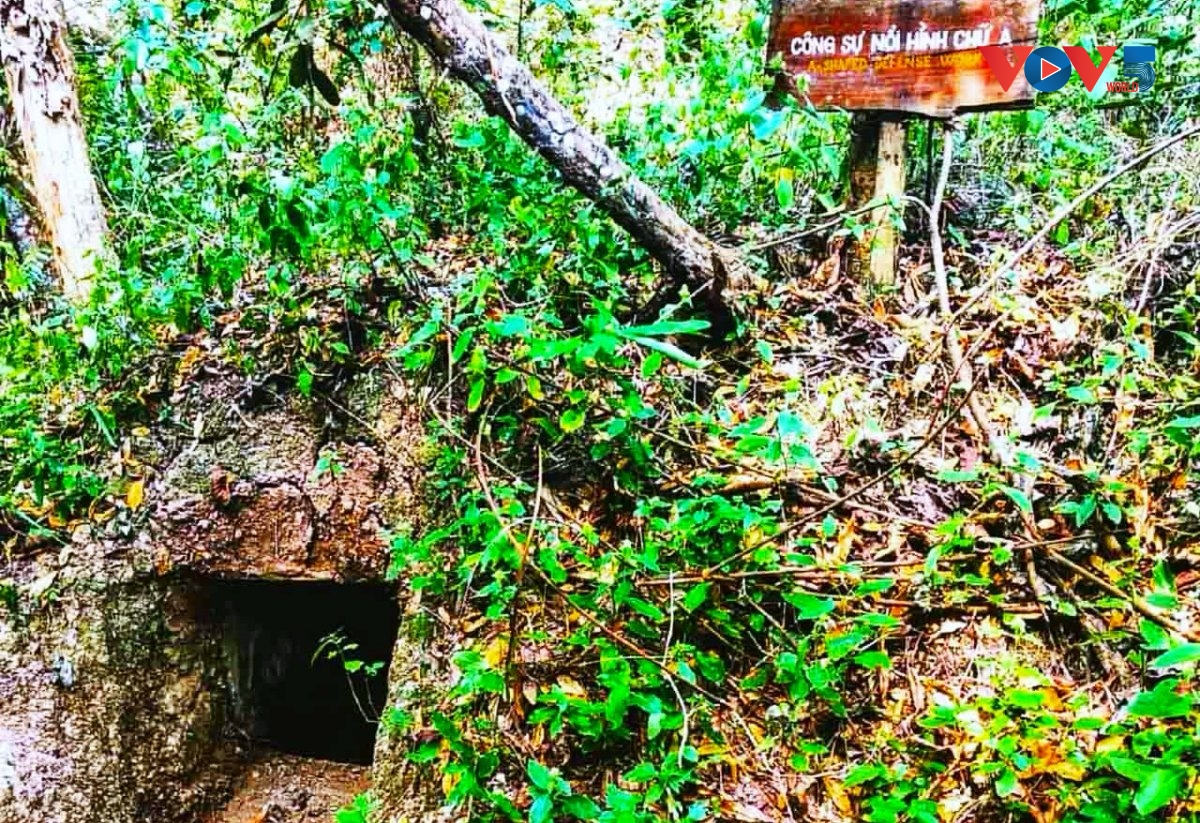
A visit to Xeo Quyt offers a chance to experience the Dong Thap Muoi Plain of Reeds while exploring their rich history. Visitors can follow narrow paths winding through the cajuput forest or take a boat along canals and waterways to discover the remains of the former revolutionary base.
The best time to explore Xeo Quyt is from August to November. At this time, visitors can see vast lotus fields dotted with soft pink blooms, take striking photographs and enjoy relaxing activities such as fishing.
In October and November, when the water rises, visitors can take boat trips across the flooded fields, watch flocks of white egrets flying freely overhead and savor local dishes. Those who enjoy exploring can also walk along the 1.5-kilometer trail through Xeo Quyt historical site.
Nguyen Thi Tuyen, a visitor from Ho Chi Minh City, said: “This place is very beautiful, wild and pristine. The air is fresh. I feel relaxed and comfortable. Seeing the historical relics, I can’t help thinking how capable and courageous our predecessors were. It’s admirable.”
For younger visitors, the site also offers a connection to the past. Vo Thi Kim Ngan, a young visitor from My Tho commune, Dong Thap province, said: “When I saw the artifacts, photographs and documentary footage in the exhibition room, I could imagine the time when our ancestors fought bravely for the peace we enjoy today.”
With its outstanding historical, cultural and ecological values, Xeo Quyt was recognized as a national historical and cultural relic by the Ministry of Culture, Sports and Tourism in 1992. The new office building and exhibition room at Xeo Quyt historical site, inaugurated in April 2026 provides additional space for preserving and promoting the site’s cultural values.

Covering about 63 hectares, traces of the former revolutionary base are preserved amid the dense cajuput forest. The combination of historical significance and natural beauty gives Xeo Quyt its distinctive appeal. At the site, stories of the lives and struggles of soldiers and local people in the forest are told through artifacts, photographs and archival materials.
Huynh Minh Tuan, Vice Chairman of the Dong Thap Provincial People’s Committee, said: “The exhibition room is of profound political, cultural and social significance. The collection and display of valuable artifacts contribute to education and tourism development. The provincial Department of Culture, Sports and Tourism will continue to improve the quality of the site, collect more artifacts, and apply technology to exhibitions and interpretation to make the site more attractive to visitors.”
The rich ecosystem of the Mekong Delta’s waterways and Xeo Quyt’s historical heritage provide a strong foundation for further investment and development. In this way, the site’s historical values can be preserved and promoted, contributing to tourism development and education about local history and traditions for future generations.