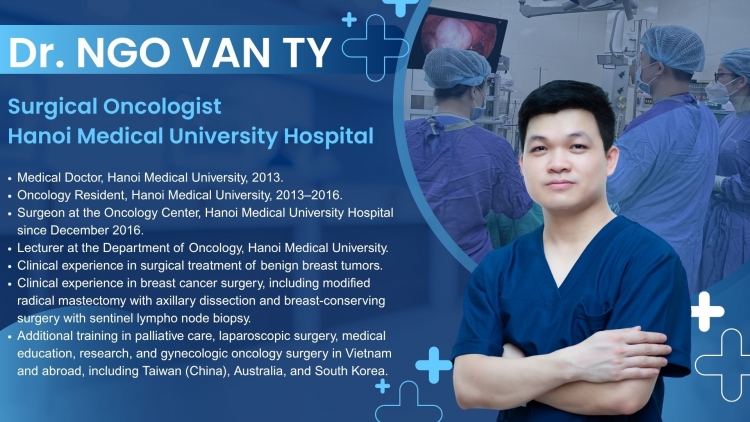




In today’s conversation, Dr. Ngo Van Ty from Hanoi Medical University Hospital, a specialist in oncology, gynecology, and breast health, shares key scientific insights on stress, proactive breast screening, and why caring for yourself must never be considered a luxury.
Reporter: Welcome to Doctor at Home, Dr. Ngo Van Ty. In recent years, stress and burnout have become very common among women. Scientifically speaking, is there any connection between long-term stress and breast cancer risk?
Doctor Ty: This is a very common question. Scientifically speaking, long-term stress has not been proven to be a direct cause of breast cancer. Breast cancer is a complex disease, and it usually develops from a combination of many factors, such as age, genetics, hormones, breast density, lifestyle, and environmental influence. However, stress is still important. Chronic stress can affect the body in many ways. It can affect sleep, appetite, mood, energy levels, and daily habits. Some people may exercise less, sleep poorly, smoke more, drink more alcohol, or delay medical care when they are under constant stress. So, I would say this clearly: we should not blame women for having stress, and we should not say stress directly causes breast cancer. But we should take stress seriously because it can affect overall health and the way women care for themselves.
Reporter: Even if stress is not considered a direct cause of breast cancer, why do doctors still encourage women to pay attention to stress management?
Doctor Ty: Doctors encourage stress management because health is not only about one disease. Long-term stress can make the body and mind exhausted. It can affect sleep quality, blood pressure, digestion, immune function, and mental health. It can also make people less motivated to exercise, eat well, or attend regular checkups. For breast health, one of the main concerns is that women under stress may ignore symptoms. A woman may notice a breast lump, nipple discharge, or breast skin changes, but because she is overwhelmed, she tells herself, "I will check it later." Stress management is not a cancer treatment, and it should not replace medical care. But it helps women stay connected with their bodies. When a woman sleeps better, feels calmer, and has support, she is more likely to notice changes early and get checked up at the right time.
Reporter: For women with busy schedules, what would be your advice on maintaining regular breast health check-ups in a realistic way?Doctor Ty: My advice is to make breast health care simple and realistic. First, women should know what is normal for their own breasts. This does not mean checking in a fearful way every day. It means being familiar with your body so you can notice a new or unusual change. Second, put health check-ups into your calendar like an important meeting. Many women wait until they have free time, but free time may never come. Choose a clinic or hospital that is convenient, and plan ahead. Third, ask your doctor what screening schedule is right for you. Women at average risk may follow general screening recommendations, while women with a family history of breast or ovarian cancer may need earlier or more frequent screening. And finally, if you notice a new lump, nipple discharge, skin dimpling, redness, swelling, or any change that persists, do not wait for your routine check-up. Please see a healthcare professional sooner.
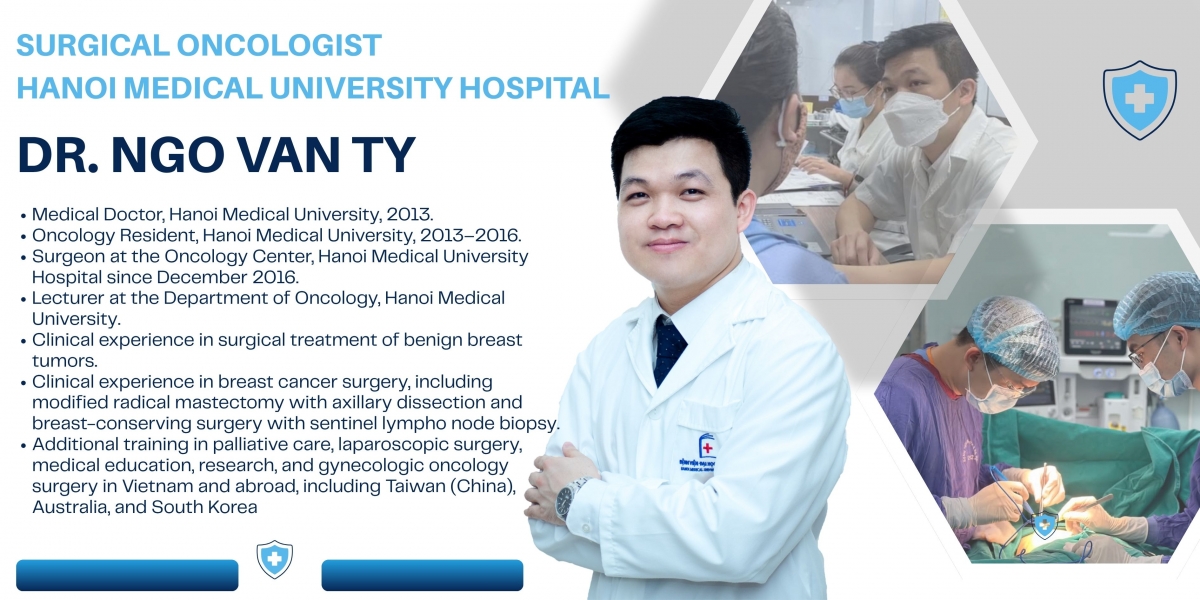
Dr. Ngo Van Ty is a surgical oncologist at the Oncology Center of Hanoi Medical University Hospital and a lecturer at the Department of Oncology, Hanoi Medical University. His clinical practice focuses on the surgical treatment of benign breast tumors and breast cancer, including modified radical mastectomy with auxillary dissection as well as breast-conserving surgery with sentinel lymph node biopsy. Alongside his clinical work, he has pursued advanced professional training inVietnam and internationally, including in Taiwan (China), Australia, and South Korea, spanning laparoscopic surgery, gynecologic oncology, palliative care, medical education, and research.
Reporter: What are some important breast screening methods or examinations women should know about, especially for those who have never been screened before?
Doctor Ty: There are several methods women should know about. The first is a clinical breast examination, where a trained healthcare professional examines the breasts and armpit areas. This can be helpful when a woman has symptoms or concerns. Breast ultrasound is commonly used, especially in younger women, women with dense breast tissue, or when there is a lump that needs further evaluation. It is painless and does not use radiation. Mammography is an important screening tool, especially for women from around age 40, depending on local guidelines and personal risk. Mammography can sometimes detect changes before a lump can be felt. For women at high risk, such as those with certain inherited gene changes or a very strong family history, breast MRI may be recommended in addition to other methods.
The most important point is that there is no single rule for everyone. The best screening plan depends on age, symptoms, family history, breast density, and personal risk. Women who have never been screened should start by talking with a healthcare provider.
Reporter: Finally, what message would you like to share with women about taking care of both their emotional well-being and breast health?
Doctor Ty: I would like to say to women: your health matters. Your emotional well-being and physical health are connected. If you are always tired, stressed, and putting yourself last, it becomes harder to listen to your body and take action early. Please do not wait until you are sick to care for yourself. Rest is not a luxury. Managing stress is not selfish. Going for a breast check-up is not something to fear. These are all part of self-care. Try to build small, realistic habits: sleep as well as you can, move your body regularly, limit alcohol, avoid smoking, talk to someone when you feel overwhelmed, and keep your medical appointments. Most importantly, do not ignore breast changes. If something feels new, unusual, or persistent, seek medical advice. Early action can save lives. Taking care of yourself allows you to live better, care for others better, and face the future with more confidence.
Reporter: Thank you, Dr. Ty, for these helpful insights. Today's discussion reminds women that caring for breast health is not only about screening, but also about listening to the body, managing stress, and making personal health a priority. That wraps up this week’s Doctor at Home. Thank you for listening, and goodbye until next time.