



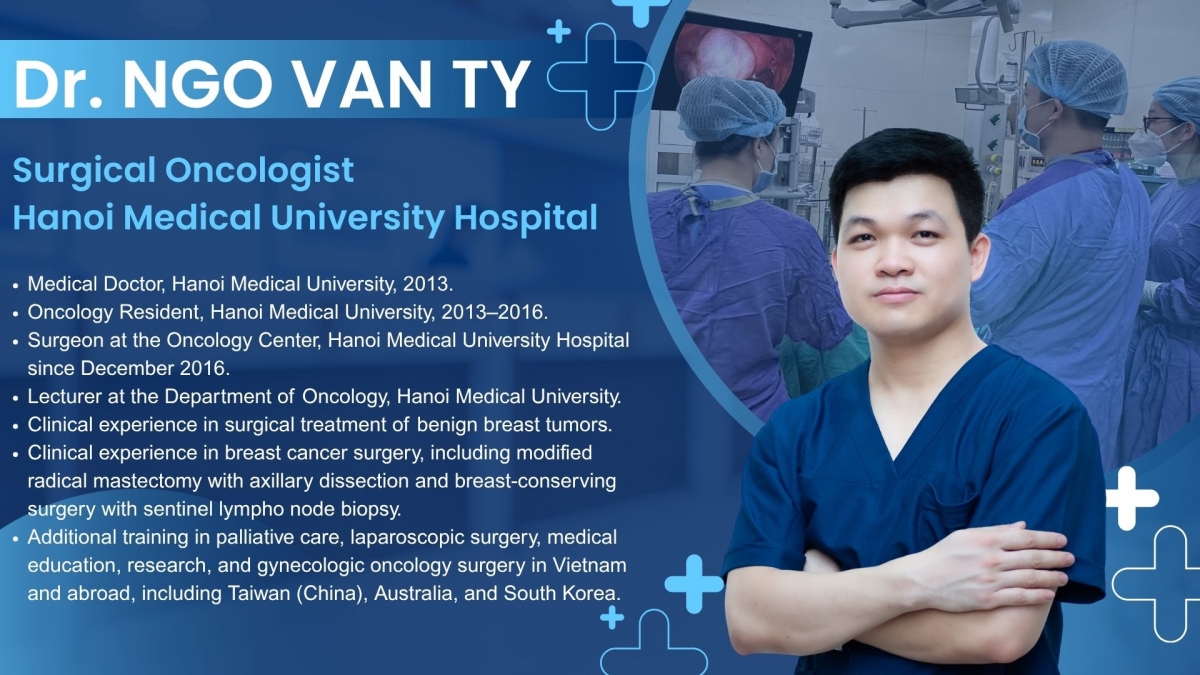
(VOVWORLD) - Breast cancer is one of the most common cancers affecting women worldwide. Yet doctors say misconceptions about who is at risk can sometimes delay diagnosis. Some women assume the disease mainly affects older people or those with a family history, leading them to overlook unusual breast changes, particularly at younger ages. However, breast cancer can develop in women without these risk factors, and its early signs are not always painful or obvious. In this week’s Doctor at Home, Dr. Ngo Van Ty from Hanoi Medical University Hospital discusses common misconceptions about breast cancer, the warning signs women should pay attention to, and why being familiar with your own body can play a vital role in early detection and treatment.
Reporter: Thank you Dr. Ty, for speaking with us. What would you say to younger women who want to be proactive about their breast health without living in fear of breast cancer?
Dr Ty: Breast cancer is still more common as women get older. Age remains one of the strongest risk factors. However, breast cancer in younger women is receiving more attention, and in clinical practice, we do see patients in their 20s, 30s, and maybe early 40s. This does not mean that every young woman should live in fear. The number of young women with breast cancer is still lower than in older age groups. But it does mean that young age should not make us careless. A young woman may still develop breast cancer, even if she feels healthy.
So the message is balance. Do not panic, but be aware. If there is a new lump, an unusual change, or a symptom that does not go away, you should be checked by a healthcare professional.
Reporter: What are important factors that may increase the risk of breast cancer?
Dr. Ty: There are several important factors women should know about. One is family history, especially if a mother, sister, daughter, or close relative had breast cancer or ovarian cancer at a young age. Some women may carry hereditary changes such as BRCA1 or BRCA2, which can increase the risk of breast cancer.
Hormonal and reproductive factors can also play a role. For example, early menstruation, late menopause, having a first child later in life, or not having children may slightly increase risk. Long-term use of some hormonal therapies may also be relevant and should be discussed with a doctor.
Other factors include dense breast tissue, previous radiation treatment to the chest, alcohol use, smoking, lack of physical activity, and being overweight after menopause.
However, many women diagnosed with breast cancer have no clear risk factors. That is why awareness and early detection are important for all women, not only those with a family history.
Dr. Ngo Van Ty is a surgical oncologist at the Oncology Center of Hanoi Medical University Hospital and a lecturer at the Department of Oncology, Hanoi Medical University. He has clinical experience in the treatment of benign breast tumors and breast cancer surgery, including modified radical mastectomy with axillary dissection and breast-conserving surgery with sentinel lympho node biopsy. He has also completed additional professional training in palliative care, laparoscopic surgery, medical education, research, and gynecologic oncology in Vietnam and abroad, including Taiwan (China), Australia, and South Korea.
Reporter: So is it a misconception that being young, slim, or physically fit means you’re at lower risk of developing breast cancer?
Dr. Ty: This is a very common misconception. Being young, slim, and physically active is good for general health, and a healthy lifestyle can reduce the risk of many diseases. But it does not make a woman completely protected from breast cancer. Breast cancer can happen to women who look very healthy. It can happen to women who exercise regularly and have no obvious medical problems. That is because breast cancer is influenced by many factors, including hormones, genetics, family history, breast density, reproductive history, and sometimes factors we cannot clearly identify.
So I always tell women: please continue to live healthily, but do not use good health as a reason to ignore breast changes. A healthy body still needs attention. If something feels different, it is better to check early than to wait and worry.
Reporter: What are some signs or changes in the body that women should not ignore?
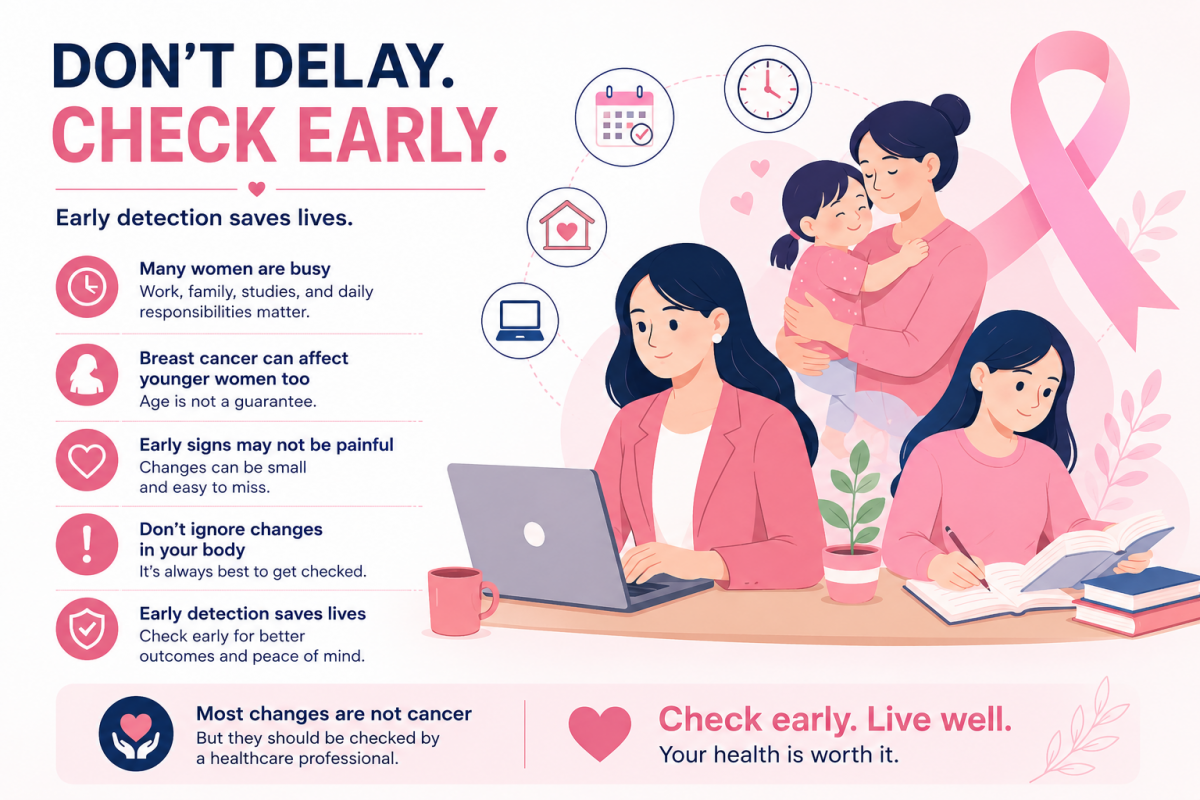
Dr. Ty: Well, many women are very busy. They may be focused on work, family, children, studies, or daily responsibilities. Because they feel healthy, they may think, “I am too young for breast cancer,” or “This lump is probably nothing.” Some women are also afraid of being examined, afraid of bad news, or simply unsure where to go. But early breast cancer may not cause any pain or major problems. Sometimes it is just a small lump or a change that seems minor. Women should not ignore a new lump in the breast or armpit, thickening of breast tissue, a nipple that turns inward, changes in breast size or shape, skin dimpling, redness, swelling, or a wound on the breast that does not heal.
Not every breast change is cancer. In fact, many breast changes are benign. But the safest approach is to let a healthcare professional examine them. Early checking gives peace of mind if it is benign and gives better treatment options if it is something serious.
Reporter: But in reality, some patients have been diagnosed at a late stage because they assumed, “It couldn’t happen to me.”
Dr: Ty: Yes, unfortunately, this does happen. Some patients notice a lump but wait for several months because they believe it is related to menstruation, stress, breastfeeding, or benign cysts. Others may think, “I’m young and I have no family history, so it could not be cancer.” I understand why this happens. No one wants to imagine that they may have cancer. Fear is very natural. But delaying examination does not make the problem disappear. In some cases, it can allow the disease to progress to a later stage.
I often tell patients that going to the doctor does not mean you are expecting the worst. It means you are taking care of yourself responsibly. If the result is normal, you can feel reassured. If there is a problem, early detection gives doctors more options and often leads to better outcomes.
Reporter: Finally, what message would you like to share with women about early detection and breast cancer awareness?
Dr. Ty: My message is simple. Please know your body and do not ignore changes. Breast awareness is not about fear. It is about understanding what is normal for you so that you can notice when something is different. If you feel a new lump, see nipple changes, notice unusual discharge, or have any breast changes that persist, please seek medical advice. Do not wait because you are young, do not wait because you are busy, and do not wait because you are afraid. Only early detection can make a real difference. When breast cancer is found early, treatment is often more effective, less complicated, and less stressful for the patient and family.
At the same time, many breast symptoms are not cancer, so checking early can also reduce anxiety. Women take care of many people in their lives, but they also need to take care of themselves. Your health matters. Listening to your body and seeking help early is one of the most important ways to protect yourself.
Reporter: Thank you, Dr. Ty, for sharing your insights with us today. Breast cancer is not only a concern for older women, and understanding the warning signs, risk factors, and importance of early check-ups can help women protect their health more effectively. That wraps up this week’s Doctor at Home. Thank you for listening, and goodbye until next time.