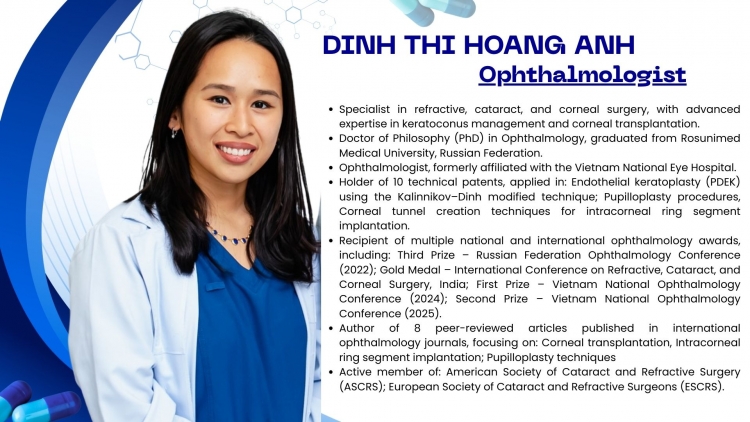




In today’s Doctor at Home, Dr. Dinh Thi Hoang Anh, Head of Ophthalmology at Hong Ngoc Hospital, a PhD-trained ophthalmologist and award-winning specialist in cataract, refractive, and corneal surgery, shares insights into what glaucoma is, who is most at risk, and why early detection and regular eye examinations are essential to protecting our vision.

Reporter: Welcome to the show, Dr Hoang Anh. Could you explain what glaucoma actually is, and why people often don’t notice symptoms until it’s too late?
Dr. Hoang Anh: Glaucoma is a group of lifelong eye diseases that cause damage to the optic nerve. If not detected early and treated appropriately, it can lead to permanent vision loss or blindness. Because it develops silently, symptoms may or may not be noticeable depending on the type of glaucoma. In the early stages, vision may remain unaffected, so patients often do not recognize the problem. Glaucoma can only be accurately diagnosed through visual field tests and evaluation of the optic nerve by ophthalmologists.
Without timely screening, patients risk irreversible vision loss. Given the seriousness of the disease, regular eye exams and early detections are crucial, especially for high-risk individuals.
Reporter: How common is it, in reality? What are the early warning signs that people should pay attention to?
Dr. Hoang Anh: It is estimated that there are currently about 650,000 people with glaucoma in our country. The detection rate of glaucoma remains low. Even in developed countries like in the US or UK, detection rates are only around 50%, meaning half of glaucoma patients remain undiagnosed and untreated.
Glaucoma has many subtypes and causes, so symptoms vary widely depending on the type. The main types are open-angle glaucoma and closed-angle glaucoma. In the early stages of both types, symptoms are often subtle and easily overlooked, such as eye discomfort, heaviness, seeing halos around light, headaches, partial visual field loss, and obscured vision. If any of these symptoms occur, patients should promptly visit a specialized eye clinic for examination and diagnosis.
Reporter: Are there specific age groups or health conditions that require more frequent screening?
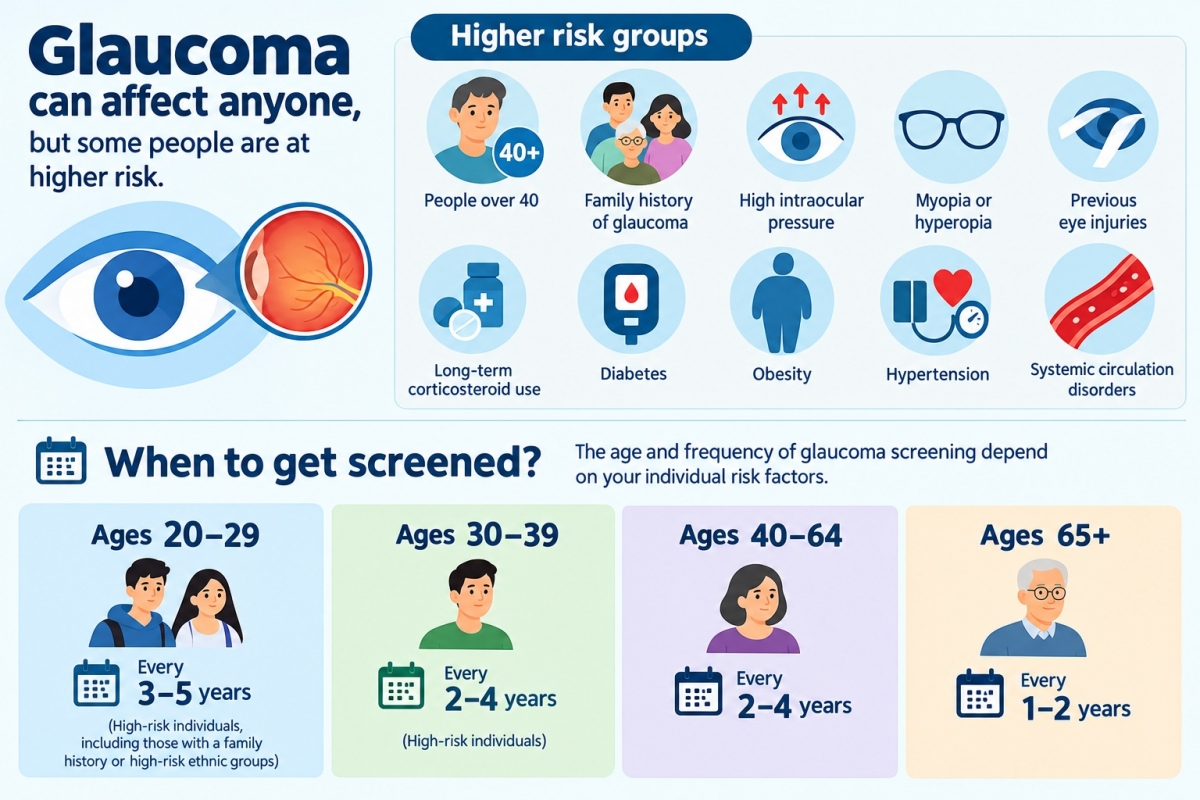
Dr. Hoang Anh: Everyone is at risk for glaucoma, but certain groups a have higher risk, including people over 40, those with a family history of glaucoma, individuals with high intraocular pressure, refractive errors such as myopia or hyperopia, previous eye injuries, long-term corticosteroid use, diabetes, obesity, hypertension, or systemic circulation disorders. The age and frequency of glaucoma screening depend on individual risk factors. According to the American Academy of Ophthalmology, people aged 20 to 29, those with a family history of glaucoma or belonging to a high-risk ethnic group should have an eye exam every three to five years.
Aged from 30 to 39, there are high-risk individuals who should have an eye exam every two to four years. People from age 40 to 64, eye exams are recommended every two to four years. People from age 65 and above, eye exams should be conducted every one to two years.
Reporter: That was a brief introduction to our guest expert, Dr. Dinh Thi Hoang Anh. Let’s now continue our conversation with the next question. Could you walk us through the current treatment options? How do eye drops, laser therapy, and surgery each work to control glaucoma?
Dr. Hoang Anh: Treatment usually begins with prescription eye drops. Some medications reduce eye pressure by improving fluid drainage, while others reduce the production of fluid in the eye. Depending on the desired pressure reduction, doctors may prescribe one or multiple types of drops.
Because some eye drops are absorbed into the bloodstream, patients may experience side effects unrelated to the eyes. To minimize this, patients should keep their eyes closed for one to two minutes after applying drops and may press gently on the inner corner of the eye near the nose for one to two minutes, removing any excess medication from the eyelid. In many cases, eye drops alone may not reduce eye pressure sufficiently.
Doctors may also prescribe oral medication, typically a carbonic anhydrase inhibitor, to be used alongside eye drops. Side effects can include frequent urination, tingling in fingers or toes, depression, stomach pain, and kidney stones. Other treatment options include laser therapy and surgery.
These techniques help drain fluid from the eye and reduce intraocular pressure. So you can do laser peripheral iridotomy, which is an option for patients who cannot tolerate eye drops, and minimally invasive glaucoma surgery, which usually requires less post-operative care and carries fewer risks. After glaucoma diagnosis, patients should follow the prescribed treatment plan, usually starting with eye drops, then laser or surgery if needed.
Reporter: Before we conclude, do you have any additional advice for our listeners on protecting their vision and preventing avoidable vision loss?
Dr. Hoang Anh: Have regular eye exams every three to six months and closely monitor intraocular pressure, visual fields, and the optic nerve. Maintaining a healthy lifestyle, light exercise, a nutritious diet, avoiding activities that increase eye pressure, and protecting the eyes from injury is also essential for long-term disease control. Proper daily eye care helps prevent early vision deterioration.
Eye care is not only important in old age, but also should be considered from an early age. Alongside a balanced diet and healthy lifestyle, regular eye exams are crucial for early detection and treatment. Thank you to our listeners for tuning in to the program.
Reporter: Our thanks to Dr. Dinh Thi Hoang Anh for those helpful insights into glaucoma and the importance of early detection. Remember, regular eye check-ups and a healthy lifestyle can help protect your vision for years to come. That’s all for today’s program. Thank you for tuning in, and goodbye until next time.