



In this episode of Doctor at Home, we speak with Dr. Dinh Thi Hoang Anh, Head of Ophthalmology at Hong Ngoc Hospital, to explore whether procedures like LASIK, SMILE, and Femto-LASIK are truly safe and worth it.
Reporter: Thank you for joining us, Dr. Hoang Anh. Laser eye surgery is often seen as a life-changing procedure, but it can also seem intimidating to those unfamiliar with it. From your experience, how common has it become, and what’s driving more people to choose this option?
Dr. Hoang Anh: Laser eye surgery is now very popular, especially for people with myopia, hyperopia, or astigmatism who want to reduce their dependence on glasses or contact lenses. In my clinical experience, the number of patients choosing this procedure has increased rapidly in recent years due to its safety, speed, and stable results. Many people opt for laser surgery because it can improve vision within just a few days, reducing inconvenience in daily life and work, particularly for those who play sports or have professions that require sharp vision. However, since it is still a medical intervention, some patients feel anxious. Careful preoperative evaluation of corneal thickness, dry eye, and overall eye health is very important to ensure safety and optimal outcomes.
Reporter: Today, patients can choose from several types of laser vision correction, including LASIK, SMILE, and Femto-LASIK. Could you explain the key differences between these procedures, and how doctors determine which option is best suited to each patient?
Dr. Hoang Anh: LASIK, SMILE, and Femto-LASIK all use laser technology to correct refractive errors and have been proven safe and effective. The difference lies mainly in how the procedure is performed. Choosing the right method depends on factors such as corneal thickness, degree of myopia or astigmatism, lifestyle needs, and overall eye health. A thorough eye examination, including corneal measurements and other important parameters, is performed before recommending the most suitable technique.
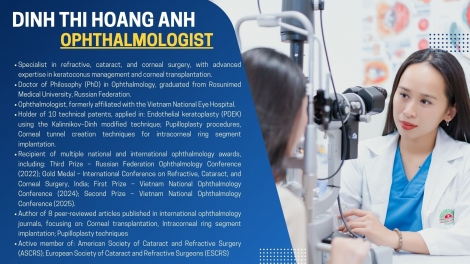
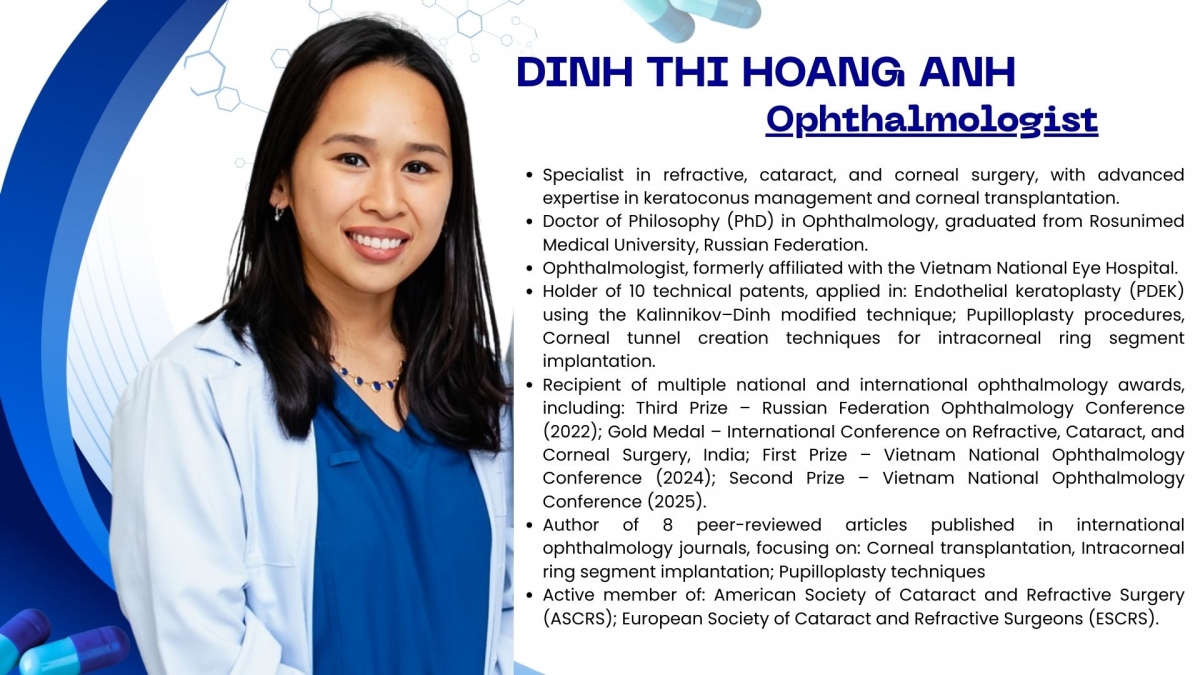
Dr. Dinh Thi Hoang Anh is a PhD-trained ophthalmologist specializing in refractive, cataract, and corneal surgery, with advanced expertise in keratoconus management and corneal transplantation. She previously worked at the Vietnam National Eye Hospital and is known for her contributions to innovative surgical techniques in vision correction. Dr. Hoang Anh is the holder of 10 technical patents and the author of multiple peer-reviewed studies published in international ophthalmology journals. Her work has earned her several prestigious national and international awards, and she is an active member of leading professional organizations such as ASCRS and ESCRS.
Reporter: Now that we’ve gotten to know Dr. Hoang Anh a little better, let’s turn to a question that’s on many people’s minds: Who can actually benefit from laser eye surgery?
Dr. Hoang Anh: Before laser eye surgery, several important criteria must be met to ensure safety and successful outcomes. Patients are typically at least 18 years old, with stable vision for at least six months. Corneal thickness is crucial: if the cornea is too thin, surgery may weaken it and increase the risk of complications such as ectasia. Overall health also matters; for example, patients with diabetes, autoimmune disorders, or taking medications that affect healing require careful assessment. The goal is to ensure the eyes are suitable for surgery, minimizing risks and achieving long-term stable results.
Reporter: Even when patients are interested in laser eye surgery, many still have concerns before taking the next step. What are the most common worries you encounter, and how do you help patients feel informed and confident about the procedure?
Dr. Hoang Anh: Patients often worry about pain, complications, or whether their vision will remain stable after surgery. I reassure them that modern laser procedures are very quick, virtually painless, and rarely cause complications. A detailed preoperative examination ensures maximum safety. Recovery time depends on the procedure, but in general, it is very fast. Most patients notice improvement within the first 24-48 hours. During this period, vision may be slightly blurry, and there may be mild glare or a gritty sensation in the eyes. However, within a few days, vision stabilizes and discomfort gradually decreases.
Reporter: Finally, what should patients do after surgery to protect their eyes and maintain stable vision?
Dr. Hoang Anh: After surgery, patients should follow their prescribed eye drops regimen, maintain good eye hygiene, avoid rubbing their eyes, and limit exposure to smoke and dust. Proper rest, reduced screen time, and attending follow-up appointments on schedule help maintain stable vision and reduce the risk of complications or regression. My advice is to schedule a direct consultation so the doctor can assess the degree of myopia, corneal thickness, and overall health. Only after a thorough evaluation and personalized recommendation can you determine the most suitable procedure. Avoid making a rushed decision based on general information or comparisons.
Reporter: Thank you, Dr. Hoang Anh, for your valuable insights and practical advice. That brings us to the end of today’s Doctor at Home. We hope this discussion has helped answer your questions about laser eye surgery and given you a clearer understanding of whether it is the right choice for you. Thanks for listening, and see you again in our next program.