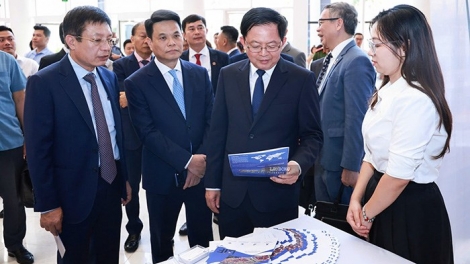




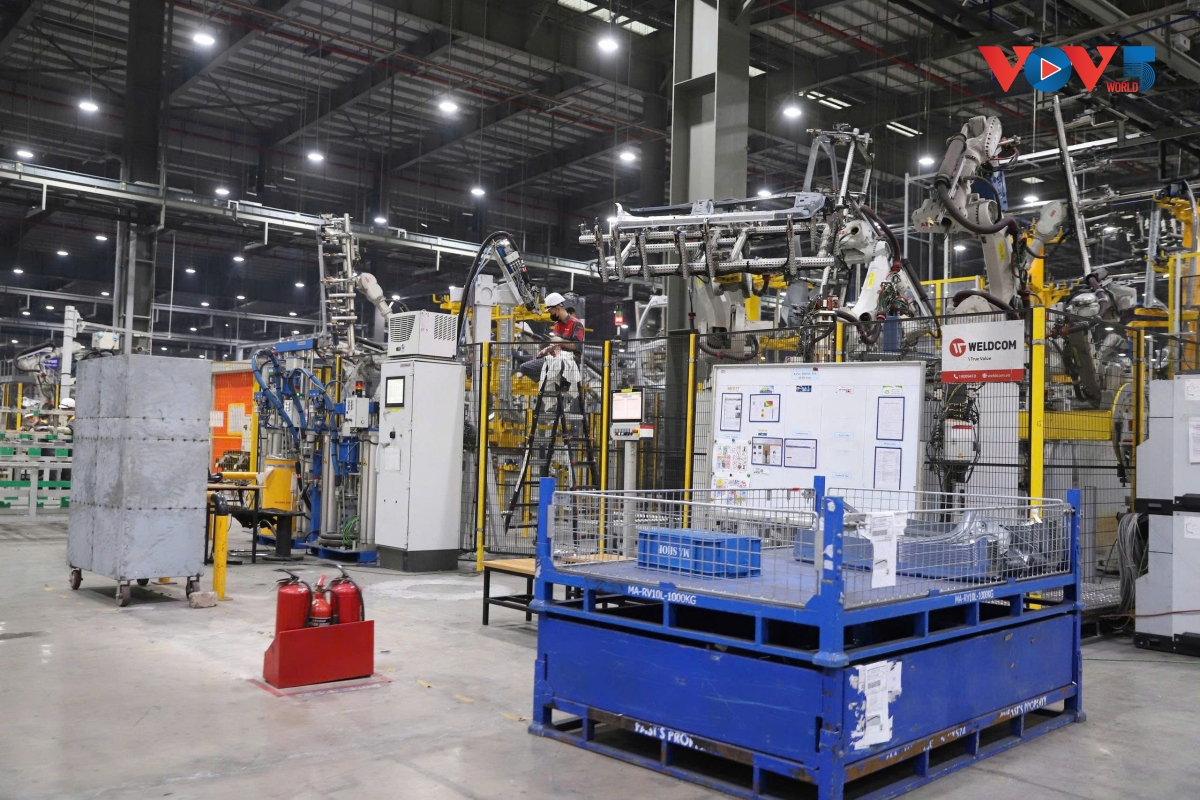
Hai Phong is working to close those gaps by expanding support industries, strengthening domestic business capacity, and strengthening linkages between FDI and domestic sectors. The city has a strong foundation in processing and manufacturing, supported by an integrated network of economic zones, industrial parks, and modern port and logistics infrastructure.
The presence of major FDI corporations in electronics, automotive, machinery, and textiles generates substantial local demand. But the city can fully capitalize on FDI only if domestic suppliers meet strict requirements for quality, delivery times, competitive pricing, and traceability.
Tran Van Thang, Chairman of the municipal Business Association, underscored the need to focus on increasing the localization ratio, on how far local businesses can participate in supply chains, on deploying smart logistics, and on making effective use of data, rather than focusing only on the number of FDI enterprises. “Investors must bring technology, modern management, innovation, and high standards, and create opportunities for domestic firms to participate in their supply chains,” said Thang.
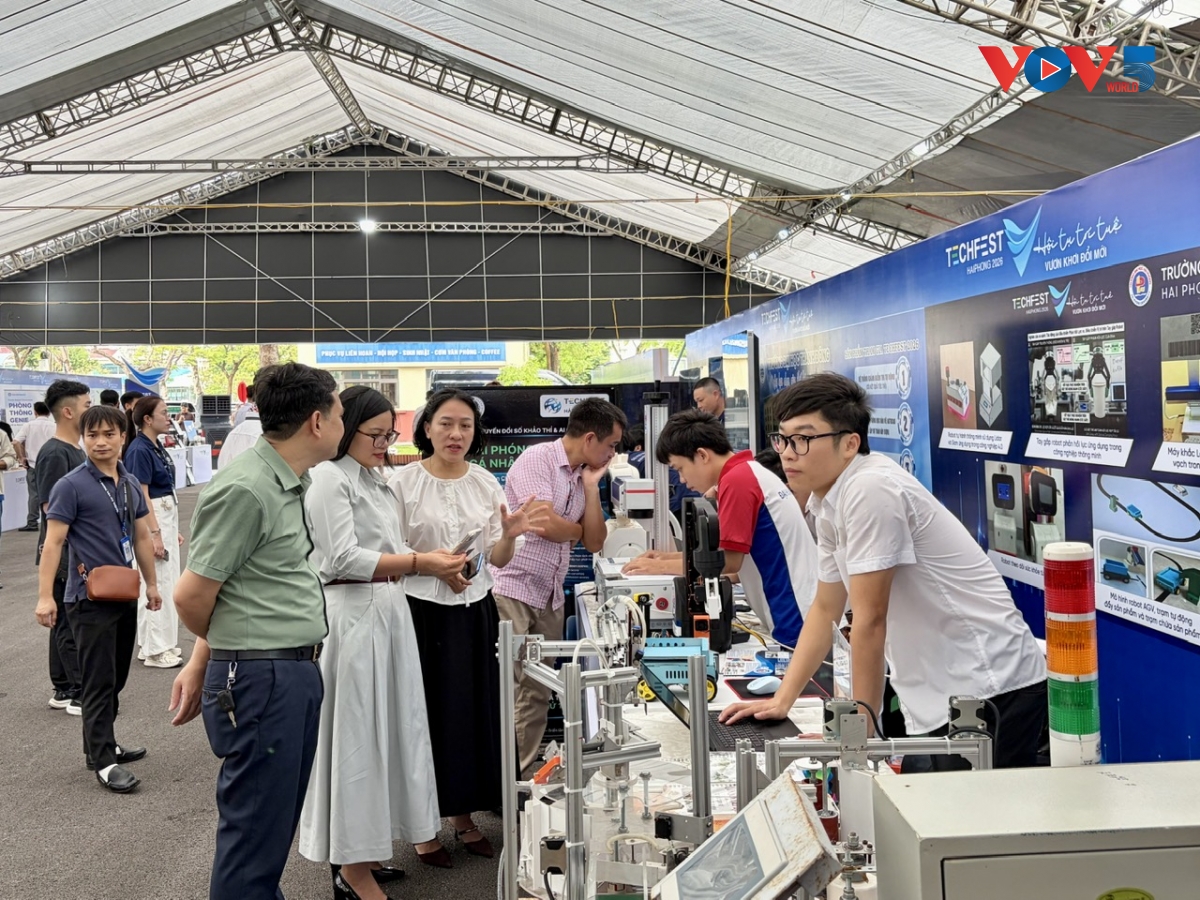
Hai Phong recently held supply-demand-matching events, supported production optimization and technological upgrades, and helped local firms meet the stringent technical requirements of global corporations.
But challenges remain. Many small and medium-sized support-industry enterprises need workshops of a few thousand square meters and need to be located close to major production areas to minimize transport costs and respond quickly to orders. But land plots in existing industrial zones are predominantly designed for large-scale operations.
According to Pham Doan Tung, Chairman of the municipal Industrial Development Support Association, “Industrial zones and industrial clusters are geared primarily toward serving large corporations. We haven’t given enough attention to reserving land specifically for support manufacturers.”
“Support-industry firms that produce screws, bolts, components, and smaller parts, don’t need several hectares. Often, 1,000 to 3,000 square meters, or at most 5,000 square meters, is more than enough space to set up their machinery and conduct precision engineering,” Tung added.
On July 23 this year, the Hai Phong People's Committee approved the Supporting Industry Development Program for the 2026–2035 period, prioritizing 5 sectors – electronics, high-tech manufacturing, mechanical engineering, automotive, and textiles and footwear. The program is focused on strengthening management capacity, training skilled workers, and promoting technological R&D, innovation, and technology transfer.
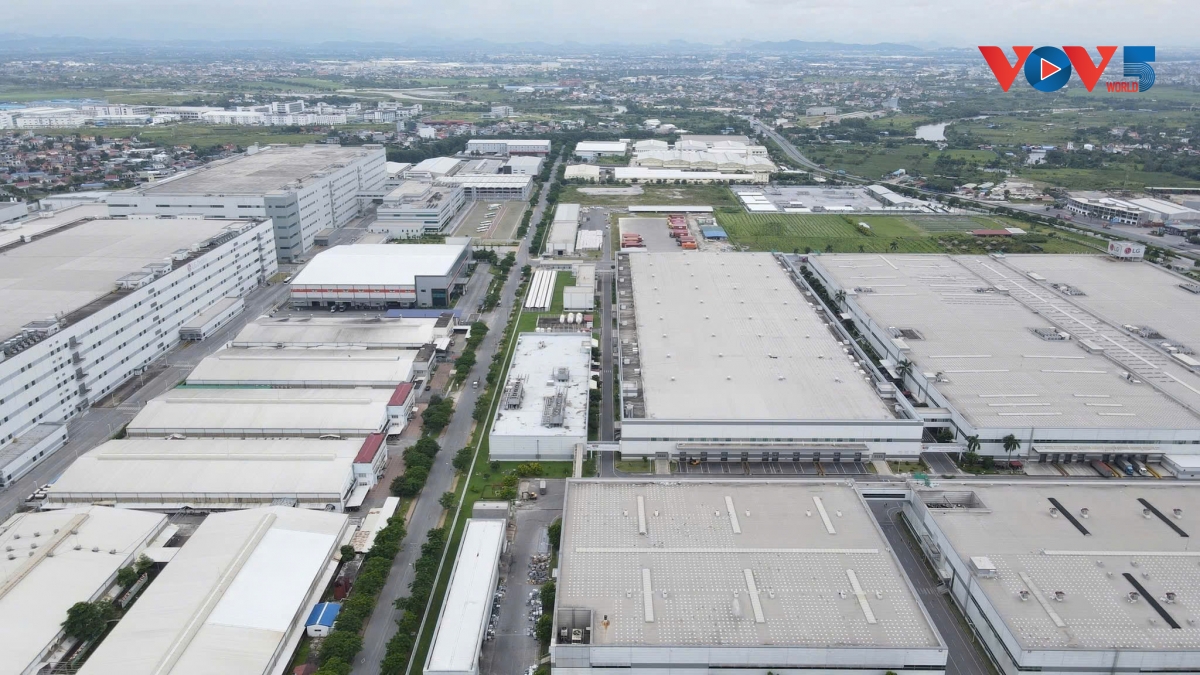
Hai Phong has set ambitious targets: by 2030, the city aims to have 300 to 350 support-industry enterprises capable of joining the supply chains of FDI companies and multinational corporations. By 2035, that figure should reach 450 to 500 enterprises.
Global FDI flows are shifting toward locations with a skilled workforce, technological capability, strong infrastructure, and a strong business ecosystem. Investment attraction no longer depends just on tax incentives and low-cost labor. There has been a shift in FDI policy from attracting investment by volume to pursuing higher-quality projects with stronger economic spillovers.
Economist Nguyen Canh Cuong, a lecturer at the University of Economics and Business of Vietnam National University, Hanoi, said, “We have become a major manufacturing hub. Now we need to become an industrialized nation integrated into global value chains. For that, next-generation FDI will play a key role.”
Politburo Resolution 10 adopted in June 2026 on developing the foreign-invested economy places emphasis on investment quality and efficiency, technology transfer, supply chain integration, and stronger linkages with domestic enterprises.
For Hai Phong, these objectives will translate into tangible results only if the gap between FDI plants and domestic factories is narrowed through strong purchase orders, a qualified technical workforce, and suitable production space. When components, spare parts, and industrial services can be sourced locally, FDI inflows will generate stronger spillovers for domestic businesses and reinforce Hai Phong's industrial base.